

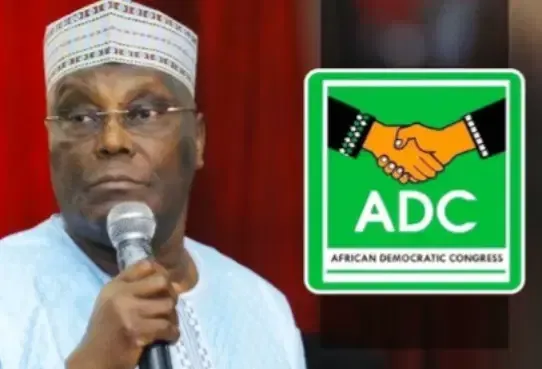
The dust still hasn't settled on the primary election process of the African Democratic Congress (ADC) before the political accusations began flying. Paul Ibe, the media adviser to former Vice President Atiku Abubakar, has stepped into the arena to defend the process that handed his boss the party's presidential ticket. Observers have questioned the credibility of the primary, but Ibe insists his party chose the path of integrity by allowing the election petitions committee to investigate complaints.
Ibe's defense stands in sharp contrast to his blistering critique of the ruling All Progressives Congress (APC). He didn't mince words when describing the APC's own internal primaries, labeling their results as manufactured figures. According to him, the ADC intentionally slowed down its internal voting process specifically to accommodate any grievances that surfaced, ensuring that the final outcome wasn't just a rubber stamp but a verified result.
“Recall that when these allegations were made, the process was slowed down,” Ibe said. “That was done to give an opportunity to the committee to look at the allegations because we are not like the APC that are already manufacturing figures.” He added, “When allegations are made, we don't just shut them down; we investigate to ensure the final outcome is a verified result.”
Beyond the logistics of the ballot, this back-and-forth signals a much larger battle for the Nigerian soul. Ibe framed the upcoming 2027 general election as a direct referendum on the current administration of President Bola Tinubu. For the Atiku camp, the narrative is simple: voters must decide if they want four more years of economic hardship or prefer to head in a different direction.
Political analysts are already dissecting the weight of these statements. The ADC, often seen as a third-force platform, is attempting to position itself as a more transparent alternative to the major parties. By invoking the presence of Independent National Electoral Commission (INEC) monitors during their primaries, they hope to prove that their house is in order and that they can be taken seriously by the Nigerian electorate.
Every election cycle brings with it a predictable storm of disputes, and Ibe acknowledges that even siblings in a family often disagree on matters. He argues that legitimate concerns about an election process are a natural feature of democracy, provided there is a mechanism to address them. The ADC’s decision to pause for investigations is their way of showing they have internal checks and balances.
For the ordinary Nigerian, the noise coming from the political class can feel exhausting. Whether you are scrolling on your phone in the middle of a workday or unwinding at home, the message from the Atiku camp is clear: they are preparing to frame the next cycle as a choice between two distinct futures. As we inch closer to 2027, the strategies for control and the accusations of manipulation will only increase in volume, with the cost of living dominating conversations from Lagos markets to the north's farms.
Historically, the ADC has struggled to gain the same footing as the APC or the Peoples Democratic Party (PDP). By securing a figure with the political weight of Atiku Abubakar, the party is trying to rewrite its own history. This move isn’t just about the technicalities of a primary; it is about establishing legitimacy in the eyes of a public that has become increasingly skeptical of party primaries.
What's left to be seen is how the public will react to these charges of manufactured figures. Voters are looking for results that show up on their plates and in their bank accounts, rather than just a well-oiled party machine. In a country where the cost of living is a major concern, they want tangible benefits from their leaders.
Ultimately, this is a calculated political move to define the enemy early. By attacking the integrity of the ruling party’s primary process, the Atiku camp is trying to plant a seed of doubt in the minds of voters long before the actual 2027 ballots are cast, setting up a battle for control and accountability that will only intensify as the campaign season heats up.