

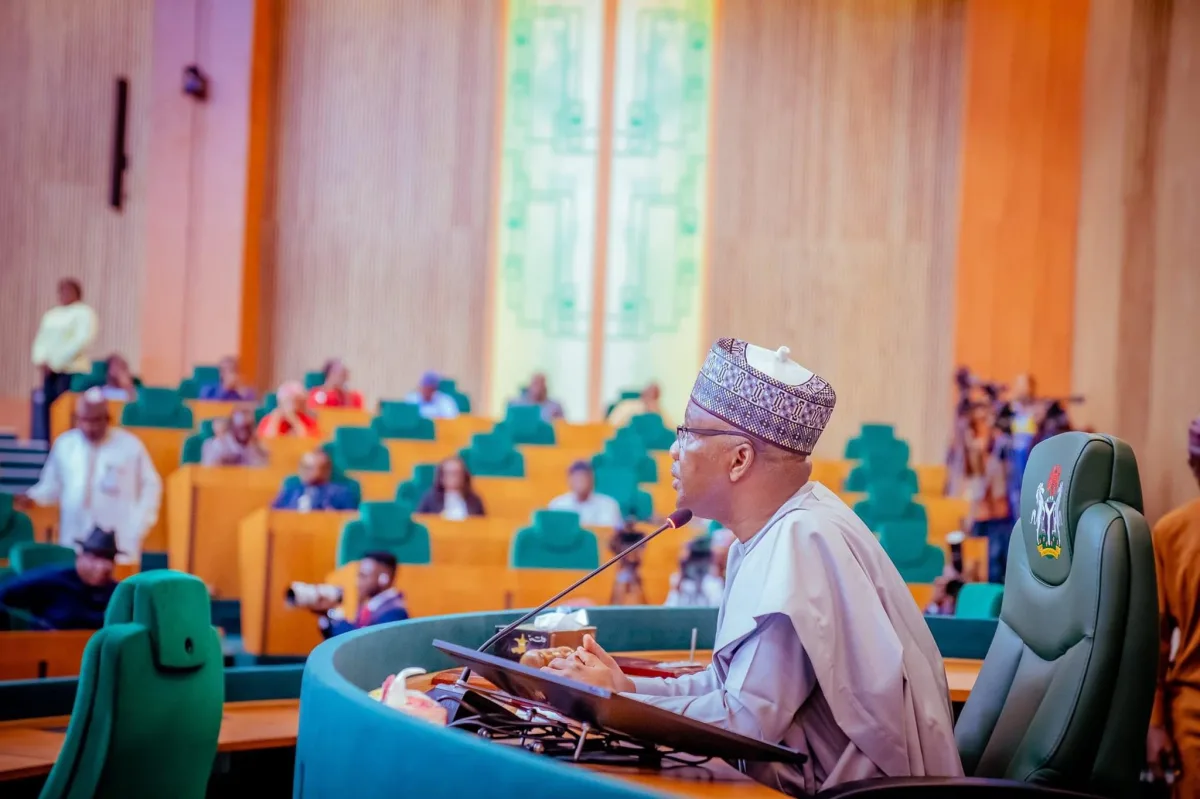
The House of Representatives has taken a major step toward creating state police — a move many Nigerians have demanded for years as banditry and kidnapping spiral out of control.
On Thursday, lawmakers voted overwhelmingly in favour of a constitutional amendment bill to establish state police. 289 voted yes. Only one voted no.
The bill, known as HB 617, is part of ongoing efforts to fix Nigeria's worsening security crisis — terrorism, banditry, kidnapping, communal violence. The Senate also passed its own version the same day and sent it to its Constitution Review Committee.
But don't expect state police to appear tomorrow. The bill still needs to go through a harmonisation committee if the two chambers pass different versions. Then at least two-thirds of the 36 state Houses of Assembly must approve it before it goes to the president for assent.
The same week, the House finally ended a messy fight over who would lead the opposition in the chamber. Speaker Abbas Tajudeen read a communication from minority caucus members naming Fred Agbedi (PDP, Bayelsa) as minority leader, Abdussamad Dasuki (ADC, Sokoto) as deputy minority leader, and Manu Soro (APM, Bauchi) as minority whip.
The announcement ended weeks of uncertainty. Some opposition lawmakers had pushed for Ikenga Ugochinyere (APP, Imo) to take the job. The dispute boiled down to how the House rules should be read — specifically, how much legislative experience a principal officer needs.
Security was the dominant theme throughout the week. On Tuesday, the House summoned the nation's service chiefs and National Security Adviser Nuhu Ribadu to appear before lawmakers. The decision followed a motion by Sulaiman Gumi of Zamfara State, who warned that attacks, kidnappings and banditry had created a humanitarian crisis across Zamfara, Sokoto, Katsina, Kaduna, Kano, Kebbi and Jigawa.
During debate, Abdussamad Dasuki criticised what he called a pattern of resolutions that produce little real change. Stanley Olajide, representing Ibadan North-west/Ibadan South-west, pushed for more technology-driven security solutions.
The House asked the Ministry of Defence to send more personnel and equipment to affected states. It also called for non-military interventions to tackle poverty and unemployment — the things that fuel insecurity.
In a separate resolution, the House demanded immediate action against banditry, kidnappings and attacks on schools and places of worship. The motion, sponsored by Ibe Osonwa (LP, Abia), highlighted how mass abductions of schoolchildren have forced thousands out of school and worsened Nigeria's out-of-school children crisis.
Lawmakers went further. They declared that if insecurity continues and authorities fail to restore safety within a specified period, the service chiefs should resign honourably for failing to protect lives and property.
The House also ordered a full investigation into a train accident along the Itakpe-Warri rail corridor. The motion, sponsored by Francis Waive (APC, Delta), cited reports that at least four people died and several others were injured. Passengers also suffered emotional trauma, financial losses and disruption of their daily lives.
The House has adjourned plenary until 7 July, marking its third legislative anniversary.