

The single sharpest fact in one or two punchy sentences. Who did what, where, when, and why it matters.
Chief Justice Paul Baffoe-Bonnie, Ghana's head of the judiciary, is facing scrutiny over his perceived closeness to the ruling National Democratic Congress (NDC) government, fueling concerns about the judiciary's independence.
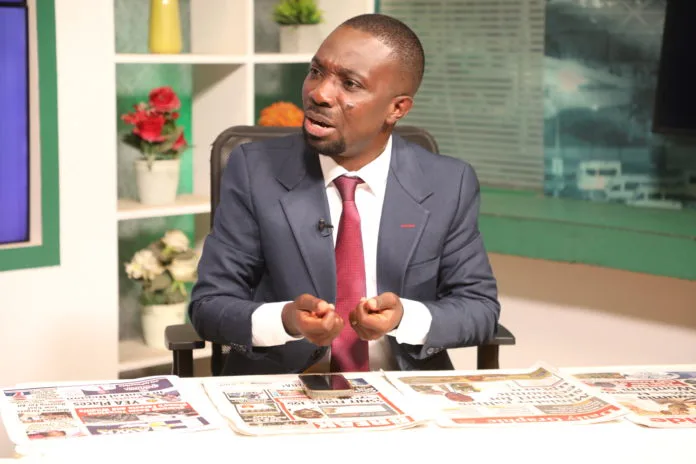
Team Lead of the People's Forum, Dennis Miracles Aboagye, expressed concern over what he describes as the perceived closeness between Chief Justice Paul Baffoe-Bonnie and officials of the National Democratic Congress (NDC) government. Speaking on Asempa FM's Ekosii Sen, Mr Aboagye said recent developments have created unease among some Ghanaians regarding the independence of the Judiciary. “We appreciate the response from the Judicial Service and the swift response as well. Our problem is that we are scared,” he stated.
According to him, concerns have been heightened by ongoing prosecutions involving political opponents and public perceptions surrounding the conduct of some state institutions. “Political opponents are being prosecuted and the bail conditions are hideous, and the Chief Justice is seen around government people,” he alleged.
The People's Forum leader argued that the office of the Chief Justice requires a high level of caution in public engagements in order to protect public confidence in the Judiciary. “The Chief Justice is not an ordinary citizen. He has no business being around government appointees,” he stated.
He further suggested that the optics of the Chief Justice being seen in the company of government officials could undermine public trust in the Judicial Service. “He should step out with an aura. His relationship with the NDC is awkward and that is not what the office of the Judicial Service should be doing,” he said.
Mr Aboagye stressed that public officials occupying sensitive constitutional positions must be mindful of how their actions are perceived. “You carefully choose. It's bad optics. He should stand shoulder to shoulder. He should not be seen in the shadows of people in government,” he remarked.
The concerns formed the basis of an open letter recently addressed to the Chief Justice by the People's Forum. “The letter we wrote was in all intents and purposes to shape our democracy,” he explained.
“We want assurance,” Mr Aboagye said, highlighting the need for the Judiciary to provide public assurances of its independence and impartiality.
Ghana has a long history of tumultuous politics, with the NDC and its main rival, the New Patriotic Party (NPP), often accused of manipulating the judiciary to serve their interests. The current controversy surrounding Chief Justice Baffoe-Bonnie has sparked renewed debate about the role of the Judiciary in Ghana's democracy.
The Judiciary in Ghana is mandated to interpret the constitution and maintain law and order. However, critics argue that the influence of the ruling party threatens the independence of the Judiciary.
In 2022, President Nana Akufo-Addo appointed Paul Baffoe-Bonnie as the Chief Justice despite opposition from a section of the public who raised concerns about his perceived closeness to the NDC government. Mr Aboagye stated that the appointment was a 'big mistake'
Ghana has seen a surge in high-profile prosecutions of its politicians, many of whom have been accused of corruption. However, critics argue that some of these prosecutions are motivated by politics rather than a genuine desire to fight corruption.
Mr Aboagye warned that if the Chief Justice fails to address the concerns around his perceived closeness to the NDC government, it could have far-reaching consequences for Ghana's democracy. “If this perception persists, it will undermine public confidence in the Judiciary and erode the very fabric of our democracy,” he said.
The Ghanaian public is closely watching the developments and anxiously awaiting the response from the Chief Justice and the Judicial Service.