

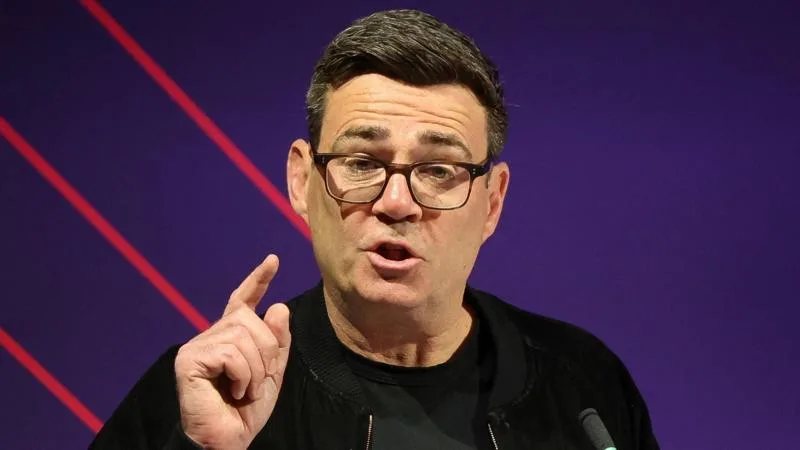
It’s not every day you see a sitting Mayor take a swing at a former Prime Minister, but that’s exactly what happened this week. Greater Manchester Mayor Andy Burnham has accused Sir Tony Blair of being fundamentally disconnected from the realities of everyday life. This isn't just a friendly difference of opinion; it’s a full-scale public row about where the Labour party should be headed next.
The tension kicked off after Sir Tony released a massive 5,600-word essay. In it, the man who led the country from 1997 to 2007 claimed the current government lacks a coherent plan. He argued that Labour is currently holding back business growth and urged the leadership to cling to the 'radical centre' rather than moving left. He suggested the party suffers from a delusion that losing seats to the right means they need to swing further in the opposite direction.
Burnham, who is preparing for the Makerfield by-election on 18 June, wasn't having any of it. He pointed out the glaring omission in Sir Tony’s critique: the complete absence of the word 'inequality'. For Burnham, this confirms his suspicion that the former leader doesn't grasp the struggle people face just to pay their bills. If you can't see that basic necessities are no longer affordable for the average family, Burnham suggests you simply don't understand the current political climate.
"If you don't get how that's driving politics now, if you are not rooting your analysis in the fact that people are unable to live and that things that were taken for granted are no longer affordable, then you are not understanding what's going on."
This by-election is a pivotal moment for Burnham. He’s battling Reform UK candidate Robert Kenyon for the seat on the outskirts of Wigan. While Sir Tony offered a polite nod to Burnham’s candidacy, calling him a 'great guy', he couldn't resist a dig at Burnham’s previous claim that Britain has been on the 'wrong path' for four decades. Sir Tony asked if nothing good happened during the Thatcher era or his own time in power. He framed Burnham’s critique as historically illiterate.
Burnham pushed back hard in an interview with the Observer. He insists that the last 40 years of policy have created deep inequality. He believes this has caused people to abandon the political centre in search of extremes. When asked if this makes him a leftist, Burnham said he’s happy with the label if it means prioritising people’s lives over the blind faith that the market is always the answer.
Beyond the name-calling, there are real policy disagreements at play here. Sir Tony is particularly concerned about new workers' rights legislation and an increase in National Insurance contributions for employers. He argues these moves scare off companies and kill growth. He wants the government to focus on removing obstacles for businesses, tackling illegal immigration, and going all-in on Artificial Intelligence.
Not everyone thinks Sir Tony's blueprint is the magic bullet, though. Torsten Bell, the former head of the Resolution Foundation think tank who now serves as the Pensions Minister, gave a pointed response to the essay. While he called the piece an impressive effort, he concluded that it doesn't actually offer a plan that fits the challenges of 2026. Bell’s dry assessment? Simply shouting 'AI' in an essay isn't a strategy for a country.
Sir Tony also faced questions about the funding behind the Tony Blair Institute. He defended his work with wealthy donors like Oracle founder Larry Ellison. He argued they share a vision for the technological revolution. He insists that working with such figures is just a way of finding the right answers for the future, regardless of the optics. It’s a classic case of a former leader trying to maintain influence while the current party machinery tries to define its own path in a very different economic reality.
The debate over the party's future direction remains a central focus for both figures.