

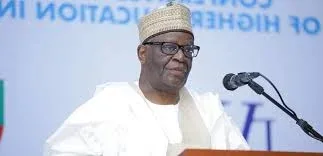
Africa has spent decades copying political and economic systems from outside, and it hasn't worked. That was the blunt message from former Chief of Staff to President Buhari, Prof. Ibrahim Gambari, diplomat Moudjib Djinadou, and academic Dimas Garba at a book launch in Abuja on Tuesday.
The event was the launch of Renegade Africa: All it Takes to Be African, written by Djinadou, a former UN official and founder of the Itumo Institute, a think tank based in Porto-Novo, Republic of Benin. It was held at the Savannah Centre for Diplomacy, Democracy and Development in Utako.
Gambari, who chaired the launch, said sustainable development in Africa can only happen when policies and institutions are rooted in the continent's own history, culture, and aspirations. He didn't hold back.
"The external cannot love us more than we love ourselves. And we are the ones who know where the shoe pinches because we wear it."
The book, he said, asks a question many African intellectuals avoid: "Despite all our efforts, could it be that Africa's shortcomings in building genuine sovereignty are first and foremost failures toward itself?"
Gambari argued that Africa's weakness isn't about geography or history. It's about alienation — undervaluing indigenous governance systems, economic philosophies, languages, and collective knowledge. "We have imitated, persisted in, and mimicked—never adapted—values and policies external to our environment," he said. "This mimicry has, in many regards, made us strangers to ourselves."
He pointed to China as an example: when it adopted socialism, it did so with "Chinese characteristics." Africa, he said, practices "democracy without African characteristics, and then we are surprised that sometimes it doesn't work."
The former UN official also highlighted the continent's economic trap: exporting raw materials and importing manufactured goods, including food. The solution, he said, is "productive sovereignty through the development of local domestic capacity." He urged Africa to add value to its production so it can participate in global value chains that benefit everyone.
On demography, often framed as a threat, Gambari called it an opportunity if Africa invests heavily in education, mentoring, and training its youthful population.
Dimas Garba, a lecturer at Baze University who reviewed the book, traced Africa's contact with the West back to the 8th century, driven by trade routes and resource exploration. He said this contact gradually distorted Africa's self-perception and led to the abandonment of its values and systems.
The book is structured in three parts: a diagnosis of African society, law, and power; an examination of what it calls "confiscated heritage"; and a final section on reclamation.
Djinadou, the author, said the book is a call for Africans to rediscover themselves. "To open up to the world and make a contribution to it, one must first be oneself," he said. "And for that, we must unearth our pre-colonial heritage, which is our true patrimony—its political institutions founded on deliberation and consensus."
The speakers agreed that Africa possesses vast resources and potential, but faces economic, security, and social challenges. Their message was clear: stop mimicking the West, reclaim indigenous systems, and build from within.