

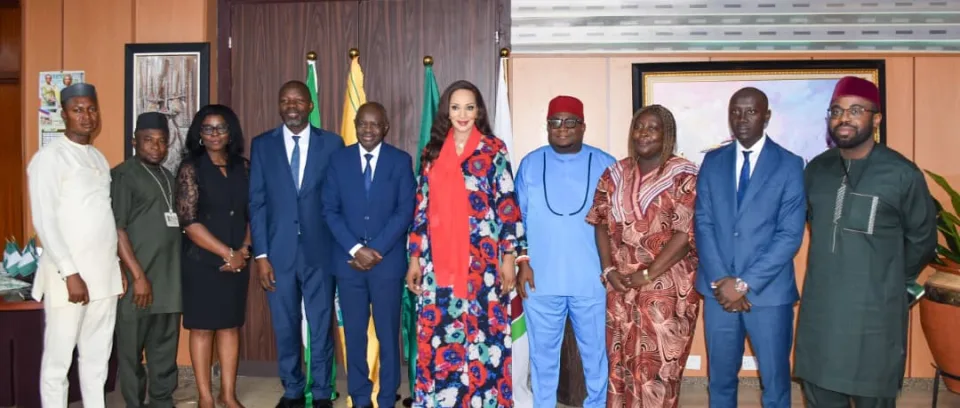
Nigeria’s Minister of Foreign Affairs, Amb. Bianca Odumegwu-Ojukwu, and Côte d’Ivoire’s Ambassador to Nigeria, Kalilou Toure, met in Abuja this Wednesday to overhaul how their two countries share secrets and secure borders. The pair focused on the blunt reality that criminal syndicates don’t respect national boundaries, often using the porous nature of West African transit routes to move illicit cargo.
"Côte d’Ivoire remains one of Nigeria’s major trading partners in Africa, and we must expand our cooperation in cosmetics, perfumes, coffee production, petroleum products, technical partnerships, and industrial manufacturing," Amb. Bianca Odumegwu-Ojukwu stated.
The meeting, detailed by ministry spokesperson Kimiebi Imomotimi Ebienfa, wasn't just about security. Both delegations walked through a massive agenda that spanned from the mundane realities of consular affairs to the complex mechanics of prisoner transfers. This legal talk examines how to handle convicted nationals, potentially allowing individuals to serve sentences closer to home under shared bilateral agreements.
Economic Ties and Industrial Ambition
Beyond the tactical military and intelligence cooperation, the talks zeroed in on industrial integration. For years, the trade flow between Abuja and Abidjan has been largely restricted to primary raw materials. The new push aims to move both nations into finished goods—specifically high-value items like perfumes and specialized cosmetics. By aligning their manufacturing standards, the ministers aim to make it easier for companies to shift products across the border without getting trapped in the usual bureaucratic web of customs bottlenecks.
This economic pivot is designed to bolster regional stability by creating jobs, which the ministers view as a direct antidote to the recruitment efforts of violent extremist groups. If a young person has a stable factory job in Abidjan or Lagos, they’re statistically less likely to be tempted by criminal networks. The talks also covered the role of parliamentary diplomacy in sustaining these agreements. By involving lawmakers, both sides hope to ensure these policies survive shifts in government or personnel changes.
The Security Landscape in West Africa
West Africa has seen a spike in transnational organized crime, including the sophisticated movement of people and illicit drugs. Security experts point out that the absence of integrated data systems often allows known criminals to slip through checkpoints in one country only to reappear in another. By harmonizing intelligence-sharing protocols, Nigeria and Côte d’Ivoire are attempting to build a digital wall that tracks high-risk individuals in real-time.
This isn't just about police work; it’s about state survival. Maintaining constitutional order has become increasingly difficult as non-state armed groups exploit the gaps in national security apparatuses. The planned prisoner exchange mechanism is another tool here, meant to manage the growing population of foreign nationals caught in the legal systems of both countries. Implementing this requires updating several existing Memoranda of Understanding that have remained dormant for years.
Preparing for the Next Bilateral Session
With the next summit already being planned for Côte d’Ivoire, the pressure is on bureaucrats to move from ink on paper to actual enforcement. The teams are currently reviewing a backlog of pending bilateral agreements to identify which ones are ready for immediate action. The focus here is on technical partnerships and specific timelines for delivery, marking a shift from previous meetings that often ended in vague promises.
- Primary Objectives: Enhanced intelligence sharing, cross-border security, and trade integration.
- Key Sectors: Petroleum, coffee, cosmetics, and industrial manufacturing.
- Legislative Goal: Strengthening institutional cooperation and parliamentary oversight.
- Consular Focus: Formalizing prisoner transfer arrangements for convicted nationals.
- Next Step: A follow-up bilateral session hosted in Côte d’Ivoire.