

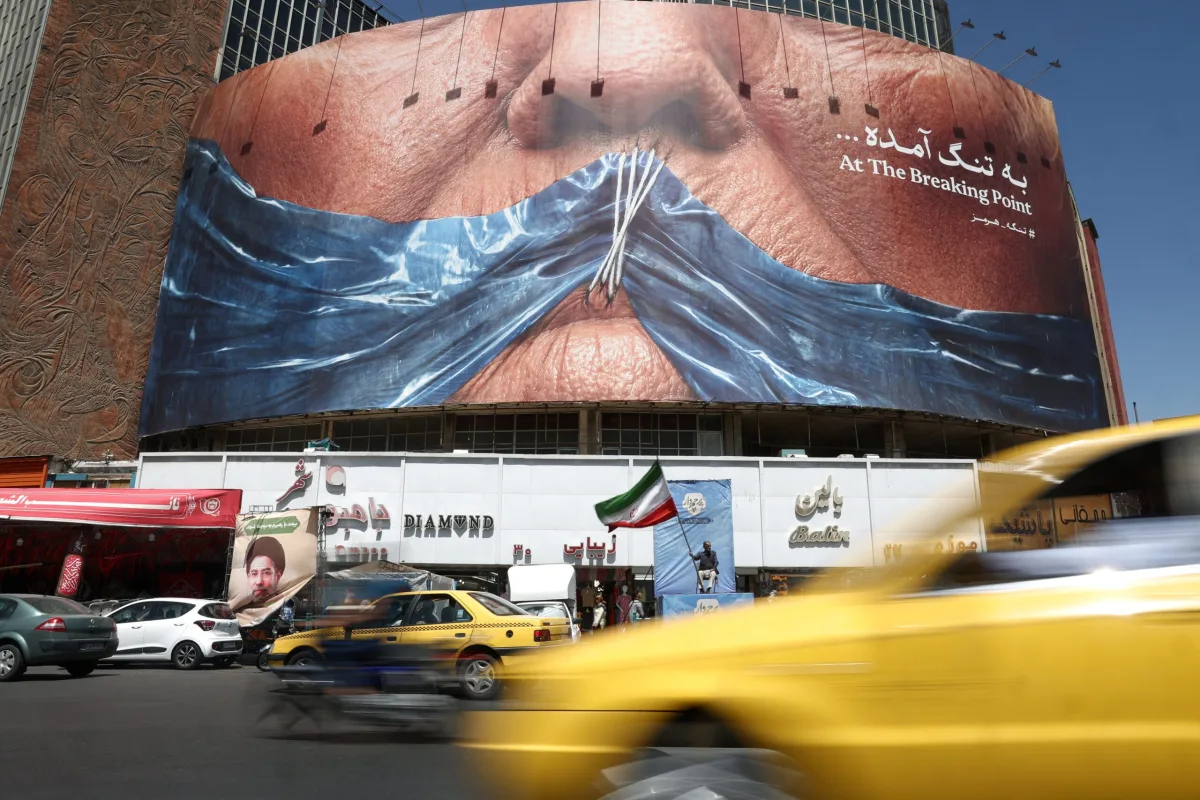
The United States has launched military strikes against Iran after President Donald Trump said Tehran shot down a US Apache helicopter in the Strait of Hormuz.
Trump told ABC News on Tuesday, June 9, that Iran downed the helicopter and that the US was responding. “I believe the response should be very strong, very powerful, and that’s what this one is,” he said.
Iran’s state media reported that Qeshm Island in the Strait of Hormuz was attacked and that a projectile hit was confirmed in Sirik. Explosions were heard in eastern areas of Hormozgan, according to Iran’s Fars news agency.
The Apache was brought down by a one-way Iranian attack drone, a US official said. The two pilots were rescued by a US Navy surface drone after two hours in the water and are in stable condition, according to the US military’s Central Command. Trump had earlier described them as uninjured.
Iran’s Foreign Minister Abbas Araqchi didn’t directly address the helicopter incident but said foreign forces in the region risked being involved in accidents or crossfire. “To reduce risk, best solution is for them to leave,” he said on social media.
Iran’s state media later cited a military source saying no offensive air operations had been conducted in the Strait of Hormuz in the past 24 hours. The source also said there would be a decisive response to any renewed “hostility by the enemy.”
Trump told The Wall Street Journal on Tuesday that the incident “wasn’t a big deal” and stressed “the pilot is fine.” But the episode adds strain to efforts to broker a peace deal to end the wider Middle East war and reopen the Strait of Hormuz, a vital route for oil and gas.
Trump has repeatedly said Iran and the US are close to an agreement, but there have been few signs of progress since a tenuous ceasefire took effect in early April.
In a parallel conflict, Israel struck the historic port city of Tyre in southern Lebanon on Tuesday, killing at least eight people. It was the deadliest strike on the city since fighting erupted in early March, when Hezbollah launched rockets at Israel. A video verified by Reuters showed debris strewn across a road at the site of the attack.
Israel’s refusal to end its campaign against Iran-backed Hezbollah has hindered Trump’s efforts to extend the ceasefire into a durable settlement. Iran and Israel exchanged airstrikes earlier this week, killing two people in Tehran.
Trump told Axios on Monday he warned Israeli Prime Minister Benjamin Netanyahu: “I said, ‘Bibi, you better be careful, or you’ll be on your own very soon.'”
Tehran has long said any peace deal with Washington depends in part on an end to fighting in Lebanon. In northern Israel on Tuesday, Israeli troops operating near the Lebanon border killed one person after returning fire, the military said.
Israel has never halted its Lebanon campaign, which has killed thousands, saying the conflict is separate from any US-Iran ceasefire. Hezbollah has also continued its attacks.
Meanwhile, Tehran continues to block most shipping through the Strait of Hormuz, which before the war carried a fifth of the world’s crude oil and liquefied natural gas. Washington has imposed its own blockade of Iranian ports.
US Energy Secretary Chris Wright said on Tuesday that ship traffic through Hormuz is rising “very meaningfully,” but added it would take many months to return to normal energy flows once the war ends.
Trump has said any peace deal must ensure Iran can’t develop a nuclear weapon. Iran’s demands include lifting international sanctions, releasing billions of dollars in frozen assets, and recognition of its control of the strait.