

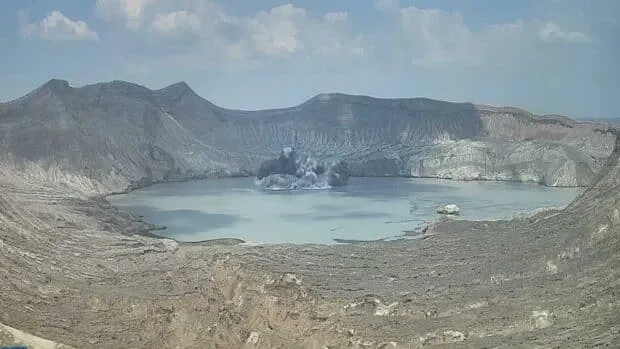
The sulfur dioxide (SO2) coming out of Taal Volcano has crashed.
On Friday morning, Phivolcs reported that only 188 metric tons (MT) of SO2 were released from the main crater over the past 24 hours. That's a massive drop from the 3,105 MT daily average recorded from June 4 to 11.
The volcanic plume reached up to 1,200 meters high and drifted east and southeast. Phivolcs called it a "moderate emission" event.
To give you an idea of how big that drop is: just a few days ago, on June 11, Taal was spewing thousands of tons of SO2 daily. Now it's down to a fraction of that.
What Phivolcs is watching
Even with the drop, the volcano remains under Alert Level 1. That means it's still in an abnormal state. Magmatic, hydrothermal, or gas-driven activity is going on beneath the surface.
Phivolcs warns that sudden steam-driven or phreatic explosions, volcanic earthquakes, minor ashfall, and lethal accumulations or expulsions of volcanic gas can still happen.
They also reminded everyone that the entire Taal Volcano Island is a Permanent Danger Zone (PDZ). Entering it is still prohibited. Flying any aircraft close to the volcano is also banned.
What happened before
From June 4 to 11, Taal was on a tear. The daily SO2 emission averaged 3,105 MT. On some days, it was even higher. That prompted Phivolcs to raise the alert and warn communities around the lake.
The high emissions led to vog — volcanic smog — which affected air quality in nearby towns. Residents reported eye irritation, throat discomfort, and breathing issues. Local governments handed out face masks.
What's next
Phivolcs will keep monitoring Taal's parameters 24/7. If SO2 emissions stay low and other signs calm down, they might lower the alert level further. But if things spike again, they could raise it.
For now, the message is: don't let your guard down. The volcano is still active, and the drop could be temporary.
Why this matters
Taal is one of the most active volcanoes in the Philippines. It sits right in the middle of a populated area in Batangas province, just a few hours from Manila. A major eruption could displace hundreds of thousands of people and cause billions of pesos in damage.
In January 2020, Taal erupted violently, sending ash plumes 15 kilometers high. It forced over 500,000 people to evacuate, destroyed crops and livestock, and grounded flights. The ashfall reached Metro Manila.
So even a quiet day at Taal is worth paying attention to. And a sharp drop in emissions? That's good news — but it's not the all-clear yet.