

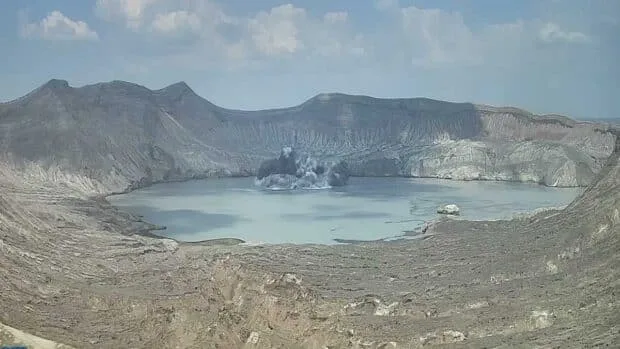
Taal Volcano in Batangas is playing a weird game of hide-and-seek with the people living in its shadow. For days, the sulfur dioxide fumes were thick and choking, but as of today, May 27, the air near the crater is finally getting a little bit of breathing room. The Philippine Institute of Volcanology and Seismology, or Phivolcs, confirmed that the gas levels have dropped to 869 metric tons over the last 24 hours.
Compare that to the 1,314 metric tons we saw being coughed up daily between May 21 and 26, and you can see why some folks might be tempted to let their guard down. Don't pack your bags to head back just yet. Just because the gas is thinning out doesn't mean the mountain has gone to sleep. Far from it, the volcano is still very much active and restless under the surface.
Phivolcs recorded 21 volcanic earthquakes and 10 tremors in the same 24-hour window. These movements are the volcano's way of reminding everyone that the magma is still pushing against the rock deep below. While the plume of ash and gas only reached about 600 meters before drifting southwest, that shaking ground is the real headline here. It shows that Taal is still working hard, even if it's currently doing it quietly.
For the people living in towns like Agoncillo, Laurel, or Talisay, this is a familiar, if exhausting, reality. Taal is one of the most active volcanoes in the Philippines, and it doesn't always follow the rules of a textbook eruption. It's known for 'phreatic' activity, where water hits hot magma, causing sudden steam-driven blasts. The agency keeps a constant watch on the 'main crater,' which is the central vent where all this drama usually starts.
- The sulfur dioxide output dropped from 1,314 metric tons to 869 metric tons in just one day.
- A total of 21 distinct volcanic earthquakes were detected by sensitive monitoring equipment.
- Scientists also logged 10 volcanic tremors, which are longer, continuous vibrations compared to single quakes.
- The volcanic plume reached a height of 600 meters above the crater floor.
- The wind direction remains a critical factor for nearby communities, with the current plume drifting toward the southwest.
If you've been to Batangas, you know the soil there is rich and the views are beautiful, which is why thousands of Filipinos refuse to move away permanently despite the risks. The danger isn't just the lava that people see in movies; it's the toxic gas and the unpredictable ashfall that can ruin a harvest or cause major respiratory problems for the elderly and young kids. Phivolcs keeps the alert level under constant review, shifting it as the data changes.
The agency's role here is basically being the designated 'watchman' of the country. They use a network of seismic sensors and satellites to catch these subtle changes before they turn into full-blown disasters. When they say the volcano is 'seismically active,' they're telling the public that the mountain is still having a 'bad day' even if it isn't screaming at us with fire and smoke right this second.
For the average person in the region, the 'no-go' zones remain exactly where they are. Local government units are expected to keep enforcing the safety protocols, especially for those living on the volcano island itself. If you're planning a weekend road trip to Tagaytay for some bulalo or coffee, just keep an eye on the official bulletins. You don't want to get caught in a sudden shift in wind direction if the volcano decides to wake up properly tomorrow.