

The single sharpest fact in one or two punchy sentences. Who did what, where, when, and why it matters. Not a summary of everything — the one thing that makes someone stop scrolling. A reader who only reads this paragraph must understand what happened.
President Ferdinand Marcos Jr.'s ambitious plan to build the Philippines' first nuclear power plant may have hit a snag. According to draft guidelines crafted by the Department of Energy (DOE), the pioneer nuclear power plant might not come online until 2038, six years later than the target date set by the president. The Philippines relies heavily on imported fuels, mainly coal and oil, which have been contributing to the country's climate change woes. The nuclear power plant, a key component of Marcos Jr.'s energy mix, is expected to provide a cleaner alternative. However, the delay may raise concerns about the country's ability to transition to cleaner energy sources.
The Department of Energy drafted guidelines suggest a 10-year staggered delivery program for the nuclear power plant. This program aims to start in 2038, with the country's first nuclear power plant expected to be operational by 2048. The government's push for nuclear energy has been met with caution, with some critics expressing concerns about safety and security. Despite these concerns, the government remains committed to pursuing nuclear energy as part of its transition to cleaner energy sources. The Philippines has previously considered building nuclear power plants, but the project was shelved due to concerns over safety and high costs.
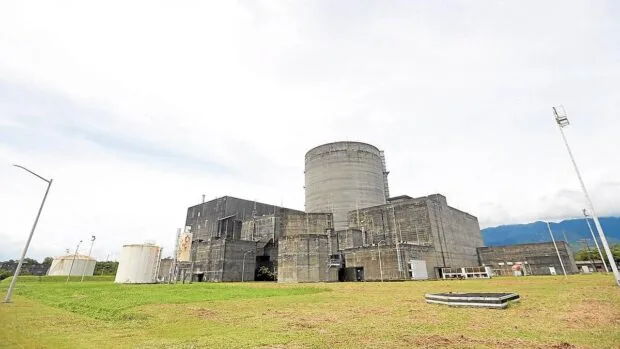
The Marcos family has a long history of advocating for nuclear energy in the Philippines. President Ferdinand Marcos Sr. led the construction of the mothballed Bataan Nuclear Power Plant in the 1970s. His son, President Ferdinand Marcos Jr., hopes to revive the country's nuclear ambitions and provide a cleaner alternative to imported fuels. The nuclear power plant is seen as a key component of the government's energy mix, which aims to reduce the country's reliance on imported fuels to around 25% by 2030.
The delay in the nuclear power plant's construction has raised questions about the government's ability to meet its energy targets. The Energy Department has been working on a new energy plan that aims to increase the country's renewable energy share to around 50% by 2030. However, experts worry that the delay in the nuclear power plant's construction may undermine the government's efforts to transition to cleaner energy sources.
Key Facts
- Draft guidelines suggest a 10-year staggered delivery program for the nuclear power plant.
- The program is expected to start in 2038, with the country's first nuclear power plant operational by 2048.
- The government aims to reduce the country's reliance on imported fuels to around 25% by 2030.
- Renewable energy is expected to increase to around 50% of the country's energy mix by 2030.
- The Energy Department is working on a new energy plan that aims to increase the country's renewable energy share.
President Ferdinand Marcos Jr.'s administration has been advocating for nuclear energy as part of the country's transition to cleaner energy sources. The government remains committed to pursuing nuclear energy despite concerns over safety and security.
And the delay in the nuclear power plant's construction has raised questions about the government's ability to meet its energy targets. The Energy Department will need to work closely with other government agencies to ensure that the country's energy mix is diversified and meets its targets. The Philippines' push for nuclear energy has been met with caution, but the government remains committed to pursuing this cleaner alternative.