

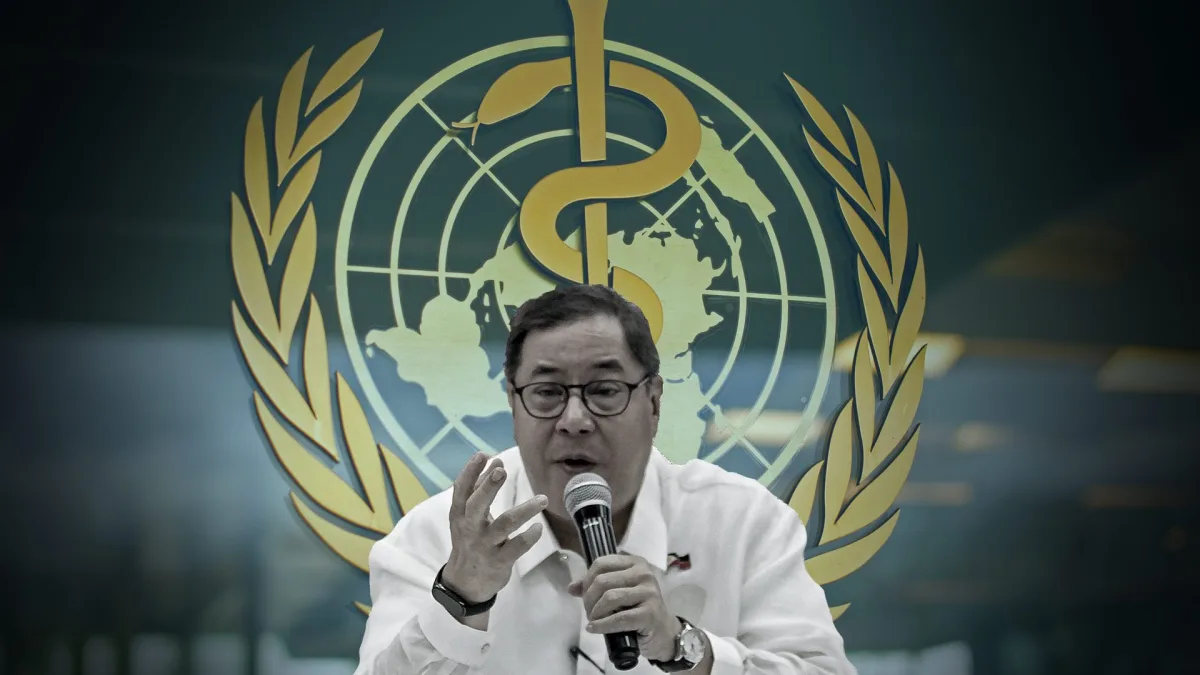
The resignation of Health Secretary Teodoro Herbosa marks the end of a consequential chapter for Philippine healthcare. While opinions on his tenure will inevitably differ, one achievement stands out beyond domestic politics: under his leadership, the Philippines assumed the presidency of the World Health Assembly in 2025, placing the country at the center of global health diplomacy.
As the Department of Health (DOH) begins a new chapter under Secretary Jose “Brix” Pujalte Jr., congratulations are in order. He assumes office at a pivotal moment for Philippine healthcare. The challenges before him remain substantial — from strengthening primary care and healthcare financing to improving health outcomes — but he also inherits an opportunity to preserve the Philippines’ growing international profile in global health.
Herbosa's election as president of the World Health Assembly presents a rare opportunity. The Philippines has never produced a WHO director-general, and few Filipinos have held a position that offers comparable international visibility, diplomatic relationships, and credibility within the global health community. Serving as president of the World Health Assembly does not guarantee election as WHO director-general; the director-general is elected by WHO member states through a highly competitive process, and any future candidacy would depend on qualifications, international support, and geopolitical circumstances.
The opportunity created by the country’s leadership of the World Health Assembly may not come again for many years. Allowing that momentum to fade without exploring its long-term potential would be a missed strategic opportunity. Secretary Herbosa’s resignation closes one chapter. It need not close the Philippines’ global health ambition.
The Philippines has shown significant progress in strengthening its healthcare system, investing US$ 10 million in rural health programs and increasing healthcare financing to support a more robust primary healthcare system. The DOH has also launched new programs to reduce hospital-acquired infections, improve maternal health outcomes, and enhance mental health services.
As the Philippines continues to build on its international profile in global health, policymakers should carefully consider whether preserving and building on the Philippines’ current standing in global health aligns with the country’s long-term national interests. Dr. Jaemin Park, an adjunct professor at the University of the Philippines College of Public Health, emphasizes the significance of this opportunity: “The Philippines has a unique chance to produce its first WHO director-general. Will the Philippines have another opportunity like this in the foreseeable future? No one can say with certainty.”
Key Facts
- Health Secretary Teodoro Herbosa resigned, ending a consequential chapter for Philippine healthcare.
- The Philippines assumed the presidency of the World Health Assembly in 2025 under Herbosa's leadership.
- The Philippines has never produced a WHO director-general.
- Secretary Jose “Brix” Pujalte Jr. assumes office as the new Health Secretary.
- The DOH has invested US$ 10 million in rural health programs.
- The DOH has increased healthcare financing to support a more robust primary healthcare system.
In his new role, Secretary Pujalte Jr. has a unique opportunity to build on the Philippines’ growing international profile in global health. He can focus on preserving the Philippines’ reputation for good governance, innovation, and commitment to quality healthcare. As the Philippines continues to grow as a global health leader, policymakers must prioritize strategic investments in national influence rather than short-term political victories. The future of the Philippines’ global health ambition remains bright, and the country is well-positioned to capitalize on this rare opportunity.