

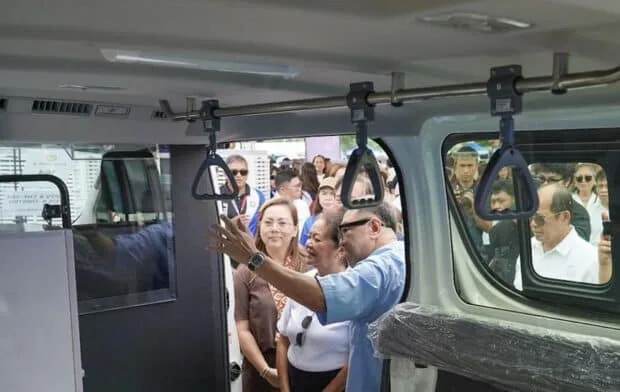
The first lady, Louise Araneta-Marcos, led the turnover on Tuesday of 44 patient transport vehicles (PTVs) from the Philippine Charity Sweepstakes Office to local government units in Mindanao at the Libertad Sports Complex in Butuan City. According to a PCSO statement, the turnover reinforced the administration's commitment to accessible healthcare, advancing President Ferdinand Marcos Jr.'s directive to bring essential services closer to Filipinos.
Louise Araneta-Marcos has been a vocal advocate for accessible healthcare in the Philippines. As first lady, she has supported various initiatives aimed at expanding healthcare services, particularly in underserved regions.
The PCSO's donation of 44 PTVs to local government units in Mindanao is a significant effort to strengthen patient mobility, emergency medical response, and access to hospitals. The vehicles are part of the PCSO's Medical Transport Vehicle Donation Program (MTVDP), which has already donated over 100 vehicles nationwide.
This donation is particularly notable in Mindanao, where geographical challenges and limited infrastructure often hinder access to healthcare services. The PTVs will help alleviate this issue and ensure that patients receive timely and quality medical attention.
The PCSO's Medical Transport Vehicle Donation Program was launched in 2020 as part of its mandate to support local governments in providing essential services to their constituents. The program aims to improve patient mobility and emergency medical response through the donation of PTVs.
To date, the PCSO has donated over 150 PTVs nationwide, with a total value of PHP 500 million (approximately USD 10 million). The donation of these vehicles has directly benefited thousands of patients and has contributed significantly to the improvement of healthcare services in the Philippines.
The PCSO's donation of 44 PTVs to local government units in Mindanao highlights the agency's commitment to accessible healthcare. As the country continues to face challenges in providing quality healthcare services, initiatives such as the PCSO's Medical Transport Vehicle Donation Program are crucial in bridging the gap between healthcare providers and patients.
The turnover of the PTVs was attended by various government officials, including local government leaders and representatives from the PCSO. The event marked a significant milestone in the agency's efforts to support healthcare services in the Philippines.
The PCSO's Medical Transport Vehicle Donation Program is a collaborative effort between the agency and local government units. The program aims to improve patient mobility and emergency medical response through the donation of PTVs.
Louise Araneta-Marcos has been a vocal advocate for accessible healthcare in the Philippines. She has supported various initiatives aimed at expanding healthcare services, particularly in underserved regions.
The PCSO's donation of 44 PTVs to local government units in Mindanao will significantly improve patient mobility and emergency medical response in the region. The vehicles will be used to transport patients to nearby hospitals and healthcare facilities.
The PCSO's Medical Transport Vehicle Donation Program has already donated over 100 vehicles nationwide, with a total value of PHP 500 million (approximately USD 10 million). The donation of these vehicles has directly benefited thousands of patients and has contributed significantly to the improvement of healthcare services in the Philippines.
The PCSO's donation of 44 PTVs to local government units in Mindanao is a significant effort to strengthen patient mobility, emergency medical response, and access to hospitals. The vehicles will be used to transport patients to nearby hospitals and healthcare facilities.
To date, the PCSO has donated over 150 PTVs nationwide, which have been used to transport patients to nearby hospitals and healthcare facilities. The donation of these vehicles has directly benefited thousands of patients and has contributed significantly to the improvement of healthcare services in the Philippines.