

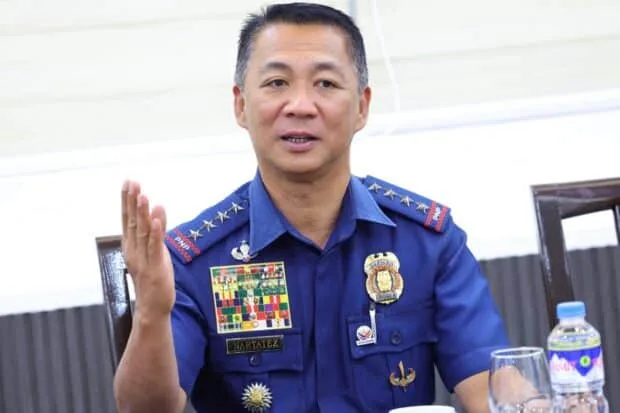
The Philippine National Police (PNP) says it has no special instructions to track individuals who may be the subject of alleged arrest warrants from the International Criminal Court (ICC).
Police Gen. Jose Melencio Nartatez Jr., the PNP chief, issued a statement Thursday saying the force hasn't received any official communication or directive regarding the supposed warrants.
"As of this time, the PNP hasn't received any official communication, documentation or directive from any government agency regarding the alleged ICC warrants," Nartatez said. "Since there's no official document relayed to the PNP yet… no special instructions have been issued to police units to monitor or track any individual."
The statement comes amid growing chatter that the ICC has already issued arrest warrants in connection with its investigation into the drug war under former President Rodrigo Duterte. The ICC is looking into thousands of killings that happened during Duterte's bloody anti-drug campaign from 2016 to 2022.
Duterte himself hasn't commented on the latest speculation. But his allies in Congress have been pushing resolutions and statements defending him against any foreign court action.
The Philippine government withdrew from the ICC in 2019 under Duterte's orders. But the ICC says it still has jurisdiction over crimes committed while the country was still a member — meaning the drug war period is fair game.
Human rights groups have been pushing for accountability for years. They've documented over 6,000 deaths in police operations, though activists say the real number could be as high as 30,000 if vigilante killings are included.
The PNP has repeatedly denied any involvement in extrajudicial killings. And now, Nartatez is making it clear: if there are ICC warrants, the police aren't the ones executing them — at least not yet.
"As of this time, the PNP hasn't received any official communication, documentation or directive from any government agency regarding the alleged ICC warrants."
So what happens next? The ICC doesn't have its own police force. It relies on member states to arrest and hand over suspects. But the Philippines is no longer a member, so cooperation is voluntary. The current administration under President Ferdinand Marcos Jr. has been noncommittal — saying it will study any request but also that it respects Philippine sovereignty.
For now, the PNP is staying out of it. But if the ICC makes a formal request through Interpol, the situation could change fast. That would put Marcos in a tough spot: cooperate with a court the country left, or defy international pressure.
Either way, the PNP wants everyone to know: they aren't hunting anyone right now.