

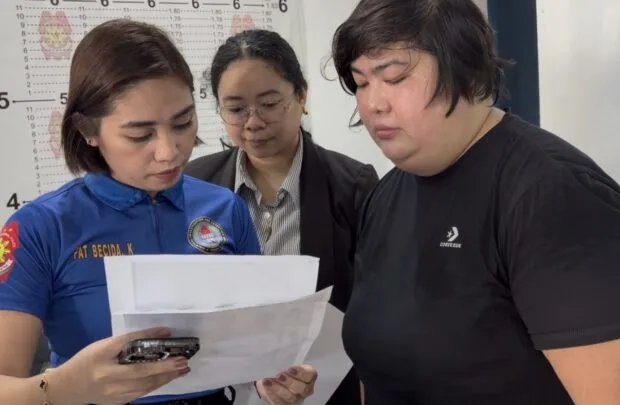
Marchel Espina, a prominent journalist in the Bacolod City, has been slapped with vexation charges after expressing his opinion on a project.
On Saturday, July 18, the Foreign Correspondents Association of the Philippines (FOCAP) expressed grave concern over the charges filed against Espina and four others. FOCAP warned against using legal action to intimidate journalists or suppress free speech. According to FOCAP, while it's the right of every citizen to seek legal redress, the law must never be weaponized to intimidate journalists or stifle free speech.
Opinion pieces that are grounded on facts have long been a pillar of journalism and democratic discourse, FOCAP said in a statement. The Presidential Task Force on Media Security also chimed in, saying that 'the government will not tolerate any attempt to silence the media through malicious and baseless charges.'
Espina was arrested in March 2026, according to reports. His arrest was part of a series of recent incidents where journalists were arrested and charged for their opinions. In January 2026, a group of journalists covering a protest in Metro Manila were arrested and charged with inciting to sedition. In February 2026, a news anchor in Cebu was arrested and charged with cyberlibel.
FOCAP is calling on the Philippine government to drop the charges against Espina and other journalists and to respect the freedom of the press.
'The law must never be used to silence journalists or stifle free speech,' said FOCAP in a statement.
The Philippine government has a history of silencing journalists and critics through various means, including arrests, intimidation, and harassment. In 2022, the Philippine Congress passed a law that allows the government to regulate social media platforms, which critics say is an attempt to stifle online freedom.
According to FOCAP, the charges against Espina and other journalists are a clear attempt to undermine the democratic process and suppress dissenting voices. The group is calling on the Philippine government to respect the freedom of the press and to uphold the principles of democracy.
Key Facts
- Marchel Espina, a journalist in Bacolod City, has been slapped with vexation charges.
- Espina was arrested in March 2026.
- The charges against Espina and other journalists are a clear attempt to stifle free speech.
- The Philippine government has a history of silencing journalists and critics through various means.
- FOCAP is calling on the Philippine government to drop the charges against Espina and other journalists.
The story has sparked outrage among media groups and human rights advocates, who say it's a clear attack on press freedom. The Philippine government's actions have been criticized by international organizations, including the United Nations and the European Union.
The case of Marchel Espina and other journalists has raised concerns about the state of press freedom in the Philippines. The Philippine government's actions have been criticized by international organizations, including the United Nations and the European Union.
The Philippine government has a history of silencing journalists and critics through various means, including arrests, intimidation, and harassment. In 2022, the Philippine Congress passed a law that allows the government to regulate social media platforms, which critics say is an attempt to stifle online freedom.
Marchel Espina's arrest is part of a series of recent incidents where journalists were arrested and charged for their opinions. In January 2026, a group of journalists covering a protest in Metro Manila were arrested and charged with inciting to sedition. In February 2026, a news anchor in Cebu was arrested and charged with cyberlibel.
FOCAP is calling on the Philippine government to drop the charges against Espina and other journalists and to respect the freedom of the press.
The Philippine government's actions have been criticized by international organizations, including the United Nations and the European Union.
In a statement, FOCAP said that 'the law must never be used to silence journalists or stifle free speech.' The group is calling on the Philippine government to respect the freedom of the press and to uphold the principles of democracy.
Marchel Espina's arrest has sparked outrage among media groups and human rights advocates, who say it's a clear attack on press freedom. The Philippine government's actions have been criticized by international organizations, including the United Nations and the European Union.
The case of Marchel Espina and other journalists has raised concerns about the state of press freedom in the Philippines. The Philippine government's actions have been criticized by international organizations, including the United Nations and the European Union.