

The House of Representatives and the Senate are locked in a stalemate over a bill that would make the government's Assistance to Individuals in Crisis Situations (AICS) program a permanent law. The Senate version includes a provision that explicitly prohibits politicians from distributing cash aid or displaying their names, images, and likenesses in connection with the program — an "anti-epal" clause. The House version doesn't include it.
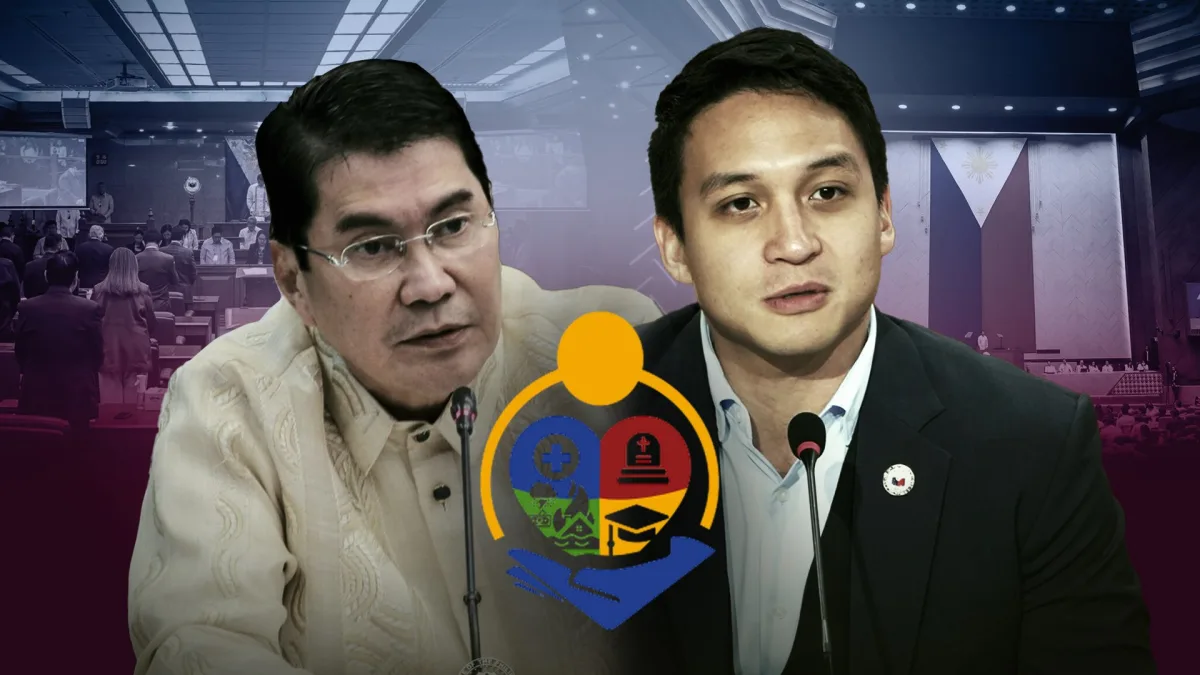
Senator Erwin Tulfo, the bill's sponsor in the Senate, accused the House of holding the bill hostage because of this provision. "There are some of them who don't want to sign it because they want to study it. I don't understand, what is there to study? Are they afraid that finally, after so many years that AICS is being used for political gain, this measure will put an end to that practice?" Tulfo said on the Senate floor on June 17.
House social services committee chairperson Cheeno Almario countered that he is "100% in support" of an anti-epal provision but argued it must be discussed in the bicameral conference committee. "In (my) committee, they said it's best to discuss these provisions. The first was the penal process. How do you punish those who use or politicize AICS? Once we put an ink on that, there's no turning back," Almario said. He also noted that the House version omitted the clause because it's already enshrined in the General Appropriations Act. "It's redundant," he added.
The AICS program was formalized by the Department of Social Welfare and Development in 2014 through a memorandum circular. It became more visible during the COVID-19 pandemic, when the health emergency drove more people to seek help from the DSWD. Under the Marcos administration, the DSWD budget for the program's funding source — the "Protective Program for Individuals and Families in Especially Difficult Circumstances" — rose from P40.08 billion in 2022 to P63.9 billion in 2026.
Critics have long flagged that politicians use AICS to entrench themselves in power, especially during elections. The program provides financial aid for medical, funeral, educational, transportation, and food expenses. It also offers material assistance like food packs and hygiene kits, psychosocial support, and referrals to other agencies.
The Senate version includes a more detailed list of vulnerable sectors, such as indigenous peoples, rebel returnees, and children living with HIV. It also emphasizes the role of the Department of Information and Communications Technology in developing an integrated delivery system — something the House bill doesn't mention.
President Ferdinand Marcos Jr. called for a special session of Congress on June 17, listing the AICS bill as one of eight measures he wanted urgently passed. But the day ended without a ratified bicameral report. With the President's State of the Nation Address set for end-July, time is running out to get the bill to his desk.
Meanwhile, Almario declined to directly address Tulfo's allegation that House lawmakers opposed the anti-epal clause to preserve the use of AICS for electioneering. "I'd rather focus on the bill. I'd rather focus on how it can help rather than just pointing and naming people," he said.