

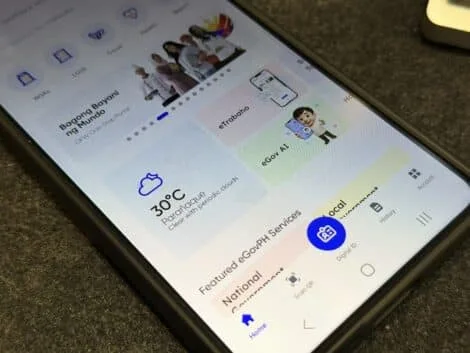
The Philippine government has spent years talking about digital transformation, but for most Filipinos, the reality is still long lines, multiple logins, and mountains of photocopies. Hidden in plain sight, however, is a platform that has quietly become one of the country's most ambitious digital government projects: the eGov app.
Ask around, and many Filipinos either haven't heard of it or don't want to download it. Some assume it's just another government application that offers little value. Others worry about privacy and security.
But here's the thing — the app already exists. It's been downloaded over 5 million times since its launch in 2023, according to the Department of Information and Communications Technology (DICT). That sounds like a lot, but with over 115 million Filipinos and a smartphone penetration rate above 70%, 5 million is barely a dent.
The eGov app was developed by the DICT and the Bases Conversion and Development Authority (BCDA), with technical support from the private sector. It aims to be a one-stop shop for government services — from applying for a national ID and getting a police clearance to paying taxes and renewing a driver's license. The idea is simple: instead of visiting multiple offices, you do everything from your phone.
Yet the app has struggled with adoption. Many people don't know it exists, and those who do often find it clunky or incomplete. A quick scan of app store reviews shows complaints about bugs, slow loading times, and services that don't work as promised.
Privacy is another major concern. The app collects sensitive personal data — full name, address, biometrics, and more. In a country where data breaches have hit major companies like Globe Telecom and Philippine Health Insurance Corporation (PhilHealth), many Filipinos are understandably wary of handing over their information to yet another government-linked platform.
Still, the app has its successes. Over 1 million digital national IDs have been issued through it, and thousands of police clearance applications have been processed. The DICT says it's working on fixing the bugs and adding more services, including business permits and birth certificates.
But the bigger question remains: will Filipinos actually use it? The app's existence doesn't matter if nobody downloads it. The government needs to do more than just build the platform — it needs to earn people's trust and make the experience seamless.
For now, the eGov app is a halfway house. The vision is there, the infrastructure is partially built, but the journey from promise to reality is still long. And while the government pats itself on the back for launching the app, millions of Filipinos are still standing in line, waiting for the digital revolution to actually arrive.