

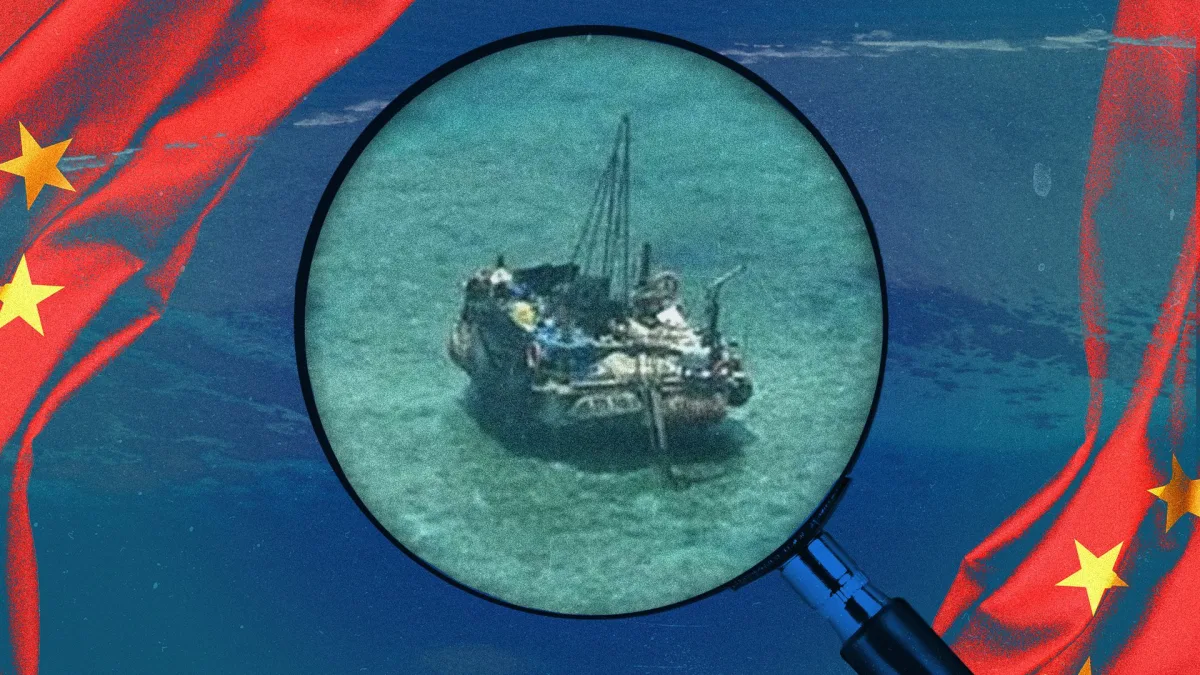
China placed an unauthorized floating structure inside the lagoon of Bajo de Masinloc, also known as Scarborough Shoal — and only removed it after the Philippine government protested.
The National Task Force for the West Philippine Sea (NTF-WPS) confirmed the installation this week. The platform measured roughly 7×7 meters, came equipped with specialized antennas, and was potentially anchored with metal stilts. It appeared at the same time Chinese research survey vessels were spotted lurking inside the shoal.
The Philippine government immediately lodged strong diplomatic protests demanding its removal. On Wednesday, June 16, the Chinese embassy in Manila announced the platform had been withdrawn, calling it a "temporary scientific research facility" of the Chinese Academy of Sciences that had completed its mission.
But analysts say this isn't a simple case of science overstepping. They see it as the opening chapter of a familiar Chinese strategy in the South China Sea: creeping presence.
Beijing rarely takes strategic maritime features through open military invasion. Instead, it uses incremental steps — salami-slicing tactics disguised as research, safety, or shelter. The same script played out before.
In 1995, China erected small wooden structures on Panganiban Reef, known locally as Mischief Reef. When confronted, Beijing said they were temporary shelters for fishermen. Manila's response at the time lacked the sustained pushback needed to stop the intrusion. Today, Panganiban Reef is a heavily fortified Chinese forward-operating base deep inside the Philippine Exclusive Economic Zone (EEZ).
The same "scientific survey" pretext was used to occupy Kagitingan Reef (Fiery Cross Reef) and Zamora Reef (Subi Reef). Today, those three features form a strategic triangle of Chinese militarization. Each hosts a 3,000-meter runway, advanced radar systems, hangars, deep-water naval piers, and surface-to-air missile systems. They give China the ability to sustain illegal, coercive, aggressive, and deceptive operations right on the Philippines' doorstep.
What worries security experts is that the structure at Bajo de Masinloc matches the opening chapters of that same playbook. It could be the preparatory groundwork — hydrographic and architectural testing — before permanent island reclamation.
A Chinese base at Scarborough Shoal would have far more serious implications than Mischief Reef. The shoal sits only 124 nautical miles from the coast of Zambales, or about 150 nautical miles from Metro Manila and Clark Air Base. A fighter jet based there could reach Basa Air Base or Clark Air Base in 20 minutes. It would effectively give China a chokehold over the Luzon Strait and the maritime approaches to Manila and Subic, while increasing surveillance of Philippine military bases in Luzon.
China's claims over Bajo de Masinloc rest on the infamous "9-dash line" sketched unilaterally by the Republic of China in 1947, swallowing nearly the entire South China Sea without historical or legal justification. The Philippines, by contrast, holds title validated by centuries of international law and continuous use.
The Philippines hasn't forgotten the lesson of 1995. This time, it acted fast — and China blinked. But with Beijing's track record, no one's betting this is the last we'll hear of structures inside Scarborough Shoal.