

The drowning of two Ateneo Blue Eagles student-athletes during a team-building activity in Dipaculao, Aurora has sparked questions about a hidden hazard along coastlines: rip currents.
Rene Baterbonia and Divine Adili were swept away near the shoreline on June 17. Ateneo president Father Roberto Yap SJ said in a statement that the team was carried away by rip currents.
So what exactly is a rip current? It's a narrow, fast-moving channel of water that flows away from the shore into deeper waters. When waves pile up on the beach, they seek balance by finding the path of least resistance back out to sea. That creates a funnel of water moving backward — hence the name "rip."
These currents typically move at one to two feet per second, but they can reach up to eight feet per second — faster than an Olympic swimmer, according to the US National Oceanic and Atmospheric Administration (NOAA). That speed is why even strong swimmers can get dragged out.
Many people confuse rip currents with rip tides, but they're different. Rip tides are caused by local tides — the change from high to low tide — and usually appear in narrow channels like river mouths. NOAA explains it simply: tides go up and down, while currents move left and right.
Rip currents are caused by wind and weather. Water pushed toward shore by waves retreats, and the path with least resistance gains speed. They become wider and faster during storms, when more energy pushes water onto the beach.
The Philippines is especially vulnerable. PAGASA says the country gets an average of 20 tropical cyclones per year — more than any other region in the world. Eastern shores facing the Pacific Ocean are most prone to rip currents.
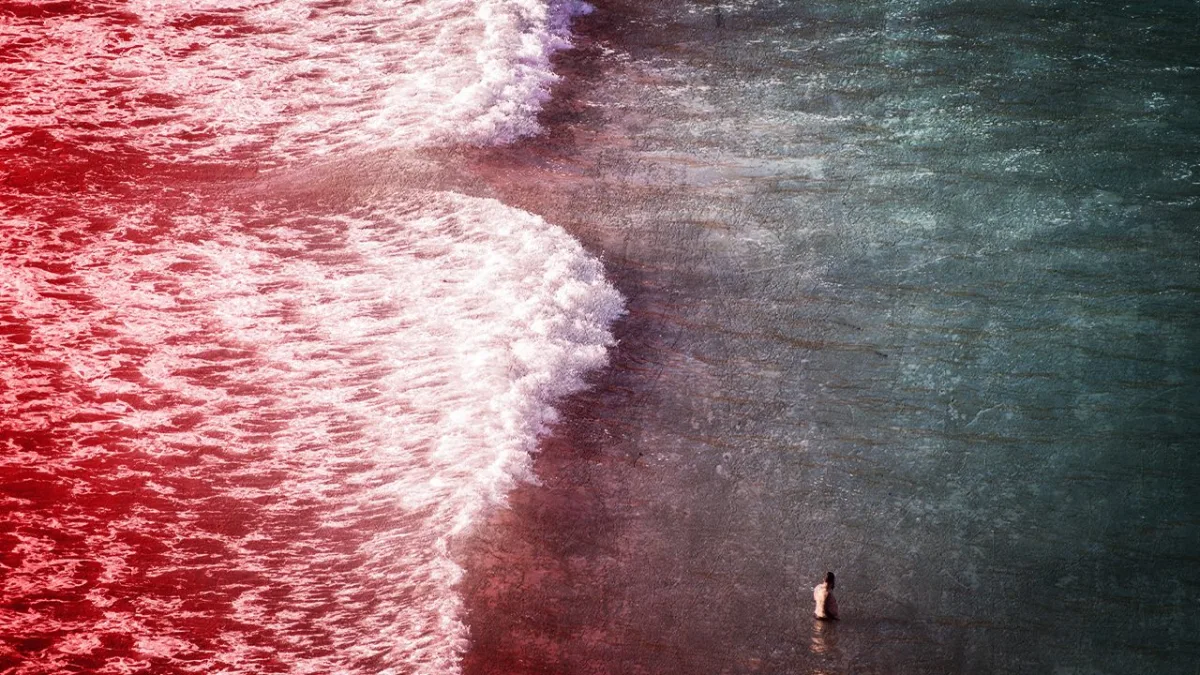
How do you spot a rip current? From a high vantage point, look for a narrow gap of darker, calmer water between breaking waves. The water may look muddier or carry seaweeds and debris moving steadily out to sea. Eroded shorelines with scalloped embayments are also signs.
If you get caught in a rip current, the US Lifesaving Association says: don't panic. Don't swim against the current. Instead, swim parallel to the shore to escape the narrow channel. If you're exhausted, tread water — the current loses momentum farther out. Use any floating device like a board or salbabida. If you can't reach shore, wave for help and call for assistance.
For rip tides, avoid narrow channels of water, especially during the change from high to low tide.
Before entering the water, NOAA advises: learn basic swimming skills, swim near a lifeguard, and never swim alone.
Key Facts
- Rip current speeds: 1–2 ft/s typical, up to 8 ft/s max
- Olympic swimmer speed: about 5.6 ft/s
- Philippines averages 20 tropical cyclones per year
- Eastern shores face Pacific Ocean, higher rip current risk
- Rip currents vs rip tides: currents caused by wind/waves; tides caused by tidal cycles