

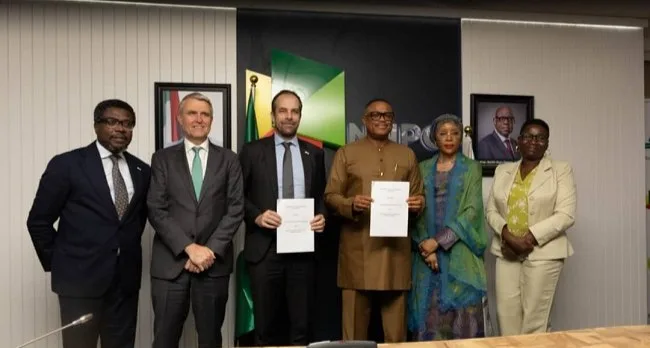
TotalEnergies EP Nigeria Limited and NNPC Limited have renewed their partnership on a drone-based technology that sniffs out methane leaks. The deal, first signed in December 2023, has been extended for another 24 months.
The technology in question is AUSEA — short for Airborne Ultralight Spectrometer for Environmental Applications. It was developed by TotalEnergies with France's National Centre for Scientific Research and the University of Reims. The drone flies over oil and gas facilities and measures methane and CO₂ emissions with high precision. That helps operators find leaks and fix them.
TotalEnergies says it was the first exploration and production operator in Nigeria to stop routine gas flaring across all its operated assets, which it achieved at the end of 2023. The company has set a target to get to near-zero methane emissions by 2030.
AUSEA campaigns now happen every year across all TotalEnergies-operated sites. In 2025, the company installed more than 2,500 sensors on its facilities to detect methane leaks in real time, so workers can respond quickly.
Matthieu Bouyer, TotalEnergies' Country Chair and Managing Director in Nigeria, said extending the partnership allows the company to support NNPC in cutting methane emissions using proven technology. “It’s an important step for Nigeria as it helps valorise Nigerian resources while lowering emissions,” he said.
Methane is a potent greenhouse gas — about 80 times more powerful than CO₂ over a 20-year period. The oil and gas industry is a major source of methane emissions, mainly through flaring and leaks. Technologies like AUSEA are becoming critical tools for companies trying to meet global climate pledges.
NNPC has been under pressure to reduce its own emissions. The national oil company hasn't yet matched TotalEnergies' feat of ending routine flaring across all its operations. This renewed partnership gives NNPC access to the same monitoring tools TotalEnergies uses on its own sites.
The deal also aligns with Nigeria's broader commitment under the Global Methane Pledge, which aims to cut global methane emissions by 30% by 2030. Nigeria signed the pledge in 2021.
For everyday Nigerians, the impact is indirect but real. Methane leaks contribute to climate change, which affects farming, floods, and heatwaves in the country. Better monitoring could also reduce gas waste — gas that could otherwise be sold or used for power generation.
TotalEnergies has been operating in Nigeria for decades, with interests in oil and gas production, liquefied natural gas, and solar power. The company is one of the biggest international oil companies in the country, alongside Shell, ExxonMobil, and Chevron.