

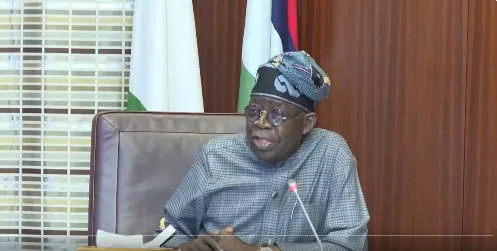
Chris Emejuru, a US-based entrepreneur and chieftain of the Action Democratic Party (ADP), has criticised President Bola Tinubu's economic policies, alleging they have worsened the living conditions of many Nigerians.
Emejuru made the claims in a statement titled, “Nigeria at a Crossroads,” where he acknowledged that the administration’s reforms were introduced with positive intentions but argued that their implementation has imposed significant hardship on citizens.
He said the removal of fuel subsidy was meant to free up resources for critical sectors such as healthcare and education, while the liberalisation of the foreign exchange market was intended to encourage private sector growth and job creation.
Emejuru argued that the complete removal of fuel subsidy was not the best approach, saying a phased implementation with social safety nets would have reduced the burden on Nigerians.
“The increase in petrol prices has affected food prices, rent, transportation and other critical sectors of the economy, leaving millions more in poverty,” he said.
He suggested that the government should have introduced measures such as affordable transportation alternatives, easier access to grants for farmers and businesses in the food supply chain, as well as incentives for the manufacturing and construction sectors to promote affordable housing.
“Planning and organisation are vital. Proper implementation of these measures would have eased the burden on many Nigerians,” he added.
On the liberalisation of the foreign exchange market, Emejuru acknowledged that it had reduced market distortions and improved investor confidence.
However, he argued that the average Nigerian had yet to experience the benefits of the policy.
He noted that the exchange rate, which he said was around N1,400 to one US dollar, had made it increasingly difficult for many Nigerians to travel abroad, pay foreign school fees or import goods for their businesses.
Emejuru advocated a managed float exchange rate system, under which the government would retain some control over the value of the naira while allowing market forces to play a role.
He also commented on the Federal Government’s tax reforms, saying they do not necessarily disadvantage small and medium-sized enterprises (SMEs), but stressed that effective implementation and greater policy harmonisation are needed for businesses and citizens to experience tangible benefits.
Emejuru further called for increased investment in the digital economy, arguing that it would create more jobs and opportunities for Nigerians.
“The increase in petrol prices has affected food prices, rent, transportation and other critical sectors of the economy, leaving millions more in poverty.”