

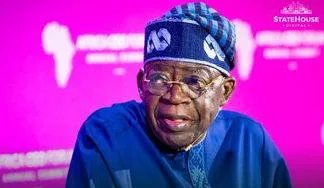
You may be wondering why Nigeria's military pay hasn't increased in decades, despite a growing terrorist threat and a long-running insurgency. Well, wonder no more. President Bola Tinubu has finally approved a long-overdue pay rise for Nigeria's armed forces, alongside a massive expansion of the country's army divisions.
The single sharpest fact in one or two punchy sentences. Who did what, where, when, and why it matters. Not a summary of everything — the one thing that makes someone stop scrolling. A reader who only reads this paragraph must understand what happened.
Babajimi Benson, the Chairman of the House of Representatives Committee on Defence, has hailed the President's decision as a 'major boost to the country's security architecture'. In a statement, Benson said the pay rise would 'boost morale, enhance operational effectiveness, improve retention and attract qualified recruits into the Armed Forces'. According to him, the expanded Nigerian Army would 'enhance command and control, decentralise operational responsibilities, improve rapid troop deployment, strengthen border security and boost intelligence-led operations against terrorism, insurgency, banditry, kidnapping and other criminal activities'.
Babajimi Benson, the Chairman of the House of Representatives Committee on Defence, has hailed the President's decision as a 'major boost to the country's security architecture'. Benson was appointed to his role in 2023, making him one of the youngest committee chairmen in the House's history. Benson, a member of the ruling All Progressives Congress, is a former Commissioner for Energy in Lagos State.
Babajimi Benson, the Chairman of the House of Representatives Committee on Defence, has hailed the President's decision as a 'major boost to the country's security architecture'. And yet, the story of Nigeria's military pay rise is not just about numbers – it's about the human cost of decades of underfunding. Nigeria's military has been grappling with low morale, a shortage of equipment, and a massive brain drain of experienced soldiers.
Babajimi Benson, the Chairman of the House of Representatives Committee on Defence, has hailed the President's decision as a 'major boost to the country's security architecture'. So, why has it taken so long for Tinubu to approve the pay rise? According to experts, the delay was due to a combination of factors, including the government's cash crunch and a desire to avoid a pay increase that would have been seen as inflationary.
Babajimi Benson, the Chairman of the House of Representatives Committee on Defence, has hailed the President's decision as a 'major boost to the country's security architecture'. The President, who was elected in 2023, had pledged to make security a top priority during his campaign. And with this decision, Tinubu has made good on that promise – but critics say it's long overdue.
Babajimi Benson, the Chairman of the House of Representatives Committee on Defence, has hailed the President's decision as a 'major boost to the country's security architecture'.
Key Facts
- The pay rise will see the salaries of junior personnel increase by an average of 50%.
- The Nigerian Army will be expanded from 8 to 12 divisions, with 4 new divisions created in Makurdi, Ilorin, Jalingo and Benin City.
- 28,000 new personnel will be recruited into the army over the next two years.
Babajimi Benson, the Chairman of the House of Representatives Committee on Defence, has hailed the President's decision as a 'major boost to the country's security architecture'. This expansion will not only boost the country's security capabilities but also create jobs for young people in rural areas. The new divisions will be created in the North Central, North West and South South regions, where the security threat is greatest.
Babajimi Benson, the Chairman of the House of Representatives Committee on Defence, has hailed the President's decision as a 'major boost to the country's security architecture'. And while the pay rise and expansion of the army are welcome developments, some experts say they don't address the root causes of Nigeria's security problems.
Babajimi Benson, the Chairman of the House of Representatives Committee on Defence, has hailed the President's decision as a 'major boost to the country's security architecture'. According to Abdullahi Aboki, a security expert at the Centre for Democracy and Development, the real challenge for Nigeria's military is the lack of resources, including funding and equipment.
Babajimi Benson, the Chairman of the House of Representatives Committee on Defence, has hailed the President's decision as a 'major boost to the country's security architecture'.
Quotes
'We commend the President for this historic and visionary decision. This is a major boost to the country's security architecture and a testament to his commitment to strengthening national security and improving the welfare of military personnel,' Babajimi Benson said. He added that the pay rise and expansion of the army will 'further strengthen Nigeria's defence capabilities while promoting professionalism, discipline and institutional efficiency within the Armed Forces'.
Babajimi Benson, the Chairman of the House of Representatives Committee on Defence, has hailed the President's decision as a 'major boost to the country's security architecture'.
'The President has once again demonstrated remarkable leadership and an unwavering commitment to the security and stability of our nation,' Babajimi Benson said.
'These bold reforms represent strategic investments in the men and women who daily make enormous sacrifices to safeguard our country's peace, unity and democratic values,' Babajimi Benson added.
Babajimi Benson, the Chairman of the House of Representatives Committee on Defence, has hailed the President's decision as a 'major boost to the country's security architecture'.
Image Query
New military divisions
Category
nigeria
Tags
nigeria, military, army, pay rise, security
Meta Description
President Bola Tinubu has approved a historic pay rise for Nigeria's armed forces and expanded the country's army divisions to boost national security.