

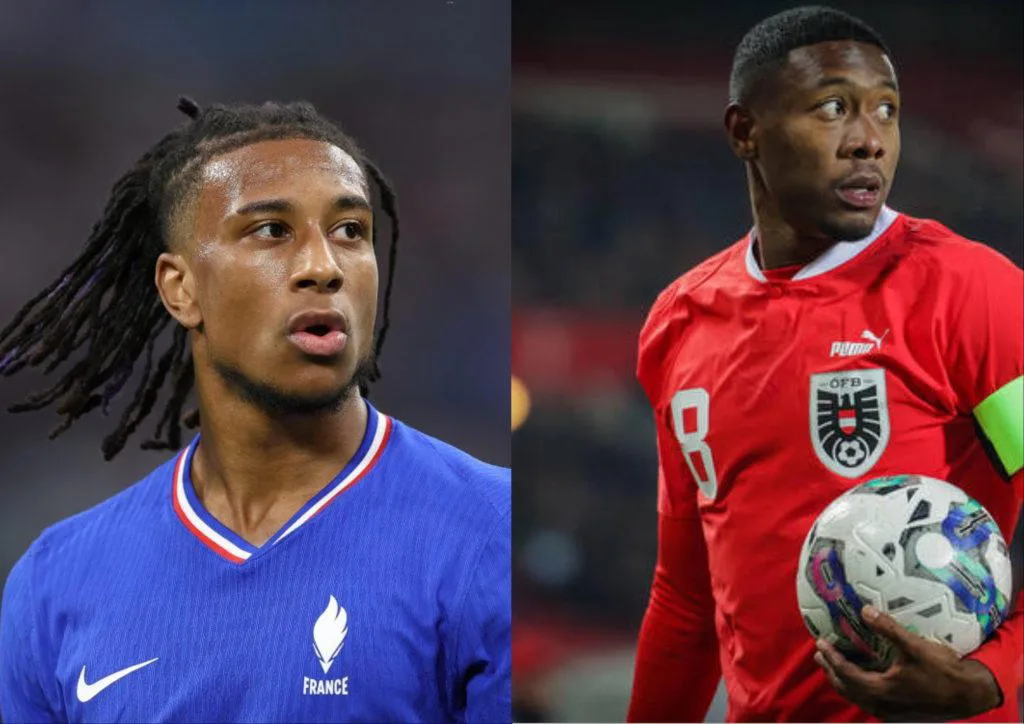
The Super Eagles failed to qualify for World Cup 2026, but players with Nigerian roots will still shine on the biggest stage. Among them is a group of talented footballers born to Nigerian parents or carrying strong Nigerian heritage, who could have formed a formidable Nigerian XI.
Meet Owen Goodman, the goalkeeper born in Canada to a Nigerian mother and an English father. Goodman was invited to Nigeria's U-20 setup before committing to Canada, a recurring theme in Nigerian football — the battle for dual-nationality talent. And while he is not expected to start for Canada at the World Cup, his case highlights the ongoing challenge for Nigeria to retain its homegrown talent. This challenge is particularly concerning given that goalkeeping remains one of the positions where the Super Eagles have searched for long-term stability in recent years.
Goodman's inclusion is especially notable, as the absence of a stable goalkeeper has been one of the Super Eagles' major woes in recent years. Right beside him in this hypothetical Nigerian side is Manuel Akanji, the Switzerland international born to a Nigerian father and Swiss mother. Akanji has represented his adopted nation at multiple World Cups and European Championships, and his leadership, composure, and elite-level experience would make him an automatic starter in this team.
Alongside Akanji is David Alaba, widely regarded as one of the finest defenders of his generation, and whose father is Nigerian. Alaba has spent more than a decade representing Austria at the highest level and will lead Austria at their first World Cup appearance since 1998. Then there's Noah Okafor, born to a Nigerian father and Swiss mother, who has become a regular fixture in the Swiss national team and enters the tournament with valuable major-competition experience.
And yet, despite their Nigerian heritage, none of these players has chosen to represent the Super Eagles. Instead, they will be among the many African footballers who make up the squads of other nations. This raises questions about Nigeria's ability to retain its homegrown talent and whether it has the necessary infrastructure to compete with European nations for top players.
But let's imagine what could have been if they had all chosen Nigeria instead. It's an intriguing thought, as it would have given the Super Eagles an incredibly talented squad to work with, one that could have potentially challenged for a spot in the quarterfinals.
Hypothetical Nigerian XI
- Goalkeeper: Owen Goodman (Canada)
- Right-back: Manuel Akanji (Switzerland)
- Centre-back: David Alaba (Austria)
- Centre-back: Noah Okafor (Switzerland)
- Left-back: Antonio Nusa (Norway)
- Midfield: Felix Nmecha (Germany)
- Midfield: Carney Chukwuemeka (Austria)
- Forward: Bukayo Saka (England)
- Forward: Michael Olise (France)
- Forward: Folarin Balogun (United States)
In reality, the Super Eagles' failure to qualify marks a missed opportunity for Nigeria to showcase its football talent on the biggest stage. However, for fans of Nigerian football, the thought of this hypothetical XI still offers a tantalizing glimpse into what could have been. They will continue to dream of what could have been, but the harsh reality is that the Super Eagles will not be taking part in the tournament.