

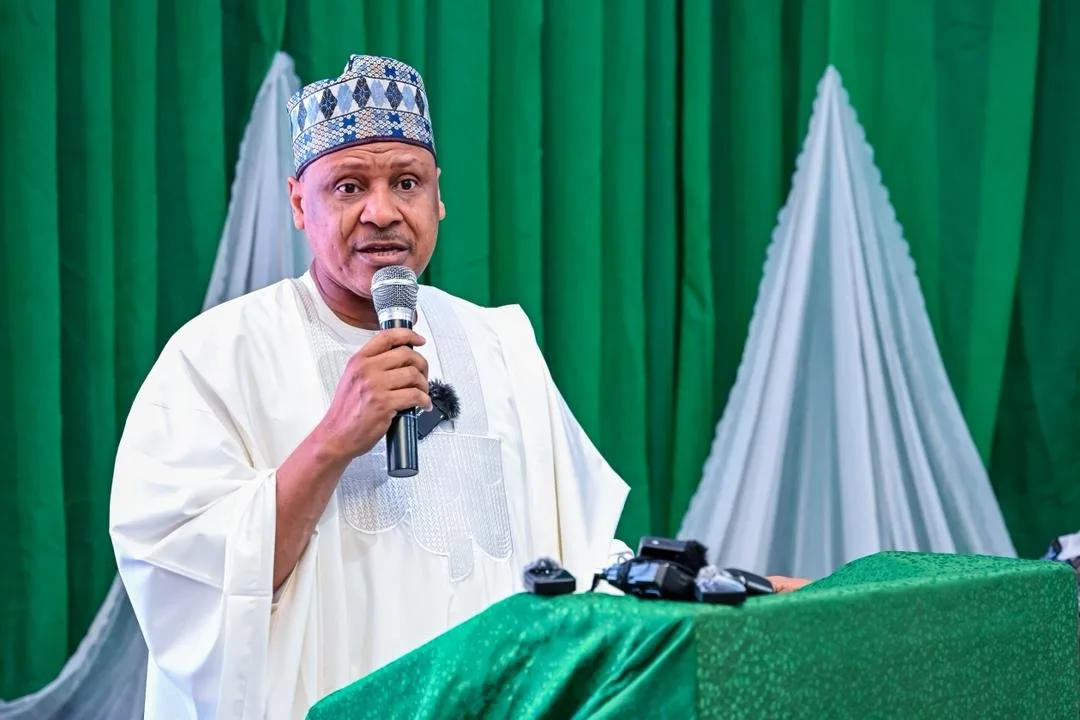
Nigerian journalists should stop putting terrorists and criminals on their front pages. That's the message from Information Minister Mohammed Idris, who spoke at a security summit organised by the Nigerian Union of Journalists (NUJ) and the State Security Services (SSS) on Thursday.
"Please take these terrorists and criminals off your front pages," Idris said. "This is what they crave for free of charge."
The minister said excessive coverage of criminal activities serves the interests of those who want to spread fear and instability. He argued that journalists must balance press freedom with national responsibility.
"It saddens my mind. I feel very unhappy when I see our front pages, when I see our headlines, reporting the activities of these criminals and underplaying the ones by the security agencies," he said.
Idris was clear that he isn't calling for censorship. "Nobody is calling for censorship. Nobody is asking the media not to do its job, but we must know that we must have a country to keep," he said.
The two-day summit in Abuja also drew officials from the International Press Institute (IPI) Nigeria, military and police officers, and representatives of Defence Minister Christopher Musa and Kano State Governor Abba Yusuf. The SSS Director General is expected to speak on Friday.
"The best journalists are those who know what not to report in the interest of nation-building."
— Mohammed Idris, Minister of Information and National Orientation
Idris said Nigeria faces increasingly complex security threats — terrorism, violent extremism, cybercrime, misinformation, and organised crime. He said this makes collaboration between the media and security agencies more important than ever.
He also praised the improving relationship between journalists and the SSS. He noted that the NUJ reported no cases of journalists being arrested or detained by the agency in the last 18 months. He challenged other security agencies to match that record.
Nigeria's security challenges are deep and spreading. The Boko Haram insurgency, now in its 17th year, has moved beyond its original base in Borno, Adamawa, and Yobe states. It has merged with banditry in the North-west and North-central, with attacks reported in Niger, Kwara, Kebbi, and Sokoto states. The violence is now creeping southward into Ondo and Oyo states.
But the government also claims progress. In his Democracy Day speech, President Bola Tinubu said over 13,000 terrorists have been killed and 124,000 others have surrendered. National Security Adviser Nuhu Ribadu first released those figures at a ruling party summit marking Tinubu's second year in office.
Idris said both the media and security agencies have critical roles in nation-building — security agencies protect lives and sovereignty, while the media serves as a watchdog and bridge between government and citizens. He reaffirmed the government's commitment to stronger engagement through dialogue, strategic communication, and capacity building.