

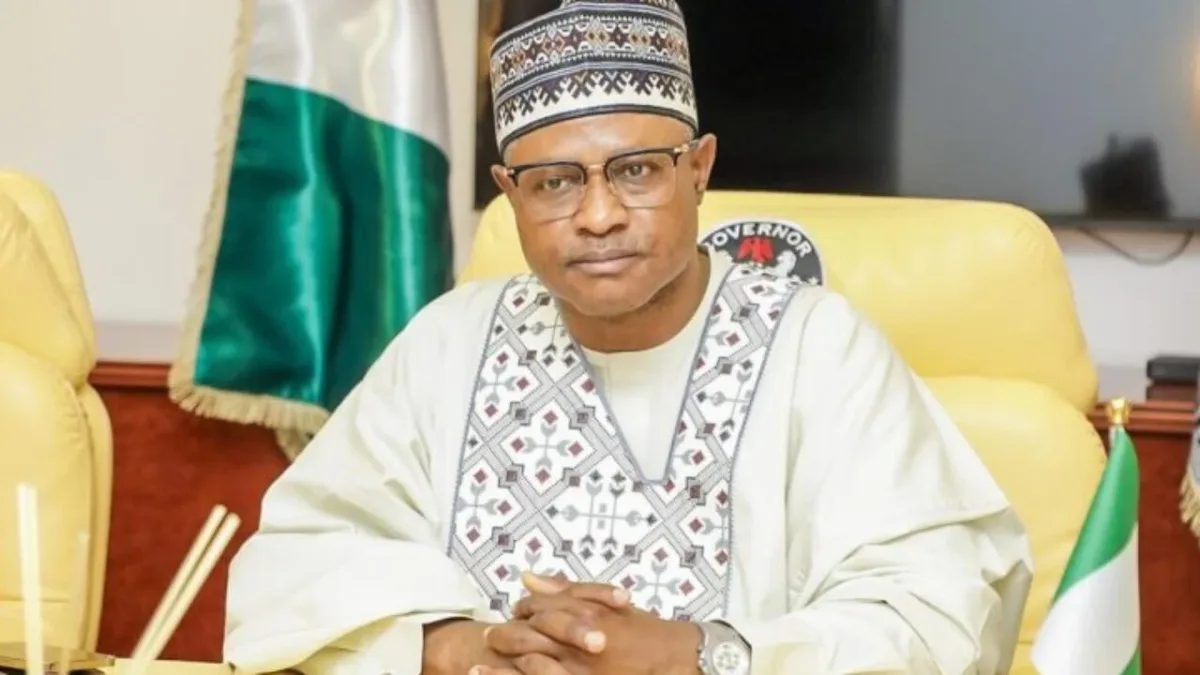
Nigeria's police force has fewer than 400,000 officers for over 230 million people. The military is under 270,000. For Kaduna State Governor Uba Sani, those numbers alone prove that the country can't defeat insecurity without state police.
Speaking during an Arise TV interview on Saturday, Sani argued that decentralised policing is no longer optional — it's essential. "State police for me is an idea whose time has come," he said. "The entire police force in Nigeria isn't even up to 400,000 personnel and the military isn't up to 270,000 personnel. In a country of over 230 million people, we can't effectively address insurgency, banditry and kidnapping without state police."
Sani acknowledged the widespread concern that governors might turn state police into a political weapon. But he insisted that the National Assembly can prevent that by crafting the right legal safeguards. "It depends on the members of the National Assembly who are going to craft this law to ensure that state police aren't given that opportunity," he said. "They should focus on crime prevention and security issues affecting their communities."
"State police for me is an idea whose time has come."
The governor also linked security reform to stronger governance. He said states where insecurity has disrupted economic and social life need both better policing and better administration to restore stability.
Sani also reflected on Nigeria's 27 years of uninterrupted democracy. He reminded Nigerians that the current system was built on sacrifice. "Nobody should compare democratic dispensation and military dictatorship. We lost many of our comrades in the struggle and many others were detained because they fought for democracy and the rule of law," he said.
He admitted that democracy hasn't fully delivered what Nigerians expected. But he argued that reform, not abandonment, is the answer. "We can't say that it's perfect, but I believe a lot of things still need to be done to achieve democratic ideals and principles." Sani urged Nigerians to keep believing in the system. "I just want the people of Nigeria to believe in democracy and continue to fight for the entrenchment of democratic ideals. That's the most important thing."
The debate over state police has been running for years. Previous attempts to amend the constitution to allow it have stalled in the National Assembly. Supporters say the federal police force is too stretched to handle local security threats like banditry, kidnapping, and farmer-herder clashes. Opponents fear that state governors, who already control local government funds and security votes, would use the police to harass political opponents or suppress dissent.
Sani's comments come as insecurity continues to plague many parts of Nigeria. Bandit attacks, mass abductions, and communal violence have become daily realities in the northwest, including Kaduna. The governor has faced repeated criticism over security failures in his state. But he maintains that the current policing structure makes it impossible for any state government to protect its citizens effectively.
What happens next depends on the National Assembly. A constitutional amendment is required to create state police. Several bills have been introduced in the past, but none has passed. Sani's intervention adds a governor's voice to the push — but whether lawmakers will move the needle remains an open question.