

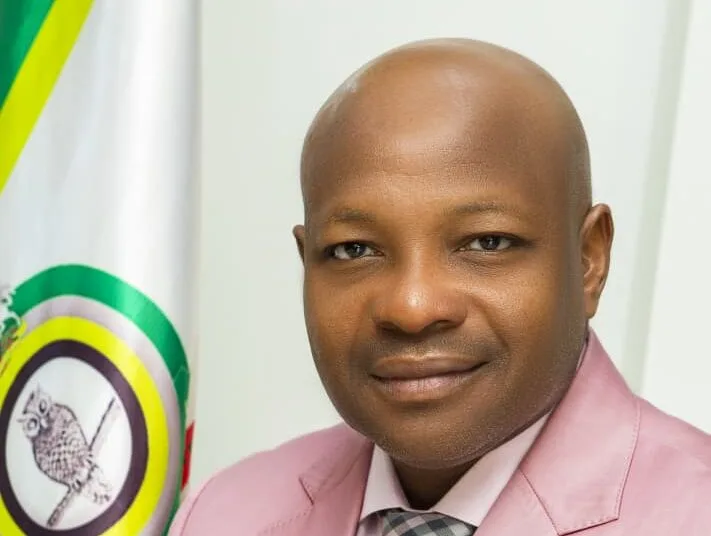
The State Security Service (SSS), often known as the Department of State Services, is undergoing a significant internal reform under the leadership of its Director General, Oluwatosin Ajayi. In a rare interview granted to PREMIUM TIMES on September 3, 2026, Ajayi detailed the agency's new direction, emphasizing a shift towards strict law enforcement, improved cooperation with other security agencies and international allies, and a stronger commitment to human rights.
Ajayi, who has spent decades within the SSS, rising through the ranks from a Cadet Officer, acknowledged the agency's historical challenges, including past criticisms for arbitrary arrests and extrajudicial treatment. He stated that his two years at the helm have been about building on past successes while addressing weaknesses. "What I have done over the last two years is not different from what I did at every level of leadership I held before now," he explained, highlighting that the current reforms are a continuation of efforts he has always championed within the service.
One of the most striking aspects of the reforms is the proactive compensation for victims of SSS errors. Ajayi revealed that in cases where the service makes a mistake, they now go beyond court-ordered compensation. He cited an instance where an individual mistakenly shot by an operative was awarded N10 million by the court, but the SSS added another N10 million and provided full medical treatment, stating, "the person we mistakenly shot deserved more."
The DG also stressed a strict disciplinary process for staff and a zero-tolerance policy for unethical conduct. "Such staff are not accommodated in our Service," he declared, aiming to prevent former staff from committing crimes in the agency's name. This move signals a clear intent to hold personnel accountable for their actions.
A visible change highlighted by Ajayi is the clear separation of civil and criminal matters. He noted that in the past, these were often conflated, leading to inappropriate use of force. As an example, he referenced the case involving the presidential aspirant Pat Utomi, where instead of an arrest, the SSS sought judicial interpretation on the legality of actions deemed a threat to national security. The court ultimately ruled against Utomi's actions, which Ajayi presented as an example of seeking legal recourse over immediate force.
Similarly, Ajayi pointed to the case involving the Socio-Economic Rights and Accountability Project (SERAP), which had accused SSS operatives of invading their premises. The SSS, with Ajayi's approval, allowed the matter to go to court, resulting in a favourable judgment of over N100 million for SERAP, without any arrests being made during the process.
He also touched upon the widely publicized case involving Omoyele Sowore, the publisher of Sahara Reporters. Ajayi clarified that the SSS had not arrested Sowore and therefore did not object to his initial bail. He indicated that any subsequent issues with Sowore's bail and subsequent revocation by the court were unrelated to the SSS's initial actions but rather to Sowore's alleged violation of court processes.
The reforms are broadly categorized into five areas: strict law enforcement, enhanced synergy between agencies, accountability, respect for human rights, and infrastructural/administrative improvements to boost operational efficiency. Ajayi noted that the agency's 40th anniversary, celebrated quietly internally, reflects a mood of national seriousness rather than fanfare.
Ajayi's willingness to engage with the media, including citing the practices of international intelligence agencies like the FBI and MI6, is a deliberate step to foster improved relations between security services and the press. He believes this transparency can help build public trust and better inform citizens about the threats facing the nation, from terrorism to other criminal activities.