

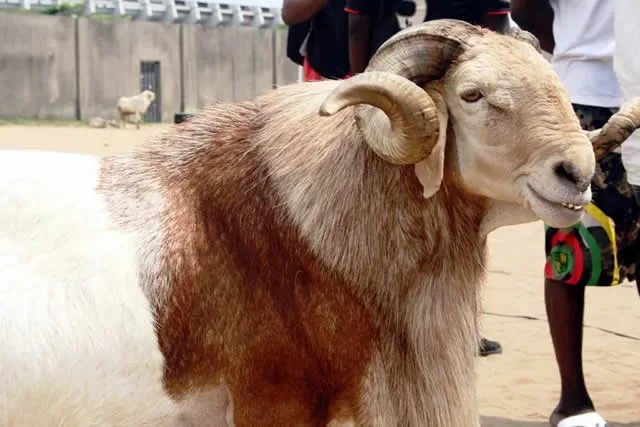
As the Sallah season nears, the festive mood at markets like Ile Epo in Lagos has been replaced by long, hollow stares and empty pockets. For many, the mandatory sacrifice has transformed from an act of faith into a financial nightmare that's forcing hard decisions in homes across the country. Rams that would've cost a fraction of the current price just a few seasons ago are now retailing between N600,000 and N800,000. The price of a full-sized cow has surged to an eye-watering N3.2 million.
"Before, I could buy two rams for N400,000 but even to get one is hard."
This reality, shared by 72-year-old retiree Remi, paints a grim picture for those on fixed incomes. Pensioners and low-income earners, who once found comfort in the tradition, are now debating whether to cut their celebrations entirely. It isn't just about the animal itself. The spiraling cost of transporting livestock from the North to the South has created a price floor that local traders say they can't ignore without going bust.
Bukalanga, a livestock seller at the market, explained that the traders are just as frustrated as their customers. He pointed out that the daily struggle is fueled by the relentless rise in fuel prices. This inflates everything from the trucks used to haul the animals to the feed required to keep them alive while they wait for buyers. Potential customers often wander through the pens, ask about prices, and then leave, unable to reconcile the cost with their bank balances.
The Economics of a Sallah Sacrifice
Beyond the raw sticker shock, this trend highlights a fundamental shift in the nation's household consumption patterns. When families, like that of a resident named Kayode, admit they have to buy smaller animals or skip the tradition altogether, it signals a deeper strain on the domestic economy. The logic is simple: when the cost of living—fuel, transport, and basic food items—swallows the lion's share of a family's budget, traditional festivals become the first casualty of austerity.
Livestock markets, which usually pulse with energy and aggressive haggling during this time of year, currently feel unnervingly quiet. Vendors report that patronage has cratered compared to previous Eid celebrations. For the average Nigerian, the sacrifice was once a communal highlight. It's now becoming a marker of a widening gap between those who can afford the luxury and those who are being priced out of their own traditions.
Market Realities
- Rams now cost between N600,000 and N800,000.
- A single cow is selling for roughly N3.2 million.
- Retirees on fixed incomes report being unable to maintain past purchasing power.
- Fuel price hikes are the primary driver for transport and feeding costs, proving that inflationary pressure is a direct cause of the current market stagnation.
- Market attendance and sales volume have dropped, which highlights a clear decline in consumer purchasing power compared to previous years.
The logistical chain responsible for getting these animals into Lagos is fragile. Any movement in the pump price of diesel or petrol instantly cascades down to the consumer at the market gate. As the supply chain struggles to absorb these overheads, the final price the buyer sees is often the only way the livestock merchants can break even. The current economic climate means the tradition of Sallah in the city faces permanent change as families adapt to these new, higher financial barriers.