

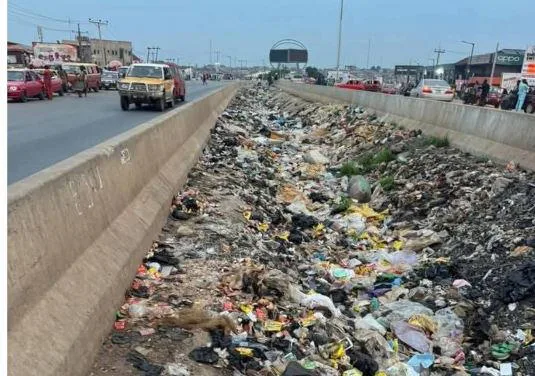
The scene in Akure, Ondo State's capital city, is particularly dire. Majestic streets are now lined with trash, as far as the eye can see. Heaps of garbage clog both major roads and inner streets. Residents, traders, and commuters bear the brunt of this mess, inhaling stale, toxic air, and navigating through muddy, unsanitary areas.
Stagnant wastewater is a common sight, and foul odours have become a daily norm for these communities. A closer look at the situation reveals a systemic failure due to weak enforcement of environmental regulations, underfunded waste infrastructure, and a heavy reliance on informal disposal methods.
Many residents still dump their trash indiscriminately, either on the roadside, in open spaces, or even within their own compounds. In markets like Odopetu, traders have been known to clog canals with waste, creating an unhealthy environment for everyone.
Government efforts to improve sanitation include a monthly environmental sanitation exercise, where state officials and waste management teams patrol the streets to ensure compliance. However, this exercise appears to have had minimal impact, as the state generates a massive amount of waste daily.
The situation in Ekiti is equally disturbing, with three major dump sites occupying a vast 69 hectares of land. Residents living in close proximity to these dumpsites face the brunt of the stench and health risks.
For Musa Sule, a resident of Ilokun, the situation is nothing short of tragic. "The smell from the dump is unbearable, and it's affecting our health, especially the children. We need the state government to address this issue urgently," he lamented.
Former Director-General of the Ekiti State Waste Management Agency, Olasunkanmi Olabode Ojo, highlighted the pressing need for a more effective waste management system.
Environmental expert Bukola Ojo emphasized the need for the government to prioritize evacuation, strengthen supervision, improve infrastructure, and enhance public enlightenment.
Key Facts
- Over 69 hectares of land in Ekiti are occupied by three major dump sites.
- Residents of Ilokun, Ekiti, live in close proximity to these dumpsites and face health risks.
- Ekiti generates massive amounts of waste daily, much of which remains uncollected.
- The state government has a monthly environmental sanitation exercise to improve sanitation.
- Residents, including traders, dump trash indiscriminately, often blocking canals and creating unhealthy environments.
- The situation in Ondo, Oyo, Ekiti, and Ogun states reflects a systemic failure in waste management.
- Weak enforcement of environmental regulations and underfunded waste infrastructure have contributed to the crisis.