

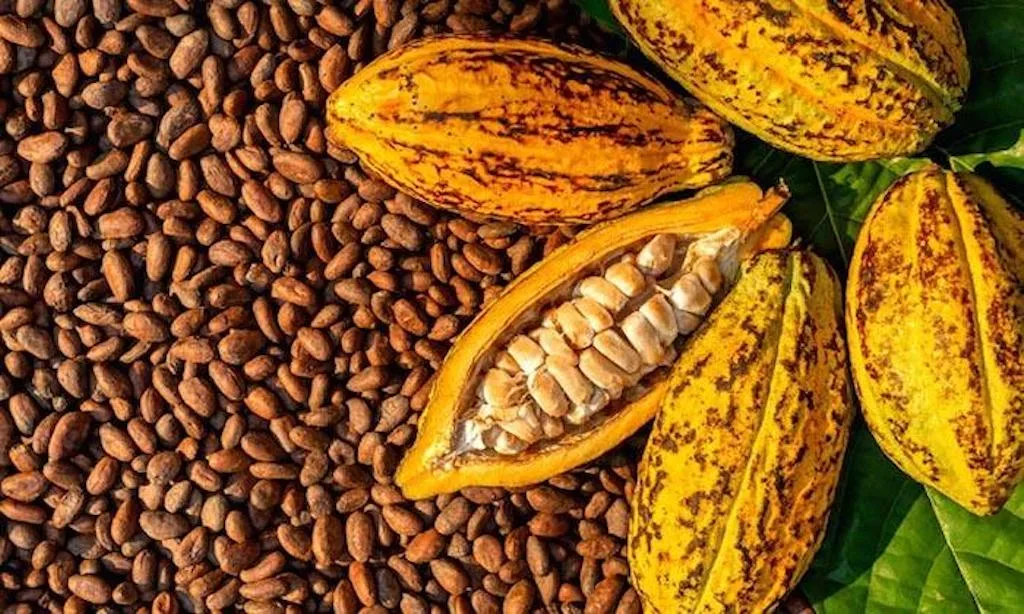
“Nigeria will no longer export raw beans while importing finished value. We will grind our beans at home, we will press our butter at home, we will make our chocolate at home, brand it at home, and sell it to the world on our own terms”
The President made the declaration at the Cocoa Value Addition Summit 2026 in Abuja, where he was represented by the Minister of Agriculture and Food Security, Abubakar Kyari.
The summit brought together government officials, cocoa-producing countries, investors, development partners, and industry stakeholders to discuss strategies for expanding cocoa processing and manufacturing across Africa.
With over 300,000 Nigerian farming households cultivating cocoa on over 1.4 million hectares, making Nigeria one of the world’s leading cocoa producers with about six to seven per cent of global output, President Tinubu believes the country can no longer rely on exporting raw agricultural commodities.
He cited ongoing investments in local processing, including a 70,000-metric-tonne cocoa processing facility under construction in Sagamu, Ogun State, and said Nigeria’s annual cocoa grinding capacity has exceeded 120,000 metric tonnes.
The President said cocoa generated more than N3 trillion in export earnings during the recent surge in global prices, but exporting raw beans meant Nigeria captured only a fraction of the industry’s economic value.
The Minister of State for Industry, John Owan Enoh, said the initiative aligns with Nigeria’s industrial policy, which seeks to reduce dependence on raw commodity exports and expand domestic manufacturing.
Nigeria is working with Ghana, Côte d’Ivoire and Cameroon to establish an African cocoa alliance aimed at strengthening the continent’s bargaining power in the global cocoa market.
The proposed alliance would coordinate policies on cocoa processing, value addition and trade among countries that account for the bulk of global cocoa production.
The Managing Director of the Bank of Industry (BOI), Olasupo Olusi, said the bank is prepared to provide long-term financing to support investments across the cocoa value chain.
The renewed push for local processing comes as Nigeria seeks to diversify export earnings away from crude oil and increase the contribution of agriculture to industrial growth.
For years, industry stakeholders have argued that expanding domestic processing would create jobs, increase foreign exchange earnings and strengthen Nigeria’s position in global agricultural value chains.
The summit ended with the adoption of the Cocoa Value Addition Accord and a proposed Abuja Declaration aimed at accelerating domestic cocoa processing, attracting investment, improving farmers’ incomes and deepening collaboration among Africa’s major cocoa-producing countries.
Nigeria has the capacity to process its cocoa beans locally, and with the current investments, the country will no longer rely on exporting raw commodities.
The single sharpest fact in one or two punchy sentences is that President Bola Tinubu has declared that Nigeria must move away from exporting raw cocoa beans and focus on processing the commodity locally to capture more value from the global chocolate market.
Key Facts
- Nigeria produces over six to seven per cent of global cocoa output.
- Cocoa generated more than N3 trillion in export earnings during the recent surge in global prices.
- Nigeria's annual cocoa grinding capacity has exceeded 120,000 metric tonnes.
- A 70,000-metric-tonne cocoa processing facility is under construction in Sagamu, Ogun State.
- The proposed African cocoa alliance aims to coordinate policies on cocoa processing, value addition and trade among countries that account for the bulk of global cocoa production.