

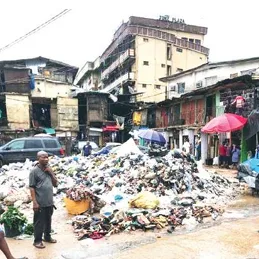
The single sharpest fact in one or two punchy sentences. Who did what, where, when, and why it matters. Not a summary of everything — the one thing that makes someone stop scrolling. A reader who only reads this paragraph must understand what happened. The Anambra State Government's decision to demolish shops at the Onitsha Main Market has left over 10,000 traders without a livelihood, with many struggling to feed their families. The market, which attracts traders from West Africa, was said to generate over $5 billion to $10 billion worth of goods annually. The Premier of the defunct Eastern Region, the late Dr. Michael I. Okpara, was instrumental in building the market, with structures that were destroyed and burnt during the civil war. After the war, it was rebuilt into a modern one and officially named Onitsha Main Market. The market has been a critical hub for trade, with people coming from all over the country to buy fashion and fashion accessories. President of Onitsha Chamber of Commerce, Industry, Mines and Agriculture (ONCCIMA), Sir Chinedu Nwonu, described the economic significance of the Onitsha Main Market, saying it is the largest open market in West Africa. He added that daily transactions in the market hover around $10 to $15 million dollars. But the government bulldozers moved in on March 1, 2026, and destroyed the shops, leaving the traders without a place to sell their goods. The government claimed the shops were illegal, but the traders countered that they had receipts and allocation papers given to them after buying the shops from the government. Many groups, including the Onitsha Chamber of Commerce, Industry Mines and Agriculture, United Igbo Elders Council, and Igboezue International Association Nigeria and the Diaspora, pleaded with the state government to reconsider its decision, but the Governor Charles Soludo-led government ignored their appeals and went ahead with the demolition. A recent visit to the market revealed that many of the traders who were displaced by the demolition exercise are finding it difficult to cope and readjust. Some have resorted to displaying their wares in open spaces, using big umbrellas, and taking the goods home at the end of the day. Others have relocated to other places within and outside the state. The government has yet to provide any reconstruction plans or offer any compensation to the affected traders. Residents now question why the shops were demolished if there were no plans to build better structures or site something else in those places.
### Onitsha Main Market The Onitsha Main Market is a significant economic hub in West Africa, attracting traders from all over the continent. The market generates billions of dollars in revenue annually and is a critical hub for trade.
### Economic Significance The President of Onitsha Chamber of Commerce, Industry, Mines and Agriculture (ONCCIMA), Sir Chinedu Nwonu, described the economic significance of the Onitsha Main Market, saying it is the largest open market in West Africa. He added that daily transactions in the market hover around $10 to $15 million dollars.
### Traders' Struggle Many of the traders who were displaced by the demolition exercise are finding it difficult to cope and readjust. Some have resorted to displaying their wares in open spaces, using big umbrellas, and taking the goods home at the end of the day. Others have relocated to other places within and outside the state.
### Government Response The government has yet to provide any reconstruction plans or offer any compensation to the affected traders. Residents now question why the shops were demolished if there were no plans to build better structures or site something else in those places.