

The tears came without warning.
Standing before the charred remains of a house in Yelewata, a middle-aged man named Saaondo couldn't hold back the memories any longer. Around him, prayers echoed from a memorial Mass organised to honour victims of the June 13, 2025 massacre. But for him, the tragedy wasn't history; it was a wound that reopened with every glance at the ruins.
A year ago, fate spared him. He'd travelled out of the community just hours before armed attackers stormed Yelewata, killing hundreds and setting homes ablaze. Those he left behind never escaped.
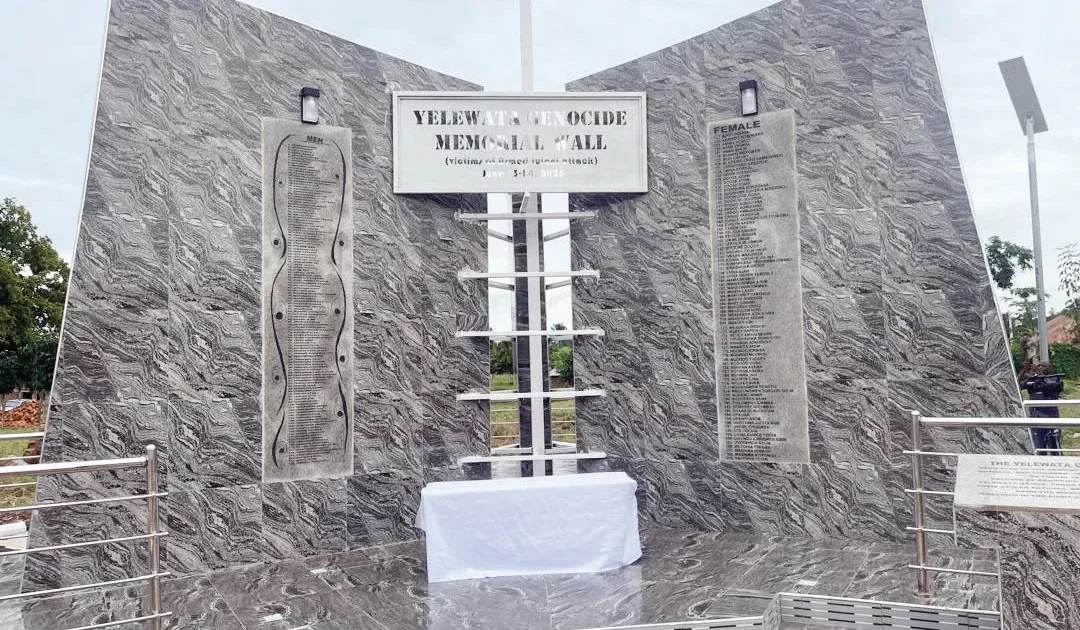
Last Saturday, as the community marked the first anniversary of the attack, the sorrow was unmistakable. Behind the speeches, prayers and unveiling of a monument bearing 272 names was a painful reality: while the dead are being remembered, many survivors say they've yet to rebuild their lives.
Matthew Mnyan, one of the leaders of Yelewata community, noticed Saaondo standing alone and quietly approached him. Concerned, he asked why he'd stepped away from the memorial Mass and appeared deeply troubled. The man's response was enough to melt even the hardest heart.
"I left this particular house for Makurdi on the eve of June 13. But all the occupants of the house were killed and burnt when the marauders invaded Yelewata. If I'd been around that night, I would've been among those being remembered at this memorial today."
His grief reflected the mood in Yelewata last Saturday as the once-sleepy community again played host to visitors from different walks of life. They hadn't come to celebrate a festival or honour a prominent figure. Rather, they'd gathered to mark the first anniversary of the deadly attack that left the community devastated.
Yelewata, located along the Lafia-Makurdi Federal Highway in Guma Local Government Area of Benue State, came under a brutal attack on June 13, 2025. The assault, which reportedly lasted about four hours, drew national and international attention. Initial reports put the death toll at about 200.
However, with the unveiling of a memorial monument in honour of the victims during the first anniversary commemoration, the number of those killed was officially put at 272, including 67 children.
Franc Utoo, a native of the community and Director of Advocacy for the US-based non-profit organisation, Equipping The Persecuted, which funded the Yelewata Genocide Memorial Monument, said the project was conceived to ensure that the victims are never forgotten.
"By choosing to erect this monument, the organisation affirms that those slain in Yelewata must never be reduced to a passing headline or anonymous casualty figures. They must be remembered with dignity, permanence and honour," he said.
He added, "As the first monument of its kind in Benue State, it occupies a historic place in the moral landscape of remembrance. It preserves the names of the 272 members of the Yelewata community who were killed — 67 children, 83 women and 122 men — and places before the world a solemn record of lives violently taken."
As residents and visitors marked the anniversary, it became evident that Yelewata is still struggling to recover from the tragedy. Twelve months after the attack, the scars remain visible and the pain is far from over.
Delivering his homily at the memorial Mass, the Catholic Bishop of Makurdi Diocese, Most Rev. Wilfred Anagbe, called on government at all levels to adopt a deliberate policy of resettling displaced persons in their ancestral communities rather than keeping them indefinitely in makeshift Internally Displaced Persons camps.
According to the bishop, the continued confinement of displaced persons in camps for fear of further attacks amounts to a defeatist approach and projects the government as powerless in the face of insecurity. He argued that keeping otherwise productive members of communities in camps where they depend largely on charity is counterproductive to their physical and psychological well-being and ultimately undermines their dignity.
Anagbe also faulted the Benue state government's response, saying more must be done to provide security and support for survivors. The attack, one of the deadliest in Benue's history, hasn't yet led to any publicly known arrests or prosecutions.