

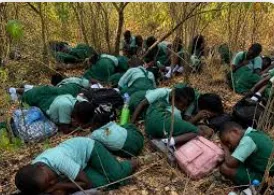
It has been a month since gunmen stormed the rural communities of Ahoro-Esinle and Yawota in Oriire Local Government Area of Oyo State and abducted pupils and teachers. Thirty days later, more than 30 people are still missing.
The attack happened on May 15, 2026. Two days later, the Inspector General of Police visited the affected communities. On May 18, one of the abducted teachers, Michael Oyedokun, was beheaded by the kidnappers. President Bola Tinubu condemned the killing the same day and ordered intensified rescue efforts.
On May 30, Oyo State Governor Seyi Makinde visited Oriire. A federal government delegation followed on May 31. On June 1, teachers in the area went on strike and protests erupted. On June 16, social media activist VeryDarkMan led a protest in Ibadan.
But the children and their teachers haven't come home.
In the affected communities, shock has given way to a quieter, more painful uncertainty. Parents no longer speak in declarations. They ask questions: Are they alive? Are they healthy? Will they ever come back?
The abductees are believed to be held in forest corridors associated with Oyo National Park. It's dense, difficult terrain that has made rescue efforts slow and visibility low.
Farming, the main livelihood in the area, continues but with caution. Movement between settlements has dropped. Schools in neighbouring communities are feeling the effect too. Parents are weighing safety against education, and many are keeping their children at home.
The killing of teacher Michael Oyedokun while in captivity has changed everything. What some hoped would be a recoverable situation now carries a more sobering weight. The risk is no longer theoretical.
The crisis has drawn reactions from prominent figures. The Aare Ona Kakanfo of Yorubaland, Gani Adams, called it a worrying indicator of shifting insecurity patterns in the South-West. He said communities once considered stable are now exposed.
"What is happening in these rural communities is no longer isolated. It shows that areas once considered safe are now exposed, and we must urgently strengthen coordination among all security stakeholders to prevent further deterioration."
Afenifere, the pan-Yoruba socio-political group, also weighed in. Its National Publicity Secretary, Jare Ajayi, criticised what he called a slow and inadequate institutional response. He warned that armed groups may be expanding into less-protected border communities.
"It's painful that after more than a month, these children and their teachers are still in captivity. The response hasn't matched the urgency of the situation, and we can't afford to allow armed groups to expand into more communities."
Seye Oyeleye, Director-General of the DAWN Commission, urged caution. He said any intervention must prioritise the safety of the captives.
"Every effort must prioritise the safety of the captives. In a situation like this, the method of intervention is as important as the outcome, and we must avoid any action that could endanger innocent lives."
On the operational side, the Nigeria Police Force says it's still coordinating search-and-rescue efforts alongside other security agencies. Governor Makinde has said the state government is working with federal authorities.
But for the families in Oriire, words aren't enough. They want their children back.