

The single sharpest fact in one or two punchy sentences. Who did what, where, when, and why it matters. Not a summary of everything — the one thing that makes someone stop scrolling. A reader who only reads this paragraph must understand what happened.
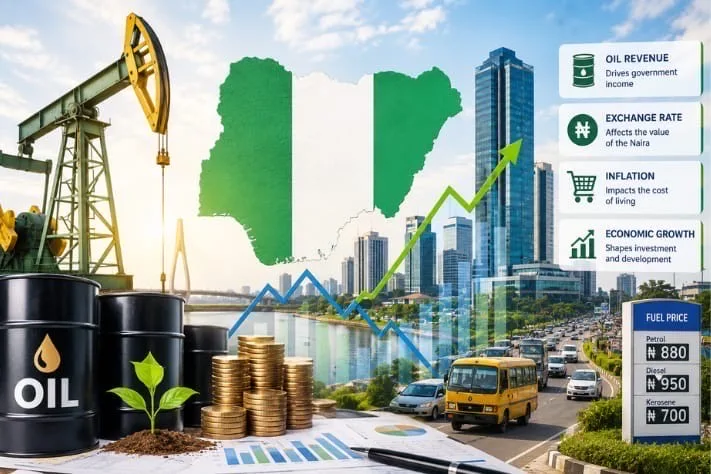
Nigeria's economy is heavily reliant on oil exports, with the country exporting over $60 billion worth of crude oil in 2025. This makes oil a critical source of government revenue and foreign exchange earnings, with fluctuations in global oil prices affecting everything from public spending to household purchasing power.
Oil exports provide a major share of Nigeria's foreign earnings. When global crude prices rise, government revenues tend to strengthen, creating greater room for public spending. The challenge is that oil markets are notoriously unstable, with geopolitical tensions and shifts in global demand and broader economic uncertainty all triggering rapid price swings.
This creates a difficult environment for long-term planning, with budget forecasts that appear comfortable during periods of strong prices quickly coming under pressure when markets weaken. Policymakers often find themselves balancing immediate opportunities against the risk of future volatility.
One of the clearest ways oil prices influence Nigeria's economy is through the exchange rate. Higher oil revenues generally increase the flow of foreign currency into the country, helping to support the naira and improve liquidity in foreign exchange markets. When prices decline, however, the opposite effect can emerge, with reduced export earnings placing pressure on foreign currency reserves while increasing concerns about the availability of dollars.
Oil price volatility can also influence inflation, both directly and indirectly. Nigeria's economy is still highly connected to energy costs, with transport expenses and manufacturing costs all responding to fluctuations in fuel prices. When energy-related costs increase, businesses frequently pass at least part of the burden on to consumers, resulting in higher prices for a wide range of goods and services.
For many analysts, the real question is how quickly other sectors can grow large enough to reduce the economy's exposure to external energy shocks. Diversification is a long-term process rather than a quick solution, and oil is deeply embedded in Nigeria's fiscal structure, meaning global price movements continue to exert a powerful influence on national economic performance.
Key Facts
- Nigeria exported over $60 billion worth of crude oil in 2025
- Oil exports provide a major share of Nigeria's foreign earnings
- Higher oil revenues generally increase the flow of foreign currency into the country
- Reduced export earnings place pressure on foreign currency reserves
- Oil price volatility can influence inflation both directly and indirectly