

Former President Olusegun Obasanjo has named four former military leaders whose actions, he says, were so critical that Nigeria might not exist in its present form without them.
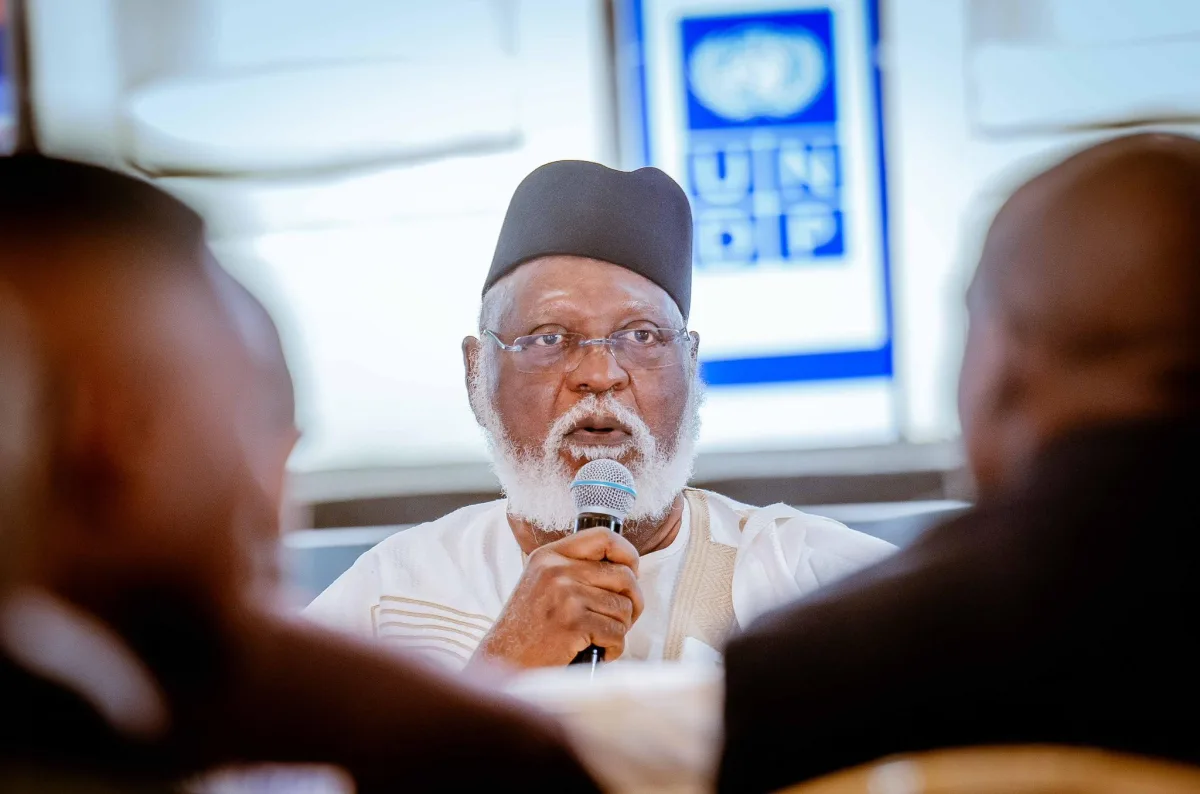
Speaking at the 84th birthday celebration of former Head of State Abdulsalami Abubakar in Abuja on Saturday, Obasanjo singled out Yakubu Gowon, Murtala Mohammed, Adekunle Fajuyi, and Abdulsalami himself.
“I'd say four military leaders have made tremendous contributions to Nigeria of today, and without their contributions, we wouldn't be where we are,” Obasanjo said.
“They aren't all perfect human beings. They all made mistakes, but they all made contributions without which we couldn't have been able to have Nigeria of today.”
The event also marked the public presentation of three books: Abdulsalami’s autobiography Call of Duty, Nigeria’s Grand Patriot, and Mediating for Peace in Africa.
Gowon, Murtala, Fajuyi —
the three who came before
Obasanjo started with Gowon, who led Nigeria through the 1967–1970 civil war. He said Gowon’s handling of the crisis after the 1966 coup kept the country together.
Without Gowon’s nationalistic approach, Obasanjo argued, Nigeria’s history could've gone a very different way.
Next was Murtala Mohammed, who ruled for only six months before his assassination in February 1976. Obasanjo described him as a transformational figure who sped up Nigeria’s return to democracy and raised the country’s standing at home and abroad.
Then he honoured Adekunle Fajuyi, the former military governor of the old Western Region. Fajuyi was killed alongside Head of State Johnson Aguiyi-Ironsi during the July 1966 counter-coup. According to accounts, Fajuyi refused to abandon Ironsi when soldiers came for him.
“Maybe more should be said about him in the future,” Obasanjo said.
Abdulsalami: the man who steered Nigeria out of crisis
Obasanjo reserved his longest remarks for Abdulsalami, who became head of state in June 1998 after the sudden death of Sani Abacha.
At that time, Nigeria was under heavy domestic and international pressure. The country was still reeling from the annulment of the June 12, 1993 presidential election — believed to have been won by Moshood Abiola — and years of human rights abuses under Abacha.
“You sagaciously managed the seeming confusion and uncertainty that followed Abacha’s death,” Obasanjo said.
“You emerged from the clouds and carefully proceeded to untangle the nation politically.”
One of Abdulsalami’s first moves was to release political prisoners, including Obasanjo himself, who'd been detained under Abacha.
Obasanjo also recalled how Abdulsalami worked to secure the release of MKO Abiola, who was still in detention. He said Abdulsalami kept him updated and sent messages to Abiola’s family.
Abiola’s son, Kola, had already arrived in Abuja to receive his father when the unexpected happened.
“I remember you telling me on the telephone, ‘Our man is dead,’” Obasanjo recalled. “‘Who is our man?’ was my question, and I screamed when you mentioned Abiola.”
Abiola died in detention in July 1998. Obasanjo said Abdulsalami handled the aftermath with tact and restraint, preventing the situation from spiralling.
Abdulsalami went on to oversee the transition that brought an end to military rule in May 1999, handing over to Obasanjo as elected president.
Obasanjo’s remarks are notable because he isn't known for handing out praise freely. He's often criticised military rulers, especially those he believes set Nigeria back.
By naming these four, he's drawing a clear line: some military leaders, despite their flaws, made decisions that kept the country from breaking apart. Whether you agree or not, it's a reminder that Nigeria’s survival has often depended on the choices of a few individuals at moments of crisis.