

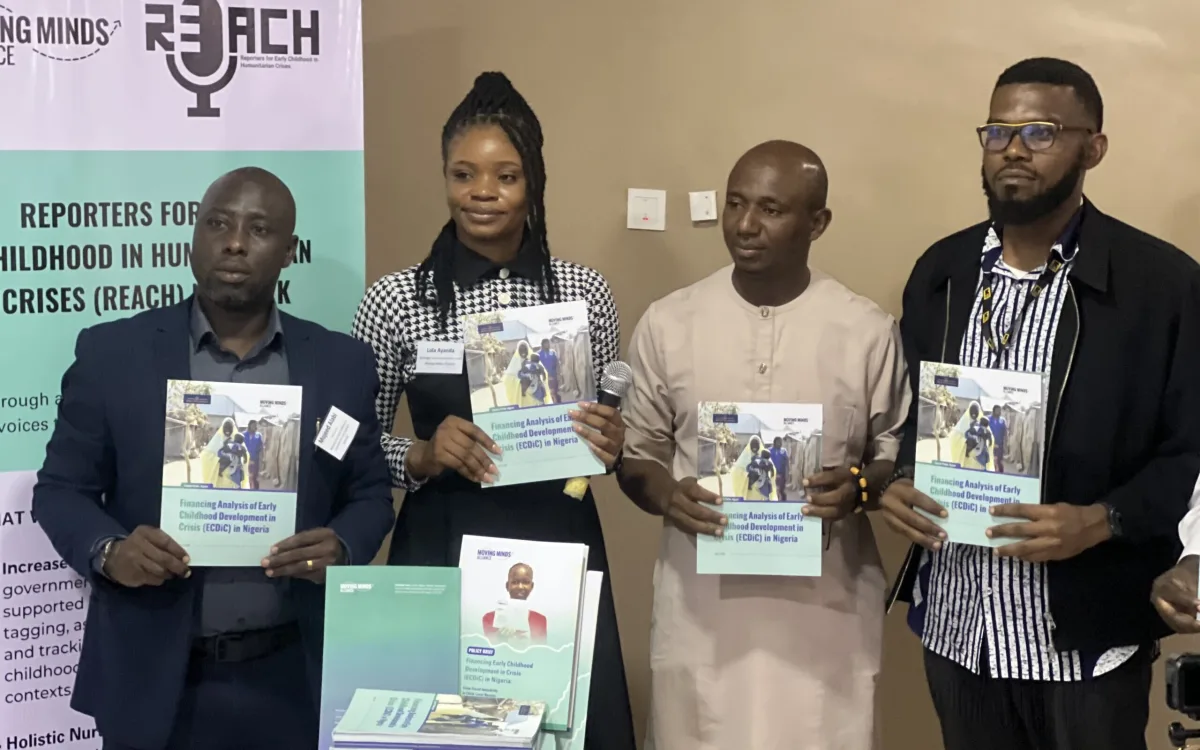
A recent report by the Moving Minds Alliance has shed light on a critical issue in Nigeria - early childhood development in crisis is severely underfunded. The report, titled 'Financing Early Childhood Development in Crisis (ECDiC) in Nigeria: From Fiscal Invisibility to Child-Level Results', was unveiled at a workshop for journalists on Early Childhood Development in Crisis Contexts in Abuja on Wednesday.
According to the report, Nigeria has no dedicated budget line for children in crisis. This means that the government does not have a specific allocation for early childhood development programs, leaving millions of children affected by conflict, displacement, and economic hardship without access to critical services.
The report found that less than 5% of Nigeria's education budget is allocated to early childhood development, and only 1.5% of the health budget is allocated to early-childhood focused services. This is despite the fact that children in crisis contexts often require specialized care and support to overcome the effects of trauma and neglect.
The report noted that the absence of a dedicated budget line hinders accountability and systematic tracking of implementation. This means that it is difficult to determine whether early childhood development programs are being effectively implemented and whether children are receiving the services they need.
The report was developed in partnership with Whole Child Advisors and reviewed Nigeria's financing of Early Childhood Development in Crisis (ECDiC) between 2020 and 2025. The report's authors used mixed-method public finance analysis to assess the existing financing arrangements for ECDIC in the budgets.
Speaking during the presentation, Lola Ayanda, Communications Manager of the Moving Minds Alliance, said that the report was the most comprehensive analysis to date of how Nigeria funds early childhood development for children living through conflict, displacement, climate shocks, and economic crisis.
The report has significant implications for the future of early childhood development in Nigeria. It highlights the need for a dedicated budget line for children in crisis and calls for increased investment in early childhood development programs.
The event also marked the formal inauguration of the Nigerian chapter of the REACH Network, a global network of journalists and media organizations committed to strengthening media coverage of early childhood development and holding governments and development partners accountable for commitments to vulnerable children.
According to Mojeed Alabi, Global Co-Chair of the Reporters for Early Childhood in Humanitarian Crisis (REACH) Network, the launch of the Nigerian chapter is a commitment by journalists to change the narrative around early childhood development in Nigeria through sustained, evidence-based reporting.
The report has sparked calls for increased investment in early childhood development programs in Nigeria. It highlights the need for a dedicated budget line for children in crisis and calls for increased investment in early childhood development programs.
The Nigerian government has yet to respond to the report's findings. However, advocates for early childhood development are pushing for increased investment in programs that support the growth and development of vulnerable children.
As the report notes, 'Behind every successful adult is an early childhood story.' The report's findings highlight the need for a dedicated budget line for children in crisis and increased investment in early childhood development programs.
Key Facts
- Nigeria has no dedicated budget line for children in crisis.
- Less than 5% of Nigeria's education budget is allocated to early childhood development.
- Only 1.5% of the health budget is allocated to early-childhood focused services.
- The report found that financing for early childhood development in crisis is poorly protected during budget execution and highly exposed to delays, inflation, and reprioritisation during periods of fiscal stress.
- The report was developed in partnership with Whole Child Advisors and reviewed Nigeria's financing of Early Childhood Development in Crisis (ECDiC) between 2020 and 2025.