

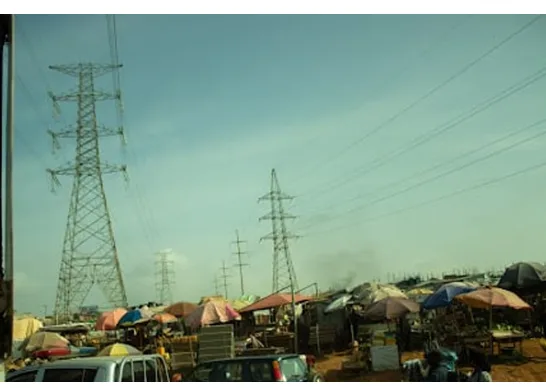
Pupils at Clementine Schools in Agbado Oke, Lagos, used to start their day under the imposing shadow of high-voltage electricity transmission lines. For over two decades, classes held, parents dropped off, and life went on, with no hint that their very presence there was a ticking time bomb. Then, the bulldozers came. In a matter of hours, classrooms that had seen generations of Lagos children grow were reduced to dusty rubble.
Mrs. Clementine Adegoroye, the school proprietress, watched as her life's work, her decades of investment, vanished before her eyes. Months later, the pain is still fresh, and the confusion is even deeper. "If government said my school was demolished because it was under the power lines, why are shops now standing there?" she asked, her voice heavy with disbelief. Her question cuts to the core of a disturbing situation uncovered by Sunday Vanguard after months of investigation across Lagos.
This isn't an isolated incident. Despite clear warnings from federal and state authorities about the severe safety risks of living or doing business beneath high-voltage electricity transmission lines, new commercial structures are popping up in these same corridors, often after demolition exercises. Millions of Nigerians are essentially living and working in these danger zones. Many affected residents and business owners claim they bought land from legitimate sellers, secured planning approvals, or occupied properties that had been standing for years without any objection from government bodies. The conflicting claims raise serious questions about who is granting approvals, why demolitions happen only after people have invested their life savings, and why unsafe zones suddenly become prime real estate for new businesses.
Mrs. Adegoroye insists she didn't knowingly build illegally. The 70-year-old educationist explained that she purchased the land from a private owner who had previously bought it from the traditional landowners. Before construction began, she conducted a survey and obtained planning approval for both her primary and secondary school buildings. When officials initially marked the school for demolition, she presented her documents at the State Secretariat in Alausa.
Consultants reportedly visited, measured the distance from the transmission lines, and assured her that the school met the required safety standards. "They checked my school building. It was in-between two power lines with the minimum spacing met. They assured me the building wouldn't be affected," she said.
That assurance, sadly, turned out to be worthless. The demolition, according to Mrs. Adegoroye, started shortly after a new chairman took office at the Agbado Oke-Odo Local Council Development Area. "I wasn't allowed to remove anything. My staff only managed to rescue the WAEC certificates. Everything else was destroyed or looted," she recounted, her voice cracking. "They've turned me into a tenant in my seventies.
My students scattered because I couldn't immediately secure another place. It feels as though I'm starting life all over again."
But what truly baffles her is what happened next. "After they demolished the place, they started selling it. Where my school stood, they have now built shops. I heard influential people bought the land." While Sunday Vanguard couldn't independently confirm claims of influential individuals buying the plots, this reporter did witness new commercial developments on parts of previously demolished transmission corridors in affected communities.
Just a few kilometers away, the Reconciliation Message Ministry faces a similar plight. Members now gather for worship in a member's home because their church building is gone. Pastor Joshua Gbemiga Babatunde, the founder, said the congregation bought the land about 25 years ago from a seller who assured them all necessary paperwork was in order. "We bought the land from Alhaji Saheed, who had acquired it from the Omo Onile. He told us everything had been done," the pastor stated. He admitted he didn't personally get government approvals before building the church but pointed out that no government agency ever questioned the development until demolition notices arrived decades later. "When we were building, nobody came to ask for documents.
Nobody warned us that we were under the power lines," he lamented.
This situation highlights a critical breakdown in urban planning and enforcement in Lagos, a megacity grappling with rapid population growth. Agencies like the Lagos State Physical Planning Permit Authority (LASPPPA) and the Lagos State Building Control Agency (LASBCA) are tasked with ensuring compliance. However, the conflicting land ownership claims and the apparent ability for new constructions to emerge in clearly marked danger zones suggest a deeper systemic issue. The National Environmental Standards and Regulations Enforcement Agency (NESREA) and the Transmission Company of Nigeria (TCN) have long issued guidelines on safety setbacks for power lines. These typically range from 10 to 30 meters depending on voltage levels.
Yet, residents often find themselves caught between acquiring land through traditional means or from private developers. They are often unaware of or misled about the true risks and regulatory status.
The financial and emotional toll on individuals like Mrs. Adegoroye and Pastor Babatunde is immense. Beyond the destruction of property, it's the loss of livelihoods, community spaces, and a sense of security that leaves lasting scars. The recurring cycle of demolition, followed by new construction, fuels public distrust. It raises questions about the accountability of both traditional land sellers and government agencies involved in the approval and enforcement processes.
Without clear accountability and consistent enforcement, millions more Nigerians remain vulnerable to similar fates. They are living their lives under the constant threat of demolition and danger.