

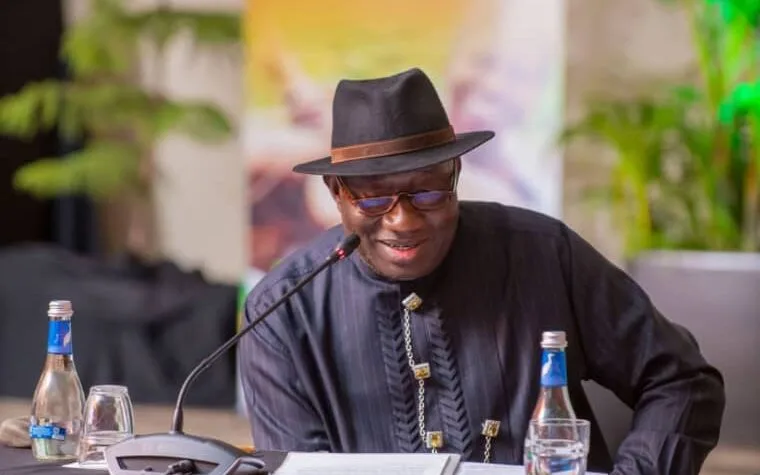
Former President Goodluck Jonathan, the Sultan of Sokoto, His Eminence Sa’ad Abubakar, and other prominent Nigerian leaders have called for national reconciliation and the preservation of institutional memory.
They made this call on Tuesday in Abuja during the public presentation of former Head of State Yakubu Gowon’s autobiography, titled “My Life of Duty and Allegiance”. The gathering drew top government officials, traditional rulers, diplomats, and elder statesmen. They're all key stakeholders in Nigeria's development.
The dignitaries highlighted that leaders must document their experiences to prevent historical distortion and inspire future generations. They celebrated Mr Gowon’s enduring legacy of unity, humility, and post-civil war reconciliation. It's a legacy that won't be forgotten.
Mr Jonathan, who chaired the event, described the autobiography as a “living testimony” from a leader who steered Nigeria through its most turbulent post-independence chapter. He noted that Mr Gowon’s magnanimity at the end of the Nigerian Civil War in 1970, famously encapsulated in his “No Victor, No Vanquished” declaration, laid the foundational blocks for national healing, reconstruction, and reintegration. This declaration was a significant step in Nigeria's history.
As younger generations study Nigeria's history, they'll hear directly from those who bore the burden of leadership during difficult times. Mr Jonathan said, “Memoirs such as this help preserve institutional memory, deepen public understanding, and enrich the national conversation on governance and leadership.” He didn't mince words.
He lamented that valuable chapters of Nigeria’s history are frequently lost because key actors fail to write accounts of their stewardship. Mr Jonathan also indicated that he intends to publish his personal reflections in due course. He won't let his story go untold.
The Sultan of Sokoto said that writing an autobiography while alive is crucial for safeguarding personal integrity. “Launching your own biography while you're still alive is one of the most important things to do.” “It's not after someone’s death that people write lies about the person when he's not alive to defend himself.” This way, the truth won't be distorted.
The royal father described Mr Gowon as an honorary member of the Sultan Abubakar family, commending his lifelong commitment to humility, spirituality, and peace-building between Christians and Muslims. Mr Gowon's commitment is genuine.
In his goodwill message, the Emir of Kano, Muhammadu Sanusi, noted that while public infrastructure and state policies inevitably change, a leader’s character remains permanently etched in public memory. He recalled a personal childhood memory from Kaduna. Mr Sanusi recounted how Mr Gowon, as a sitting head of state, would write affectionate, handwritten letters signed “Uncle Joe” to Yusuf Opam, the young son of his late friend, Col. Opam, who was killed in the 1960s. This shows Mr Gowon's kind side.
The Emir hailed Mr Gowon as a lasting role model for leadership integrity. Reviewing the book, the Catholic Bishop of Sokoto Diocese, Matthew Kukah, captured the essence of the work as a masterclass in selfless stewardship. “If this book achieves anything, let it be to show that public service is never a call to gain glory, but an aspiration to guardianship by those who lead with conscience and conviction,” he said. It's a valuable lesson.
He urged those who might disagree with the narrative to write their own accounts. “Nobody tells all the truth, because a point of view is a point for review.” “The author has written things as he saw them. And if you respond negatively to autobiography, the answer is go and write your own,” he added. This way, everyone's voice will be heard.
Earlier, the Group Chief Executive of Hailsham Group and publisher of the memoir, Akogun Adesuyi, warned that nature abhors a vacuum in historical narratives. “If you don't tell your story, the void will be filled with versions told by persons with vested interest to undermine the essence of all that you embody,” he said. It's crucial to tell your own story.
The event drew top government officials, including the Secretary to the Government of the Federation (SGF), George Akume, former heads of state, governors, ministers, and members of the diplomatic corps. They're all important stakeholders.
Former President Goodluck Jonathan and the Sultan of Sokoto called for national reconciliation and preservation of institutional memory. The call was made at the public presentation of former Head of State Yakubu Gowon’s autobiography, titled “My Life of Duty and Allegiance”. Mr Gowon’s autobiography is described as a “living testimony” from a leader who steered Nigeria through its most turbulent post-independence chapter. The autobiography highlights Mr Gowon’s magnanimity at the end of the Nigerian Civil War in 1970. Mr Jonathan intends to publish his personal reflections in due course. The Sultan of Sokoto described Mr Gowon as an honorary member of the Sultan Abubakar family. The Emir of Kano, Muhammadu Sanusi, hailed Mr Gowon as a lasting role model for leadership integrity. These facts are crucial to Nigeria's history.