

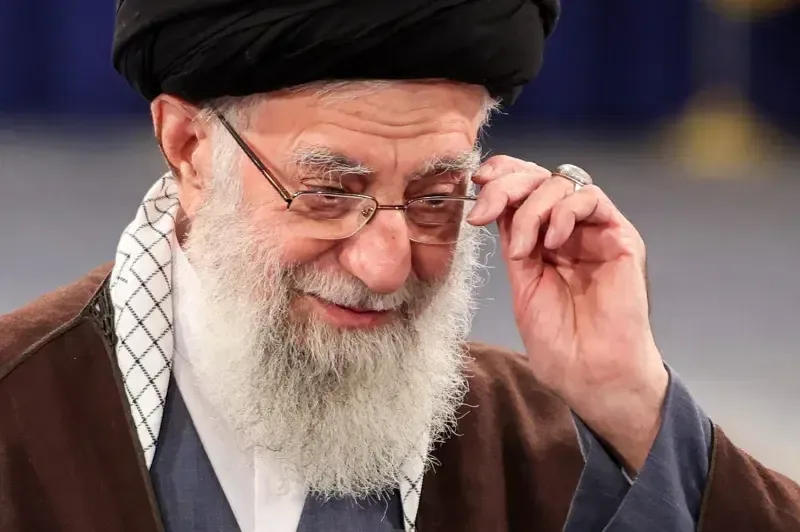
Iran's late supreme leader, Ali Khamenei, will finally be buried on July 9 — more than four months after Israeli and US airstrikes killed him on February 28.
The burial in his hometown, the northeastern holy city of Mashhad, was initially scheduled for March but postponed because of the war. State TV announced the new date on Saturday.
Before the burial, three days of funeral ceremonies will begin in the capital Tehran on July 4. That date happens to be the United States' Independence Day, which this year marks the country's 250th anniversary. Another ceremony will take place in the holy city of Qom on July 7.
Khamenei ruled Iran for nearly 37 years. He was the second supreme leader since the Islamic republic was established in 1979, taking over after the death of founder Ayatollah Ruhollah Khomeini in 1989.
His son, Mojtaba Khamenei, succeeded him as supreme leader in early March — becoming the third leader since the revolution. Mojtaba was wounded in the same strikes that killed his father and numerous other officials. He hasn't appeared in public since his appointment and communicates only through statements attributed to him.
The February 28 airstrikes were a dramatic escalation in the long-running confrontation between Iran and the US-Israel axis. They killed not just Khamenei but also several top military commanders and government officials. This dealt a massive blow to Iran's leadership.
Mashhad, where Khamenei will be buried, is one of Shia Islam's holiest cities. It's home to the shrine of Imam Reza, the eighth Shia imam, and draws millions of pilgrims each year. Khamenei was born there in 1939.
His nearly four-decade rule saw Iran through the Iran-Iraq war, the rise of its nuclear program, regional proxy wars across the Middle East, and waves of domestic protests, including the 2022-2023 Mahsa Amini uprising. He was known for his tight grip on power and his distrust of the West.
Mojtaba Khamenei's succession was swift but shrouded in secrecy. The 56-year-old cleric was seen as his father's chosen heir. But his injuries and absence from public view have raised questions about his health and ability to consolidate power.
The funeral dates fall at a sensitive time. July 4's coincidence with America's 250th Independence Day celebrations will likely be seen as symbolic — whether planned or accidental — and could further inflame tensions.
Iran's state media hasn't disclosed the full list of officials killed in the February strikes. But the attack was described as one of the most devastating on Iranian soil since the 1980s. The war that followed has reshaped the Middle East, with Iran and its proxies — including Hezbollah and Yemen's Houthis — engaged in open conflict with Israel and US forces.
The burial in Mashhad will close a chapter for millions of Iranians who lived their entire lives under Khamenei's leadership. But with his son now in charge and the region still at war, the story isn't over.