

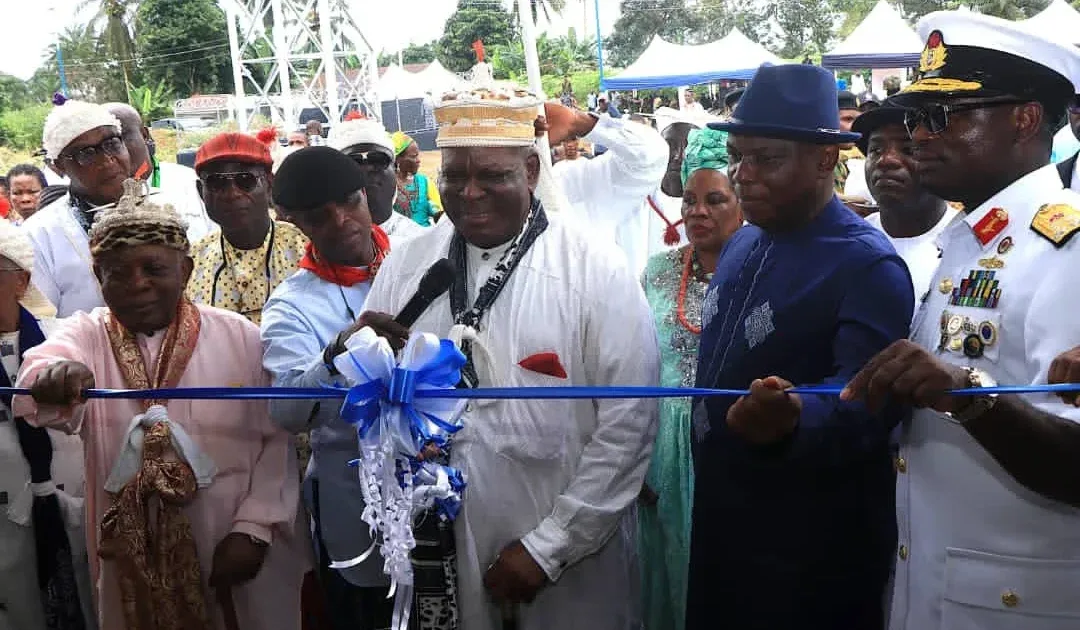
If you grew up trekking down a steep hill with a heavy bucket balanced on your head just to get muddy water from a stream, you'd probably swear to never look back once you made it in life. Rear Admiral Patrick Effah chose a different path. Instead of running away from those memories of Adiabo Akani Obio in Odukpani Local Government Area of Cross River State, he brought the cure straight back home.
Under the Chief of the Naval Staff Special Intervention Quick Impact Project scheme, the Nigerian Navy just handed over a massive 50,000-litre Braithwaite water storage tank and a solar-powered industrial borehole to the community. People in the area didn't even wait for the commissioning speeches to finish before joining the queue to fetch clean water.
I felt moved by it and was motivated to ensure that I end that stress and do something to alleviate the suffering of my people.
Effah serves as the Chief of Operations for the Nigerian Navy, and he's also a proud native of Adiabo Akani Obio. He didn't just wake up and drop projects in his village without asking questions. Before bringing in heavy equipment, he sat down with community elders and youth leaders to figure out what the town actually needed.
Water wasn't the only thing broken in the community. Effah noticed that the local town hall had been abandoned and left to rot, so he went ahead and fully renovated it too. The newly fixed hall now features proper perimeter fencing and gives residents a roof over their heads for village meetings and social gatherings.
Representing the Chief of Naval Staff, Vice Admiral Idi Abbas, the Chief of Naval Transformation and Innovation, Rear Admiral Chijioke Onyemaobi, flew in for the ceremony. He pointed out that getting clean water drives local growth and public health. Onyemaobi also praised Effah for spotting his hometown's problems and using the Navy's special scheme to fix them.
The event drew big names, including the Obong of Calabar, His Eminence, Edidem Ekpo Okon Abasi Otu V, who showed up as the Special Guest of Honour. The monarch didn't just praise the military; he dropped a stern warning for the villagers to guard the new properties with their lives.
I thank the Nigerian Navy for the initiative and I urge the people of Adiabo Akani Obio to take ownership of the projects and protect them from vandalism.
Government projects in rural areas often suffer a sad fate. Communities watch them rot or get looted because nobody treats them like their own property. Traditional rulers like the Obong know this reality too well, which explains why he spent part of his speech begging the youths not to let hoodlums steal the solar panels or vandalise the tanks.
Beyond just dropping infrastructure, military interventions like this aim to bridge the gap between men in uniform and everyday citizens. When people see the Navy fixing their streams and abandoned halls, they're less likely to view men in uniform with suspicion.