

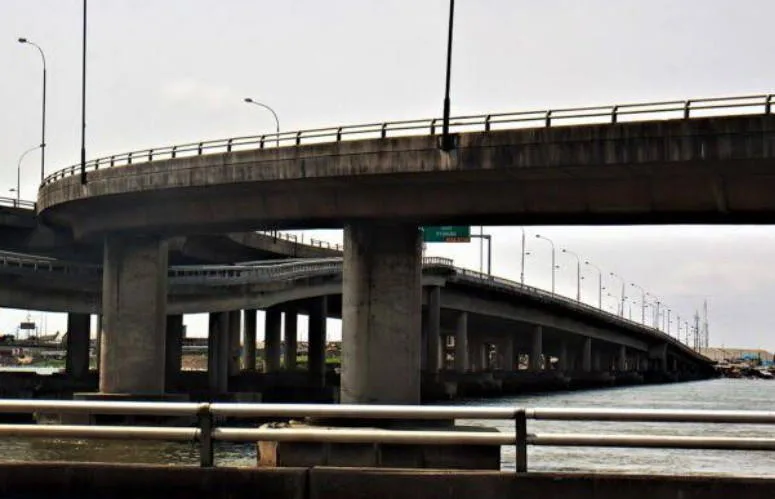
The Federal Government has announced a significant acceleration in the reconstruction of Lagos' vital Carter Bridge. It's now slated for completion within 24 months, a full year ahead of the initial 36-month schedule. This move comes as the 1.58km bridge, a critical artery for the bustling city, faces serious structural decay after decades of neglect.
Minister of Works, Senator Dave Umahi, revealed the updated timeline during an inspection of the bridge and the nearby Iddo Bridge on Monday. He was joined by the Minister of State for Works, Senator Mohammed Goronyo, and members of the National Assembly. This group included the Chairman of the House of Representatives Committee on Works, Mr. Akin Alabi. Umahi stressed that the urgency is due to the bridge's immense importance for vehicle movement in Lagos.
"Carter Bridge has stayed for over 60 to 70 years with no maintenance," Umahi stated, highlighting the dire state of the infrastructure. He explained that an underwater survey revealed critical issues. These included detached piles from pile caps, described graphically as being "like having the leg removed from the hip." He also pointed to rust within the piles, scouring (erosion at the base), and illegal sand mining as major contributors to the bridge's structural failure. Bridges typically have a lifespan of around 50 years, meaning Carter Bridge has been operating well beyond its intended service life.
The government isn't just patching up the old bridge; they've engineered a completely new design. This revamped structure will feature advanced elements aimed at improving traffic flow and ensuring long-term durability. You can expect to see one carriageway built above the other. This design promises enhanced aesthetics and engineering innovation. Additionally, more ramps are being added to ease congestion leading onto and off the bridge.
A cable-stayed section will be incorporated to provide sufficient clearance for maritime navigation below.
CCECC, the China Civil Engineering Construction Company contracted for the job, has already made some headway. They've secured the project yard and constructed access roads. Preparatory work is about 15 per cent complete. Piling, a crucial step in rebuilding the bridge's foundation, is expected to commence before the end of this week. To combat the erosion and scouring that plagued the original structure, the government is installing additional protective measures, including gabions, around the bridge foundations.
The Carter Bridge won't be completely shut down during this extensive reconstruction. The government is also applying similar protective measures to the Third Mainland Bridge to extend its lifespan by another 50 years.
With the new engineering features, including the elevated carriageways and enhanced foundation protection, Umahi expressed confidence that the new Carter Bridge is designed to last for over 100 years. He commended CCECC for their progress and thanked the National Assembly members for their support.
Earlier in the inspection, the Federal Controller of Works in Lagos, Mr. Olufemi Dare, updated the minister on the progress at the Iddo Bridge. Three spans of the Iddo Bridge (13, 14, and 15) had completely failed and have now been replaced. The casting and elevation of this section are complete. This provides much-needed headroom for navigation underneath.
Dare anticipates that this repaired section will be opened to traffic in about 10 days, after the concrete cures. This will allow the demolition of the adjacent section to begin immediately. Other components of the Iddo Bridge project, like drainage and pavement works, are nearing completion at about 90 per cent. The entire Iddo Bridge intervention is expected to wrap up within two months.
Senator Allwell Onyesoh, part of the minister's entourage, remarked that the Carter Bridge reconstruction couldn't have come at a better time. This is given Lagos's significant population growth since the bridge was first built. He assured the minister of the National Assembly's continued support for the project. Mr. Akin Alabi, Chairman of the House Committee on Works, echoed this sentiment.
He stated that the rehabilitation was long overdue and should have been undertaken years ago. He lauded Senator Umahi for his dedication to the project.