

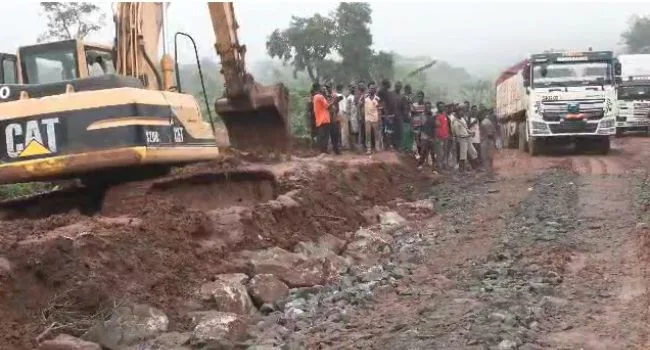
The days of despair on the Ifaki-Oye-Ilupeju road in Ekiti State are finally numbered. Following weeks of gridlock that left hundreds of fully loaded trailers stranded, the Federal Government has stepped in, with work officially commencing on the severely deteriorated route. This renewed intervention comes after a personal visit by the Minister of State for Works, Bello Goronyo, who assessed the damage and promised swift action.
The deplorable condition of this vital artery hadn't just caused immense hardship for drivers and commuters; it threatened the smooth flow of goods between the prosperous South-West and the northern parts of the country. For days, the Oye-Ilupeju axis became a parking lot for trailers, their drivers lamenting lost time and resources. This disruption highlighted how one bad road can ripple through the entire economy.
Goronyo, speaking to journalists at the site, didn't mince words about the road's importance. He described it as a "critical economic corridor," essential for moving people, agricultural produce, and other goods across Nigeria. The minister revealed that the contract for the road's rehabilitation was actually awarded back in 2025. However, it appears funding issues may have stalled progress, leading to the current crisis. He assured that the contractor had been mobilized and that the government would ensure adequate funding to get the work done properly.
"We want to assure Nigerians, particularly the people that are plying this road, that this is a very important road and it's connecting the South-West to the northern part of this country," Goronyo stated. He added that President Bola Ahmed Tinubu had given directives through the Honourable Minister of Works, Engineer David Umahi, who is currently busy in Benin, to ensure that "no road is cut in this country."
"We want to assure Nigerians, particularly the people that are plying this road, that this is a very important road and it's connecting the South-West to the northern part of this country."
One of the drivers caught in the chaos, Akanda James Taiwo, shared his ordeal. He'd been stranded for about 48 hours. He spoke of the significant losses and the sheer difficulty of being stuck on a road that had essentially become impassable. Another truck driver, Muhammed Hammed, echoed the frustration. He pointedly remarked that truck drivers and transport workers often feel forgotten by the government until election season rolls around.
The delicate balance of Nigeria's infrastructure is underscored by this situation. When a critical route like Ifaki-Oye-Ilupeju deteriorates, the impact is immediate and widespread. The government's swift response, prompted by the minister's visit and the visible distress of stranded motorists, signals a recognition of the economic fallout. The focus now shifts to ensuring the contractor has the necessary resources and that the work proceeds without further delay. Nigerians will be watching to see if this project truly breathes new life into this essential economic link.