

The Federal Government on Monday approved a combined N4.34tn in financing across five sectors including transportation, agriculture, power, infrastructure, and small business credit.
The approvals followed the Federal Executive Council meeting presided over by President Bola Tinubu at the Council Chamber of the State House, Abuja. It was the first meeting in approximately three months since the council last sat on March 4, 2026, when Tinubu swore in Inspector-General of Police, Tunji Disu.
Fourteen separate memos presented by the Ministry of Finance were approved. The approvals include N215bn in naira-denominated investments in transport, $900m (approximately N1.24tn) for agricultural and rural development, $160m (approximately N220.6bn) for Niger State solar energy from the Islamic Development Bank, $1.2bn (approximately N1.65tn) for the Sokoto-Badagry Super Highway, and a combined $500m (approximately N689.5bn) and €200m (approximately N315.6bn) for MSME financing through the Development Bank of Nigeria.
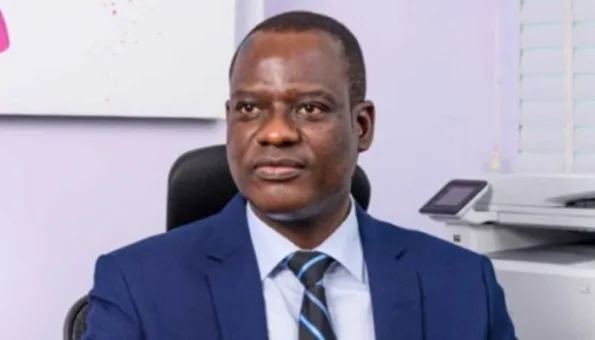
Briefing State House correspondents after the meeting, the Minister of Finance and Coordinating Minister of the Economy, Taiwo Oyedele, said "We had 14 memos for the Ministry of Finance. You would imagine I’m not going to take you through all of them one by one, but council made very strategic decisions, which I have decided to categorise under five headings."
On transportation, Oyedele said council ratified a series of previously anticipated presidential approvals covering the CNG bus initiative, electric vehicles, CNG-powered tricycles and vehicle conversion kits, unlocking the remaining investment tranche needed to complete those programmes.
"As many of you will recall, Mr President had introduced initiatives on CNG buses, electric vehicles, CNG fuel tricycles and conversion kits. Some of these investments had already been made based on anticipatory approval by Mr President, given the urgency of those interventions and council today approved," he said.
Four memos on agricultural development were approved at a combined $900m, covering financing for agricultural and rural technical-vocational training, special agro-industrial processing zones and green valuation for growth projects, he stated.
The Council approved a $160m credit facility from the Islamic Development Bank for Niger State solar energy development projects. The Islamic Development Bank will provide $150m and the Niger State government will contribute $10m as counterpart funding.
"I attended the AGM of the Islamic Development Bank about one or two weeks ago, and these were some of the conversations we had on how to finance development using concessional facilities," Oyedele said.
Council also approved financing of approximately $1.2bn for section two of the Sokoto-Badagry Super Highway, covering the Kebbi State portion of the corridor.
According to Oyedele, the final category covered two memos providing affordable financing for small businesses, one of €200m and another of $500m, to be channelled through the Development Bank of Nigeria.
Responding to questions about fuel pump prices, which remain elevated despite a decline in global crude oil prices following the easing of Middle East tensions, Oyedele said a structured process was already underway to address what he described as an asymmetric pricing problem where operators adjust prices upward quickly when costs rise but resisting downward adjustments when they fall.
Taiwo Oyedele, the Minister of Finance and Coordinating Minister of the Economy, said the government was working to address the asymmetric pricing problem where fuel pump prices remain elevated.
The Minister explained that operators adjust prices upward quickly when costs rise but resist downward adjustments when they fall. The government wants to ensure that operators do not exploit the Nigerian people while also ensuring that businesses do not go out of business.
The government is working with the Federal Competition and Consumer Protection Commission and the Nigerian Midstream and Downstream Petroleum Regulatory Authority to ensure that the market is balanced.
The asymmetric pricing problem is a major issue in Nigeria, where fuel pump prices remain elevated despite a decline in global crude oil prices.