

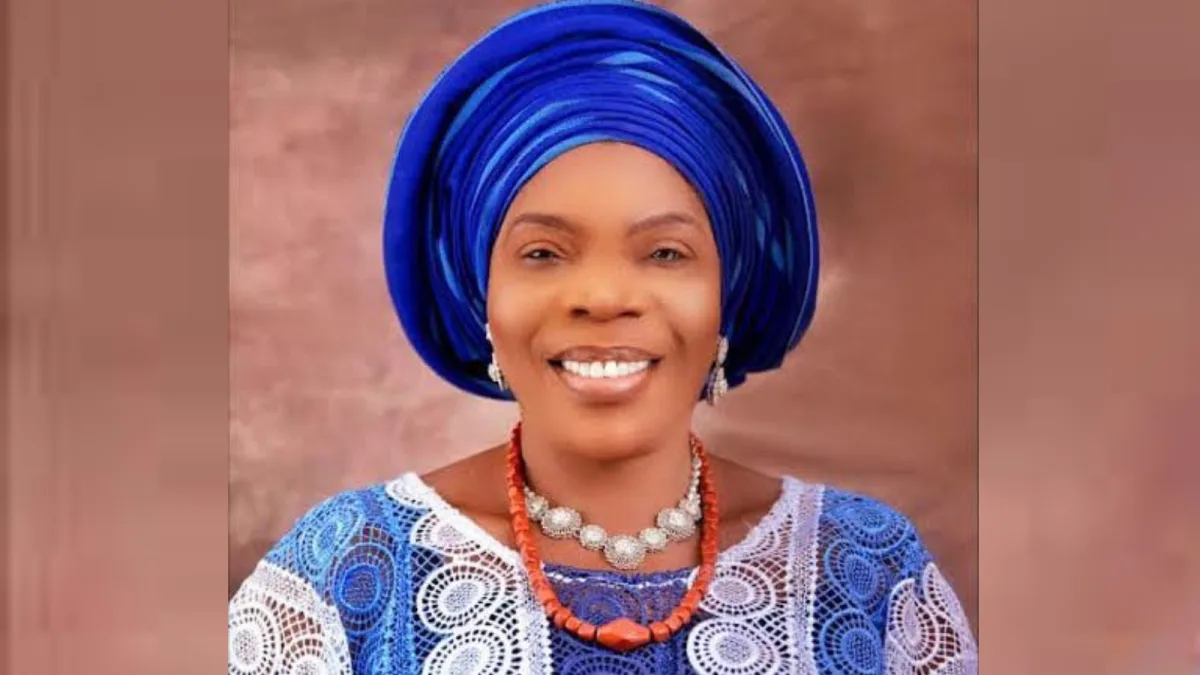
On Saturday, 20 June, Ekiti State residents will head to 2,445 polling units to elect their next governor. But here's what you won't see on the ballot: a single woman's name for the top job.
Fourteen candidates are contesting. All of them are men. This is a step backward from 2022, when two women ran for governor and seven women were deputy candidates among 16 contenders. This year, only four women are running for deputy governor.
The incumbent governor, Biodun Oyebanji, 58, is seeking reelection on the All Progressives Congress (APC) ticket. His running mate is the incumbent deputy governor, Monisade Afuye, 67. She's one of the four female deputy candidates.
The other three female deputy candidates are Dorcas Adebiyi of the Peoples Redemption Party (PRP), Adenike Ilesanmi of the Allied Peoples Movement (APM), and Itunu Ibitoye of the Action Democratic Party (ADP). Gender advocates say deputy positions often serve as a token gesture — a way for parties to show inclusiveness without giving women real power.
"It's a very sad commentary on Nigerian democratic sojourn," said Jide Ojo, a development consultant. He'd expected President Bola Tinubu to implement a gender policy, given that his wife, Oluremi Tinubu, is the first woman to serve three terms in the Nigerian Senate. But that hasn't happened.
Ojo pointed to the political system as the root cause. "For political parties like PDP, APC, APGA, ADC, NDC, none of them has a significant number of women in their National Working Committee or State Working Committee," he said. "And that's where it should ordinarily start."
Gbenga Adesunloro, a political analyst, added that running for office requires serious money and a high tolerance for risk — things many women don't have. He called for a conditional provision to level the field.
The absence of women isn't unique to Ekiti. Across Nigeria, women make up about half the population and half the voters, but they hold very few elective positions, especially executive ones. No woman has ever been elected governor in Nigeria's history.
This year's election is widely seen as a predictable win for the incumbent. In 2022, Oyebanji won decisively with 187,057 votes, beating former governor Segun Oni of the Social Democratic Party (82,211) and Bisi Kolawole of the Peoples Democratic Party (67,457). That result pushed the PDP to third place for the first time since 1999.
The 2026 ballot includes a mix of familiar names and younger contenders. Among them are Abegunde Blessing of the New Nigeria Peoples Party (NNPP), 35, and Akande Samuel of the African Action Congress (AAC), 36. But none are women.
Over one million voters have registered for this election, up from about 900,000 in 2022. Yet the candidate list doesn't reflect the state's relatively high literacy rate or its female population.
Key Facts
- 14 governorship candidates, all men (2022 had 2 women among 16 candidates)
- 4 women running for deputy governor (down from 7 in 2022)
- Incumbent Biodun Oyebanji (APC) won 2022 with 187,057 votes
- Over 1 million registered voters in 2026 (up from ~900,000 in 2022)
- No woman has ever been elected governor in Nigeria