

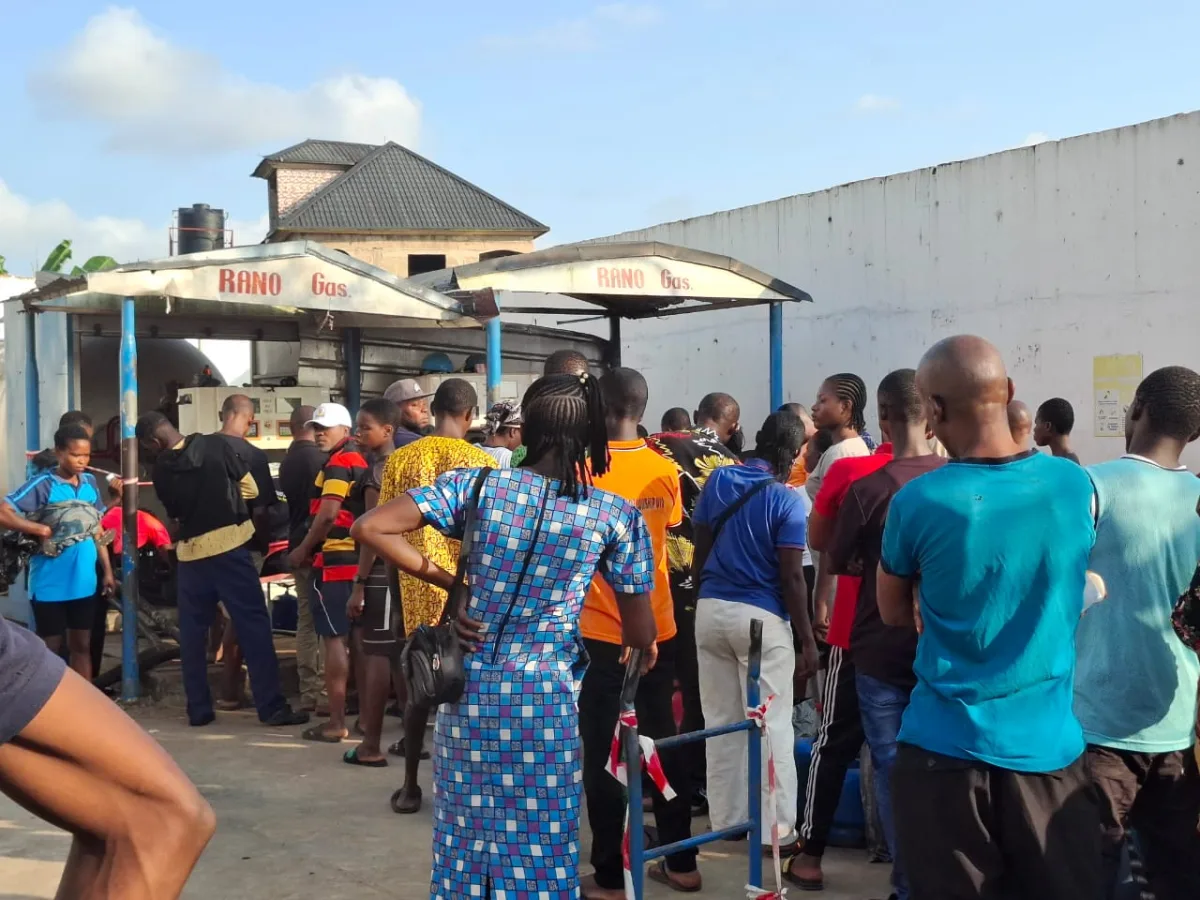
The prices of cooking gas in Nigeria have skyrocketed to a two-year high, forcing households to cut back on essential items and rely on firewood and charcoal as a primary source of energy.
In June, the price of cooking gas jumped from about ₦1,700 per kilogramme to ₦2,500, making it unaffordable for many households. Retailers attributed the price spike to shortages at coastal depots and uncertainty in international energy markets.
Lateef Badmus, manager of Al-Moruff Gas Plant along LASU-Iba Road, said retail prices largely reflected wholesale costs. 'When there is scarcity and demand is high, prices increase because consumers have little choice,' he said.
Damilola Adeyoriju, administrator at Casco Gas, described the period as a 'man-know-man' market, where access to supplies depended largely on personal relationships. 'The few marketers that had products sold mainly to people they knew. Getting even one truck became difficult,' she said.
In an interview with PREMIUM TIMES, Lagos fashion designer Lolade Fayemi lamented the high prices. 'The price is ridiculous. You still spend money on transportation to the gas station, and the gas may not even serve you for a week,' she said.
The price hike has forced many households to reduce their usage and rely on firewood and charcoal. Enomfon Okure, an oncology nurse, said she paid ₦2,100 per kilogramme in June compared to about ₦1,700 in May.
'I am managing that one for now while supporting it with firewood from my farm,' said Jo Uanzekin, a resident of Oda.
Joshua Nambur, who buys cooking gas at a NIPCO station in Akure, said he now purchases only one to one-and-a-half kilograms at a time.
In many rural communities of Ondo state, households reverted to firewood and charcoal, while some urban residents with relatively stable electricity increasingly relied on electric cookers.
Retailers in Lagos attributed the price spike to shortages at coastal depots and uncertainty in international energy markets during the recent Middle East tensions.
By the first week of July, prices had eased to between ₦1,250 and ₦1,800 per kilogramme, but many households continue to buy smaller quantities, postpone refills or return to traditional means of cooking with the use of firewood and charcoal.
In Akure, the capital of Ondo State, prices rose from about ₦1,300 per kilogramme in April to around ₦1,700 in late June before easing to about ₦1,400 in early July.
Rotimi Adamolekun, manager of SCAAB Gas, said the recent drop in wholesale prices left many marketers selling at a loss. 'My last purchase was ₦28 million for 20 tonnes. Now the same quantity sells for ₦22 million, so we have to sell at a loss,' he said.
'When there is scarcity and demand is high, prices increase because consumers have little choice,' Lateef Badmus, manager of Al-Moruff Gas Plant.
The price hike has forced many households to reduce their usage and rely on firewood and charcoal.
A similar trend emerged in Oyo and Osun states, where households reverted to firewood and charcoal.
The Nigerian government has not issued a statement addressing the cooking gas shortage.
The prices of cooking gas are expected to remain high until the government addresses the supply chain issues and improves the country's infrastructure.
The economic implications of the high cooking gas prices are yet to be determined.
The prices of cooking gas have surged in the past two months, affecting millions of Nigerians.
Households in rural communities and urban areas have been forced to rely on firewood and charcoal as a primary source of energy.
The economic implications of the high cooking gas prices are yet to be determined.
Retailers in Lagos attributed the price spike to shortages at coastal depots and uncertainty in international energy markets during the recent Middle East tensions.
Households in rural communities and urban areas have been forced to rely on firewood and charcoal as a primary source of energy.
The use of firewood and charcoal has increased in many rural communities, particularly in Ondo state.
The increase in the use of firewood and charcoal has also been noted in Oyo and Osun states.
In many cases, households have been forced to rely on firewood and charcoal due to the high cost of cooking gas.
The government has not issued a statement addressing the cooking gas shortage.
The economic implications of the high cooking gas prices are yet to be determined.
The use of firewood and charcoal has health implications, particularly for households with respiratory issues.
In many cases, households have been forced to rely on firewood and charcoal due to the high cost of cooking gas.
The health implications of the high cooking gas prices are yet to be determined.
The price hike has forced many households to reduce their usage and rely on firewood and charcoal.
Households in rural communities and urban areas have been forced to rely on firewood and charcoal as a primary source of energy.
The economic implications of the high cooking gas prices are yet to be determined.
In Oda, a resident said they are managing with one cylinder of gas, while supporting it with firewood from their farm.