

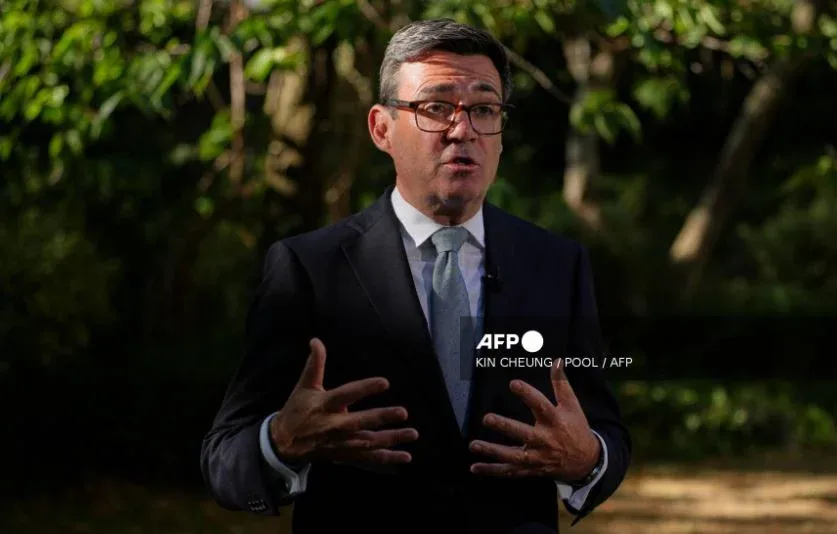
Britain's new finance minister, John Healey, said the government is 'hands-on' and 'putting British interests first'.
Britain's economy has taken a hit due to a combination of domestic political unrest and the ongoing Middle East war, which has driven up energy costs. Britain's GDP growth slowed to 0.4% in the second quarter, a drop from 0.6% in the first quarter. Keir Starmer resigned as prime minister in late June and was replaced by Andy Burnham. The Labour government is now under pressure to deliver on promises to ease the cost of living for households.
The ONS Director of Economic Statistics, Liz McKeown, said that while growth slowed in the second quarter, it remained relatively robust. Output from the services sector grew 0.5% in the second quarter, with construction also expanding. However, production flattened. Services were once again the main driver of growth, according to McKeown.
The recent football World Cup is cited as a reason for an increase in turnover in June, particularly in industries such as the manufacture of alcohol, wholesale, food and beverage serving activities, publishing activities, television production, and advertising.
But the research manager at the British Chambers of Commerce, Stuart Morrison, said that while the headline figures may look good, they 'shouldn't disguise the cocktail of cost pressures choking long-term business growth'. Morrison is calling for measures that boost trade, investment, and productivity.
The Bank of England has warned that British inflation is set to rise due to the ongoing Mideast war and its impact on energy prices. Healey has promised to remove tax on electricity bills for households this winter.
Britain needs to take action to address the cost of living crisis, and the economy needs a boost to get back on track. The new finance minister has promised to put British interests first and deliver on promises to ease the cost of living for households.
The situation in the UK will be closely watched as the new government tries to navigate a complex economic environment.
Healey has a tough task ahead of him as he tries to stimulate the economy and ease the cost of living for households.
Stuart Morrison, the research manager at the British Chambers of Commerce, said that while the headline figures may look good, they 'shouldn't disguise the cocktail of cost pressures choking long-term business growth'.
Morrison is calling for measures that boost trade, investment, and productivity. The economy needs a boost to get back on track.
Britain's economy has been hit hard by the ongoing Middle East war, which has driven up energy costs. The recent football World Cup has helped to boost business turnover, particularly in industries such as the manufacture of alcohol, wholesale, food and beverage serving activities, publishing activities, television production, and advertising.
The Bank of England has warned that British inflation is set to rise due to the ongoing Mideast war and its impact on energy prices.
Healey has promised to remove tax on electricity bills for households this winter.