

Akwa Ibom's ₦42bn CNG Bus Deal: Fleet Arrives
with Procurement Details Hidden
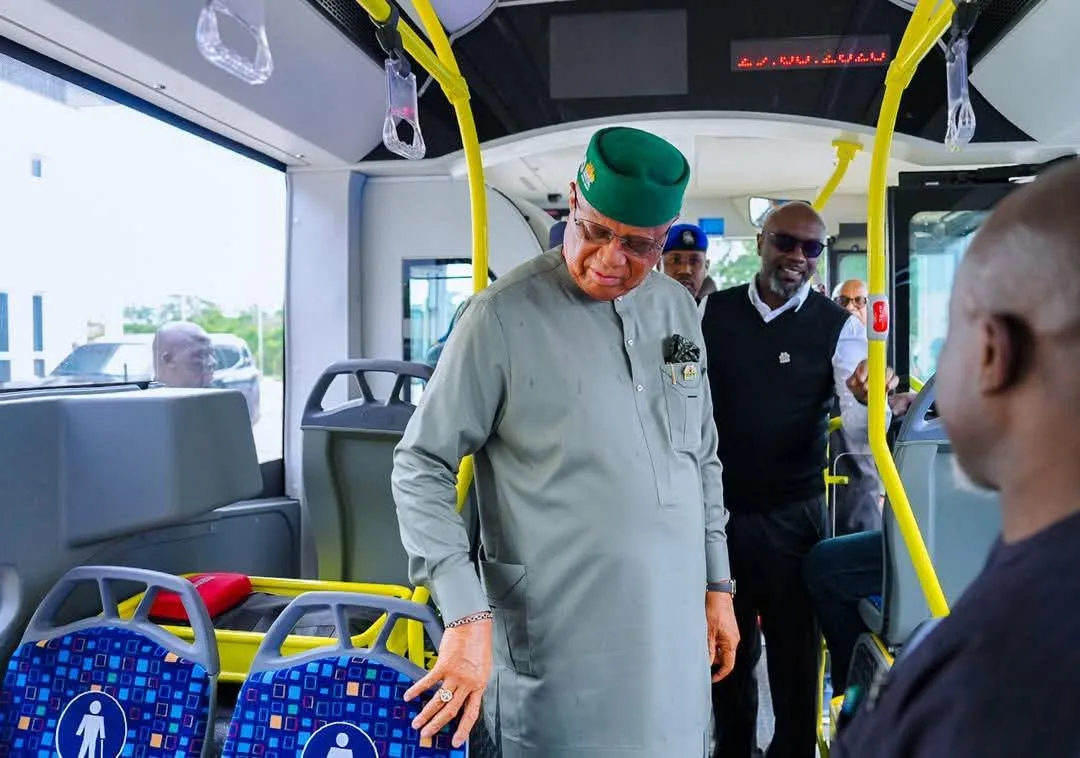
The Akwa Ibom State Government has received 20 out of 50 compressed natural gas (CNG) buses, nearly three years after Governor Umo Eno promised to mitigate the impact of fuel subsidy removal through a state-owned mass transit system.
Thirty-one months after Mr. Eno's pledge, the state has finally received the first batch of buses, but the government has yet to release contract sums, procurement records, or bidding documentation, sparking significant concerns about transparency and compliance with the state's public procurement laws.
According to the contractor, Alexandro Selefteriadis of Alpha Daiz, the CNG buses are factory-built and can operate for about 16 hours before refueling. The buses are a key component of Mr. Eno's pledge to provide affordable transportation options to residents of Akwa Ibom.
As part of the project, Mr. Selefteriadis said Alpha Daiz plans to establish a technical training school where 600 students will receive both theoretical and practical training in bus maintenance.
The Commissioner for Information, Aniekan Umanah, said supporting infrastructure is already under construction, including a CNG terminal at Ikot Ekpe community, Offot, in Uyo.
The governor first announced plans to procure subsidised public buses in August 2023 as part of measures to ease transportation costs following the removal of the petrol subsidy. However, payment was only made in October 2025, raising fresh questions about the implementation timeline.
Akwa Ibom has exceeded its initial revenue targets for the three fiscal years reviewed, achieving an all-time peak revenue of ₦2.53 trillion in 32 months.
As the state prepares to launch its new transport system, residents are left wondering how much the government paid for the buses, how the contract was awarded, and why procurement commenced more than two years after the promise.
Despite repeated requests, the government has yet to disclose the total contract value, the unit cost of each bus, logistics costs, and the procurement method adopted.
The Commissioner for Transport, Anthony Luke, was not available to provide answers regarding the project's implementation timeline.
The lack of transparency surrounding the procurement process has sparked concerns about the state's commitment to accountability and good governance.
Key Facts
- ₦42.04 billion: cumulative budgetary allocation for the project
- 20: number of CNG buses received so far
- 50: total number of CNG buses promised
- ₦2.53 trillion: all-time peak revenue achieved by Akwa Ibom in 32 months
- 31 months: time it took for the state to receive the first batch of buses after the governor's pledge
What's Next
As the state prepares to launch its new transport system, residents are left wondering how much the government paid for the buses, how the contract was awarded, and why procurement commenced more than two years after the promise. The government has yet to disclose the procurement details, sparking concerns about transparency and accountability.