

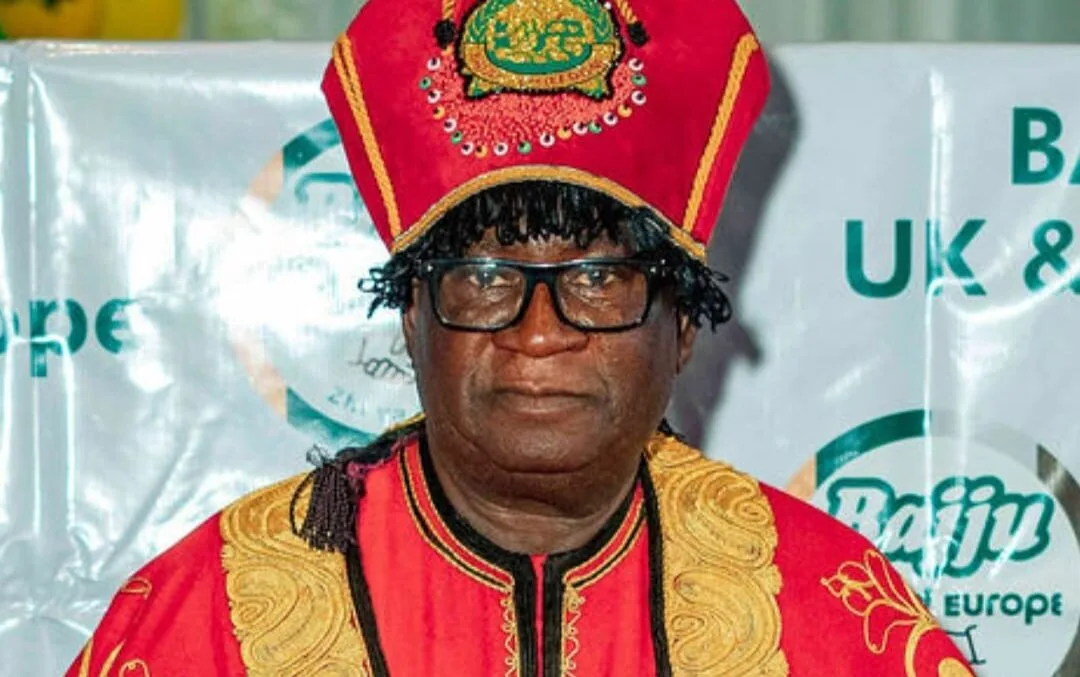
Since ascending to the throne as the second paramount ruler of the Bajju Chiefdom in 2022, His Highness Luka Kogi Yabwat, known as Agwam Bajju II, has made the completion of a permanent palace a top priority. His reign has also focused on fortifying the traditional institution, enhancing security, and nurturing the bond between the chiefdom and its citizens living abroad.
During a recent visit to the United Kingdom, where he met with members of the Bajju community and witnessed the launch of the Bajju UK and Europe Association, the monarch spoke about his aspirations. A major point of discussion was the ongoing palace project, which has faced significant delays due to accommodation issues. "When I came in, my priority was securing permanent residence for the king," Agwam Bajju II explained. He noted that his predecessor had secured land and laid the foundation, but a permanent residence remained elusive as the late king lived in his personal home.
Building on this foundation, Agwam Bajju II reconstituted the palace project committee. He initially set a tight deadline for securing temporary accommodation for himself while work on the permanent structure continued. Although the timeline had to be extended, the committee succeeded in finding a temporary residence. "Both our sons and daughters are contributing to its completion," he said, expressing hope that the permanent residence would be ready within the next one to two years.
But the monarch revealed that the chiefdom has not received any financial backing from the state government for the palace project, despite formal requests. "We have never received any support from the state government," he stated. This lack of support, he observed, seems to be a common issue for many chiefdoms in the southern part of the state, not just the Bajju.
The late Agwam Bajju, whom the current ruler holds in high regard, is credited with preserving the Bajju identity and establishing the chiefdom's structure. "He set the structure of the chiefdom," Agwam Bajju II acknowledged. "So, by setting the structure of the chiefdom, I have not done anything different from what he had done because he had already set up everything that was needed."
Agwam Bajju II expressed immense joy at meeting his subjects in the UK and Europe, highlighting their vital role in the chiefdom's progress, particularly concerning the palace project. "They have been very strong supporters of the chiefdom down there. They have contributed immensely to the position we are now in regarding the progress of the palace project. We can say we are depending on them seriously. We are looking up to them," he said.
The Bajju diaspora's initiative to establish an educational trust was met with enthusiasm. "Any society that is not literate... is a backward society," Agwam Bajju II stated. He believes the trust will empower his people to overcome life's challenges and foster overall development. "Their thought of establishing a fund for educational development is a welcome one. It will enable my people to rise." The recent launch of the Bajju UK and Europe Association was also hailed as a positive step that would benefit both the Bajju and Kajju communities.
Agwam Bajju II also stressed the critical role traditional institutions can play in economic development, provided they receive adequate support. He encouraged farming and other rural economic activities, which are the bedrock of the economy, but pointed to the significant impact of insecurity. "At the grassroots, we are the ones being attacked. Insecurity is high at the grassroots," he lamented. "If the government can come to the aid of the traditional institution, it will help us. If everyone can go to the farm freely, without fear of being attacked, it will boost the economy."
He is calling for government assistance in providing essential farming inputs like fertiliser and herbicides, which he believes would transform the economic landscape. "What we want is government support. What we want is for the government to enable us to stand on our own," he urged. Despite the current security challenges, the chiefdom continues to encourage its people to engage in agriculture, recognizing its importance for economic stability.