

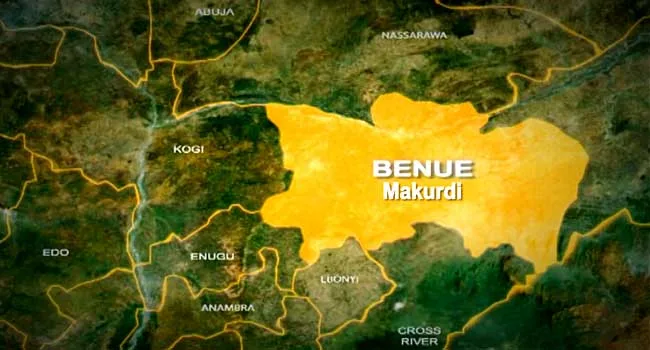
In Makurdi's Mopol Barracks, a shocking reality has been uncovered. The barracks, which houses nearly 400 families, lacks basic amenities like running water for consumption and domestic use. This has led to a daily struggle for residents, who have to wake up as early as 2am to fetch water from a stagnant stream. The situation is so dire that it's been described as 'living hell' by one of the residents.
The barracks, which is one of the largest in Benue State, has a borehole that broke down several years ago. Since then, residents haven't had a reliable source of water. They've been relying on the stream for their water needs. The stream, however, isn't a reliable source, especially during the dry season when it dries up. This leaves only a small portion where families gather to struggle for water.
Madam Franca, a housewife and mother of six, has been living on the top floor of one of the buildings for five years. She recalled that since they moved in, they've never seen water running in the barracks. The situation becomes more troubling during the dry season when the stream dries up. Families are left to struggle for water, and it's a difficult time for them.
Many residents say it's a harrowing experience, describing a routine that drains both physical strength and emotional resilience. The presence of the pond doesn't provide a solution to their problem, but rather adds to their suffering. Women and children often gather at the stream, scrambling to collect water. They must then carry it home on their heads. For those living in two-storey buildings, the journey doesn't end until they've climbed multiple flights of stairs with heavy containers to deliver the water into their homes. This physically taxing experience is also emotionally draining.
It's led to children skipping school to assist their mothers in fetching water.
Another resident, Mummy Grace, a mother of four, was seen at the stream with her children, scooping water into containers. She said that the stream is the only thing sustaining life in the barracks. She lamented that they climb the staircases every day with basins, buckets, and jerrycans of water on their heads. At the peak of the dry season, they leave their homes as early as 2am. If they don't go early, they won't get water for their family that day.
They can't afford to miss out on the limited water available.
The Benue State Police Command Public Relations Officer, DSP Udeme Edet, said that the issue hadn't been brought to the notice of the command. He stated that there's no way the issue would be brought up and it won't be addressed. The command will look into the matter and find a solution to the water crisis faced by the residents of the barracks. They won't ignore the issue, and they'll take action to resolve it.
The situation in the barracks raises serious security concerns. The wives of police officers are exposed to risks as they go to the stream, especially at early hours. This is a concern that needs to be addressed by the authorities. They deserve better living conditions, and it's the government's responsibility to ensure that they have access to basic amenities like running water. The government can't ignore the plight of these families, and they must take action to improve their living conditions.
- The Mopol Barracks in Makurdi houses nearly 400 families.
- The barracks lacks basic amenities like running water for consumption and domestic use.
- Residents have to wake up as early as 2am to fetch water from a stagnant stream.
- The borehole in the barracks broke down several years ago and hasn't been fixed.
- Children often skip school to assist their mothers in fetching water.
The water crisis in the barracks is a stark reminder of the challenges faced by many Nigerians in accessing basic amenities. It's a situation that needs to be addressed urgently to ensure that residents have a decent standard of living. The government must take responsibility for providing basic amenities like running water to its citizens, especially those who are serving the country, like the police officers and their families. They can't be expected to live without access to basic necessities, and it's the government's duty to provide for them.
As the situation continues, residents of the barracks can only hope that their plight will be heard and addressed soon. They deserve better living conditions, and it's the authorities' responsibility to ensure that they have access to basic amenities like running water. The water crisis in the barracks is a call to action for the government to prioritize the welfare of its citizens, especially those who are serving the country. They won't be able to serve effectively if they're struggling to access basic necessities, and it's the government's responsibility to support them.