

The opposition has dropped its own budget — and they didn't hold back.
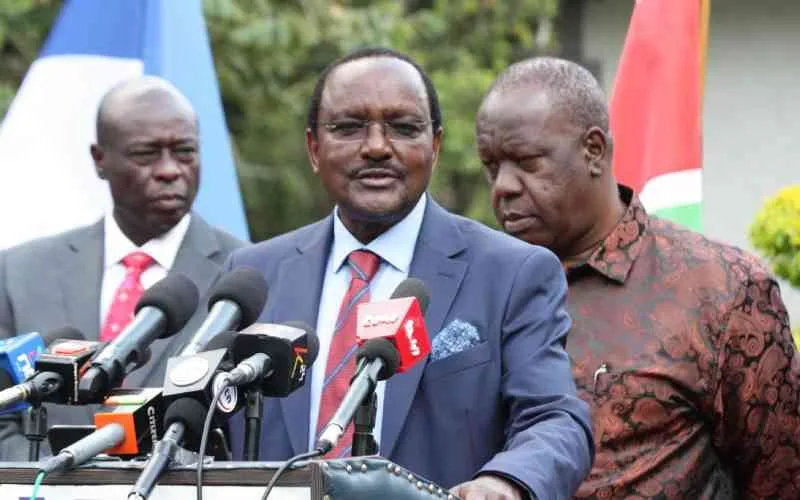
Led by Wiper Party leader Kalonzo Musyoka, the coalition on Wednesday unveiled what they call a “People’s Budget” worth Sh4.32 trillion. It's a direct challenge to President William Ruto's administration ahead of the 2026/2027 fiscal plan.
Kalonzo didn't mince words. He described the government's proposed Sh4.82 trillion expenditure as “the largest spending plan in the history of the Republic of Kenya” and warned it's built on unsustainable debt.
“Nothing, though, in all these years of public life, has prepared me for the cruelty of this budget,” Kalonzo said. He's been in public service for over four decades.
The opposition's alternative plan aims to cut the fiscal deficit to 2.8 per cent of GDP — without introducing new taxes. Instead, it relies on improved compliance and efficiency.
Here's the key difference: the government expects to collect Sh3.63 trillion in revenue but plans to spend Sh4.82 trillion, leaving a gap of about Sh1.1 trillion. The opposition says that gap will be plugged by more borrowing, deepening Kenya's debt burden.
“I have been in public service for over four decades… I have seen what bad governance does to a people who deserve so much better than they have been given.”
Kalonzo pointed out that Sh1.5 trillion is set aside for debt servicing and pensions under the Consolidated Fund Services. That means interest payments on domestic debt alone cost more than the entire education budget.
“To put that in language every Kenyan understands, interest on domestic debt alone costs more than the entire education budget,” he said.
The opposition's budget proposes increased funding for education and health. It wants to restore programmes like Linda Mama (free maternity care) and Edu Afya (health insurance for students). It also includes a Sh80 billion youth employment initiative.
On education, the coalition accused the government of underfunding free basic education despite constitutional guarantees. Kalonzo said gaps in capitation for primary, junior secondary, and secondary schools mean parents are increasingly bearing costs the state should cover.
“Free means free. All the way from Class One to Form Four. For every Kenyan child,” he said. He added that underinvestment has contributed to unrest in schools and safety concerns.
Healthcare got a heavy critique. The coalition described the Social Health Authority (SHA) as “a compulsory tax with a hospital logo.” They claimed that despite mandatory contributions, Kenyans still struggle to access services due to system inefficiencies and funding shortfalls.
The opposition also questioned a proposed Sh104 billion technology contracts linked to SHA, arguing that money should go to frontline services like staffing and medicine.
“The SHA, in its current form, isn't a health policy,” Kalonzo said.
The coalition criticised proposed tax measures in the Finance Bill 2026, including VAT on mobile money transaction fees and excise duty on mobile phones at activation. They argued these would hit low-income households hardest.
“The grandmother in Wajir waiting to receive Sh1,000… will pay more for that transfer,” Kalonzo said.
The People's Budget also proposes scrapping the Affordable Housing Levy, cutting expenditure at State House and the National Intelligence Service, and redirecting savings to irrigation and food security. It calls for a Single Treasury Account to eliminate waste, ghost workers, and duplicate payments.
The opposition urged Members of Parliament to reject the government's fiscal proposals.
“You weren't elected to be a rubber stamp,” Kalonzo said.