

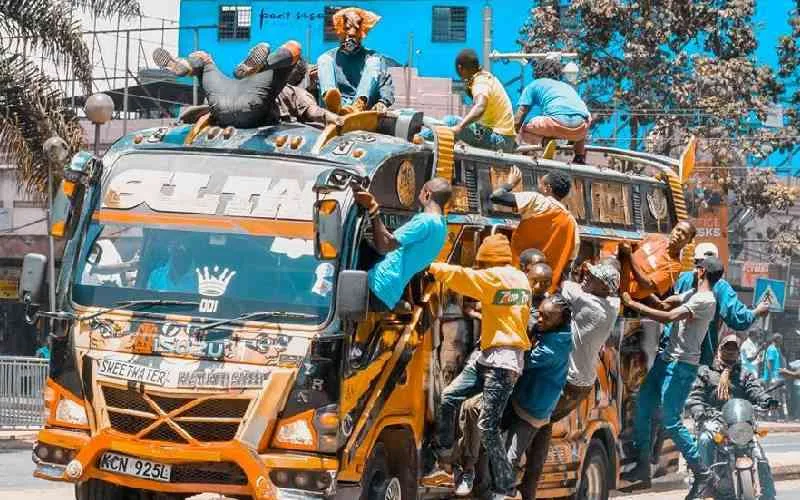
Nairobi's roads have gone from bad to lawless — and a new report says the rot runs from the driver all the way up to the regulator.
An investigation published today, titled "Of impunity and madness: How Nairobi roads descended from order to anarchy," paints a grim picture of a city where traffic rules are suggestions and enforcement is a joke. The report, which is behind a paywall on a major news site, traces how years of weak regulation and outright corruption have turned the capital's streets into a daily battle for survival.
At the heart of the problem is the matatu industry. The report describes minibuses driving on pedestrian walkways, stopping anywhere to pick up passengers, and ignoring traffic lights entirely. Pedestrians, cyclists, and private car owners are left to fend for themselves. One source inside the National Transport and Safety Authority (NTSA) told investigators that officers are often bribed on the spot — or simply stay away from busy routes because they know they can't enforce the law without backup.
The report doesn't spare the regulators. It names the NTSA as the key institution that has failed to rein in the chaos. The agency, created in 2012 to bring order to Kenya's transport sector, has been accused of being captured by the very industry it is supposed to police. Multiple attempts to reform matatu routes and impose discipline have been abandoned or watered down after pushback from powerful transport cartels.
This isn't the first time Nairobi's traffic nightmare has been documented. A 2023 World Bank study estimated that traffic congestion costs the Kenyan economy over Ksh 100 billion annually in lost productivity. But the new report goes further, arguing that the problem isn't just about traffic — it's about a breakdown in the rule of law. If the state can't enforce basic road discipline, the thinking goes, how can it enforce anything else?
The timing is awkward. The Kenyan government has been pushing a "Bottom-Up Economic Transformation Agenda" that includes massive investment in infrastructure. New highways and bypasses are being built across Nairobi. But if the roads themselves are a free-for-all, the report argues, all that concrete won't fix the underlying problem.
What happens next? The report calls for a complete overhaul of NTSA's enforcement wing, including random anti-corruption audits and a review of how traffic police are deployed. But similar recommendations have been made before — and ignored. The real test will be whether the government has the political will to take on the matatu cartels, which have deep connections in both county and national politics.
For now, the average Nairobi resident is stuck in traffic, watching matatus squeeze through gaps that don't exist. The report is a damning indictment of a system that has chosen impunity over order. Whether anyone in power will read it — and act — is another question entirely.