

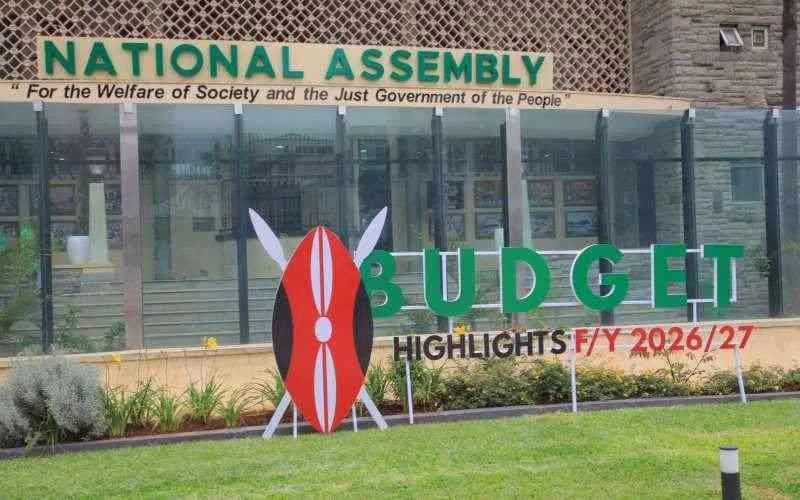
Treasury Cabinet Secretary John Mbadi walks into Parliament today carrying a Sh4.8 trillion cheque — and the hopes of millions of Kenyans who're tired of expensive everything.
The 2026-27 budget is Mbadi's big pitch: fiscal consolidation, job creation, and business growth. That's the official line. But for the average Kenyan, the real question is whether this budget will finally make basic goods cheaper.
Security is already tight around Parliament. Heavy officers are manning the premises, a sign that the government knows this budget could spark strong reactions — especially after last year's tax hikes sparked protests.
Mbadi, who took over the Treasury docket in August 2024 after President William Ruto reshuffled his cabinet, is under pressure to deliver. His predecessor, Njuguna Ndung'u, had pushed through controversial tax measures under the Finance Act 2023, which were later partially rolled back after public outcry.
But Mbadi isn't the only one with a budget today. On Wednesday, the opposition — united under the United Opposition alliance — unveiled their own Sh4.3 trillion 'People's Budget.' It's a direct challenge to Ruto's economic agenda, and it sets the stage for a heated debate in the coming weeks.
The opposition's budget is Sh500 billion smaller than the government's. The big question is: what're they cutting, and what're they prioritising? Sources indicate the opposition plan focuses more on direct cash transfers and subsidies, while the government is betting on infrastructure and tax incentives to grow the economy.
"The budget focuses on fiscal consolidation, job creation and business growth," Mbadi said ahead of the presentation.
But Kenyans have heard this before. Last year's budget also promised jobs and growth, yet inflation remains stubborn, and the shilling is still struggling against the dollar. The cost of living — from unga to rent — hasn't eased much.
This year, all eyes are on what Mbadi says about taxes. After the Finance Act 2023 nearly brought the country to a standstill, the government has been walking a tightrope: it needs revenue to service a massive public debt (now over Sh10 trillion), but it can't squeeze citizens too hard without triggering more protests.
Mbadi is expected to announce new borrowing plans too. Kenya's debt-to-GDP ratio is hovering around 70%, and the IMF has been pushing for more austerity. But with elections just over a year away, Ruto's administration is also desperate to show results.
The opposition's competing budget adds a political twist. It's not just about numbers — it's about narrative. The United Opposition wants to paint Ruto as out of touch, while the government wants to show it's still in control of the economy.
For now, Mbadi will read the budget in Parliament, and the real work begins in committee stages. Kenyans will be watching closely — not just for the big figures, but for what they mean for their pockets.
Key Facts
- Budget size: Sh4.8 trillion (government) vs Sh4.3 trillion (opposition)
- Presented by: Treasury CS John Mbadi
- Date: Thursday, June 11, 2026
- Focus areas: Fiscal consolidation, job creation, business growth
- Context: Kenya's public debt exceeds Sh10 trillion; inflation remains high
- Political backdrop: Opposition united under United Alliance; elections due in 2027